

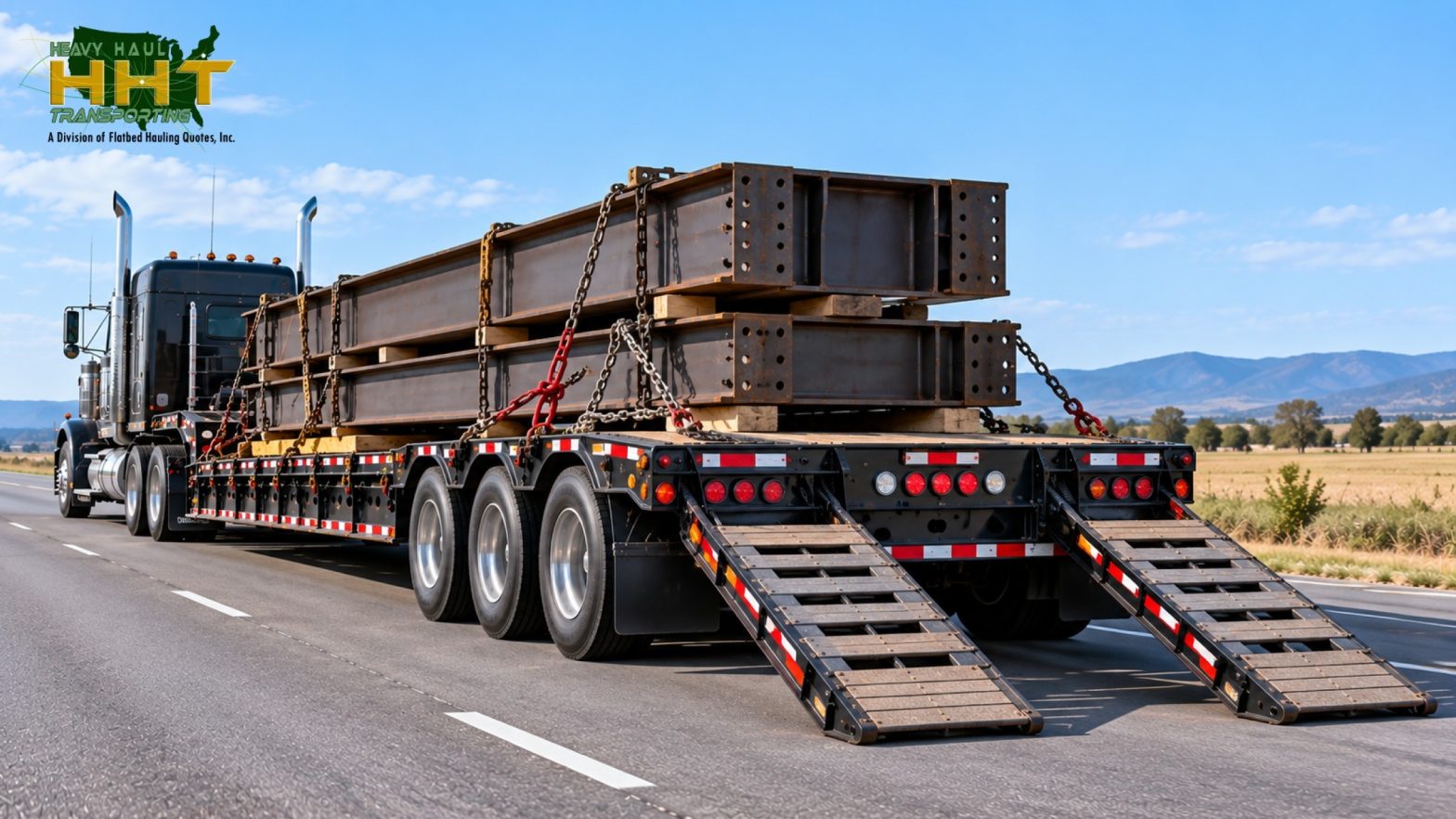
Moving heavy machinery from one location to another requires the right trailer, proper planning, and experienced transportation professionals. Standard trailers may not provide enough capacity or clearance for large construction and industrial equipment. This is where lowboy transport services can provide an effective solution.
Lowboy trailers are specifically designed to carry heavy, tall, and oversized equipment while keeping the overall load height lower. Their unique design makes them a popular choice for construction companies, contractors, manufacturers, agricultural businesses, and other industries that regularly move large machinery.
But when exactly should you use a lowboy trailer? Understanding its design, capabilities, and transportation requirements can help you choose the right hauling solution for your equipment.
What Is a Lowboy Trailer?
A lowboy trailer is a specialized heavy-haul trailer with a deck positioned significantly lower to the ground than a conventional flatbed trailer. The lower deck height helps transport tall equipment while maintaining sufficient overhead clearance during transit. Lowboy trailers are commonly used for machinery that is too tall, heavy, or oversized for conventional transportation equipment. Depending on the trailer configuration and load requirements, they can accommodate a wide range of construction, industrial, agricultural, and specialized machinery.
The low deck also makes loading heavy machinery more manageable. Equipment can often be driven or loaded onto the trailer using ramps, depending on the trailer design and type of machinery. When determining the appropriate trailer, professional heavy equipment haulers consider the equipment’s weight, dimensions, loading method, destination, and transportation route.
Why Choose Lowboy Transport Services for Heavy Equipment?
Choosing the right trailer is essential when transporting large and valuable machinery. Lowboy transport services offer several advantages for heavy equipment transportation.
Lower Deck Height
The low deck keeps the equipment closer to the road surface. This is particularly useful when transporting tall machinery because reducing the overall loaded height can help provide additional overhead clearance.
High Weight Capacity
Lowboy trailers are designed for heavy hauling applications and can accommodate equipment that may exceed the capacity of many standard trailers. The exact capacity depends on the trailer configuration, number of axles, and applicable regulations.
Improved Stability
Keeping heavy equipment lower to the ground can contribute to a more stable load during transportation. Proper loading and securement are still essential to ensure safe movement.
Easier Equipment Loading
Many heavy machines can be loaded onto a lowboy using ramps or other appropriate loading equipment. This can simplify the process of moving tracked and wheeled machinery.
Suitable for Oversized Equipment
Lowboy trailers are frequently used when machinery exceeds conventional transportation dimensions. Professional carriers can evaluate the load and determine whether a lowboy is appropriate based on its dimensions and route requirements.
What Types of Equipment Can Be Hauled on a Lowboy?
Lowboy trailers can transport many types of heavy machinery. The specific equipment that can be hauled depends on its dimensions, weight, configuration, and applicable transportation regulations.
Common examples include:
- Excavators
- Bulldozers
- Wheel loaders
- Backhoes
- Cranes
- Tractors
- Mining equipment
- Industrial machinery
- Large generators
- Construction equipment
Professional heavy equipment transportation providers evaluate the machinery before selecting the appropriate trailer and transportation method.
For especially large or heavy machinery, the carrier may also need to arrange permits, route surveys, escorts, or other requirements before transportation begins.
What Factors Determine Whether a Lowboy Trailer Is Needed?
Not every piece of heavy equipment requires a lowboy. Trailer selection should be based on several important factors.
Equipment Weight
The total weight of the machinery is one of the first considerations. A carrier needs to determine whether the selected trailer and tractor combination can legally and safely handle the load.
Equipment Height
Height is particularly important for oversized machinery. A low deck can reduce the overall height of the loaded trailer, which can be beneficial when traveling under bridges, overpasses, utility lines, and other overhead obstacles.
Equipment Width and Length
The equipment’s overall dimensions must be measured before transportation. Excessive width or length may require special permits or a different trailer configuration.
Loading Requirements
Some machines can be driven directly onto a trailer, while others may require specialized loading equipment. The carrier should consider how the machinery will be loaded, positioned, and unloaded.
Route and Clearance Restrictions
A transportation route should be evaluated for bridges, road restrictions, construction zones, steep grades, narrow roads, and other potential obstacles.
Permits and Oversize Regulations
Heavy and oversized loads may be subject to state and local regulations. Depending on the load, permits, travel restrictions, and escort requirements may apply.
Experienced lowboy trucking companies can help coordinate these requirements before the shipment begins.
How Lowboy Trucking Services Handle Heavy Equipment
Professional lowboy trucking services follow a structured process to ensure heavy machinery is transported safely and efficiently. The process typically begins with an equipment assessment, where the carrier gathers important details such as the machinery’s weight, height, width, length, and loading requirements. Based on these specifications, the carrier selects the most suitable lowboy trailer configuration.
The transportation route is then evaluated for potential clearance issues, weight restrictions, road limitations, and other challenges. If the shipment exceeds legal size or weight limits, the required permits and transportation arrangements are prepared. Once everything is ready, the equipment is carefully loaded and positioned according to proper weight distribution and securement requirements.
Chains, binders, straps, blocks, and other appropriate securement equipment may be used to keep the machinery stable during transit. The driver then transports the equipment along the planned route while following applicable safety and oversize-load regulations. Upon reaching the destination, the machinery is carefully unloaded and the delivery is completed. This organized approach allows heavy equipment haulers to effectively manage the challenges involved in transporting large, heavy, and valuable machinery.
How to Prepare Heavy Equipment for Lowboy Transportation
Proper preparation can make the transportation process more efficient and help prevent delays.
Before the shipment, consider the following:
- Clean the equipment to make inspections easier.
- Measure the equipment accurately.
- Confirm its operating and shipping weight.
- Remove loose or detachable components when appropriate.
- Secure movable parts.
- Check tires, tracks, and other critical components.
- Lower booms, buckets, arms, or attachments when appropriate.
- Confirm fuel and fluid requirements with the carrier.
- Gather necessary equipment documentation.
- Inform the carrier about any special loading or unloading requirements.
Providing accurate information to your carrier allows them to select the appropriate equipment and plan the shipment more effectively.
How to Choose Reliable Lowboy Trucking Companies
Selecting the right carrier is just as important as choosing the right trailer. When comparing lowboy trucking companies, consider their experience, equipment, safety practices, and ability to handle oversized shipments.
Look for a provider that offers:
- Experience transporting heavy machinery
- Appropriate lowboy trailer options
- Knowledge of oversize and overweight regulations
- Proper licensing and insurance
- Professional load securement practices
- Route planning and permit assistance
- Clear communication throughout the shipment
- Reliable pickup and delivery coordination
You should also provide complete information about your machinery when requesting a quote. Accurate dimensions and weight help the carrier determine the appropriate equipment and transportation requirements.
Why Professional Heavy Equipment Haulers Matter
Heavy equipment transportation involves more than simply placing machinery on a trailer. Weight distribution, load securement, route selection, permits, clearances, and delivery conditions all need to be considered.
Experienced heavy equipment haulers understand these challenges and can coordinate the transportation process from pickup through delivery.
Working with a professional carrier can also help reduce the risk of choosing an unsuitable trailer or overlooking important transportation requirements.
Frequently Asked Questions
What is a lowboy trailer used for?
A lowboy trailer is primarily used to transport heavy, tall, and oversized machinery. Its low deck height helps reduce the overall height of the loaded shipment.
What equipment can be transported on a lowboy?
Lowboys can transport equipment such as excavators, bulldozers, loaders, cranes, tractors, generators, mining equipment, and other heavy machinery, depending on the trailer’s capacity and the equipment’s dimensions.
Why is a lowboy better for tall equipment?
Because the trailer deck sits closer to the ground, the total loaded height can be lower than with some conventional trailers. This can provide additional overhead clearance during transportation.
How much weight can a lowboy trailer carry?
Capacity varies depending on the trailer configuration, number of axles, tractor, and applicable regulations. The carrier should evaluate the equipment’s exact weight before selecting the trailer.
Do I need permits for lowboy transportation?
Permits may be required when equipment exceeds legal size or weight limits. Requirements vary by state, route, and shipment specifications.
How do I find reliable lowboy haulers?
Look for experienced lowboy haulers with suitable equipment, proper credentials and insurance, knowledge of heavy-haul regulations, and a proven approach to load securement and route planning.
What is the difference between a lowboy and an RGN trailer?
Both are designed for heavy equipment transportation, but their configurations differ. An RGN, or removable gooseneck trailer, has a detachable front section that can make loading certain equipment easier. The appropriate option depends on the equipment, weight, dimensions, and loading requirements.
Final Thoughts: When Should You Use a Lowboy Trailer?
A lowboy trailer can be an excellent choice when transporting heavy, tall, or oversized machinery that requires a lower deck height and substantial hauling capacity.
Before arranging transportation, consider the equipment’s weight, height, width, length, loading requirements, and transportation route. These factors help determine whether a lowboy is the appropriate solution and what permits or special arrangements may be required.
By working with an experienced provider of lowboy transport services, businesses can coordinate trailer selection, route planning, loading, securement, and delivery more effectively.
For reliable heavy equipment transportation, Heavy Haul Transporting can help businesses move construction and industrial machinery while coordinating the requirements associated with heavy and oversized loads.