

Conway New Hampshire heavy haulers Flatbed Trucking Companies
(800) 579-4258
Get your free quote by completing our quick form or call (800) 579-4258
Heavy Haulers in Conway, NH
Conway sits at the edge of the Mount Washington Valley, where freight movement often follows a practical mix of local roads, tourism traffic, and regional supply routes. Heavy Haul Transporting handles over-the-road freight hauling for oversized and heavy equipment that needs to move through this part of New Hampshire without unnecessary delays. For shippers comparing Heavy Haulers in Conway, New Hampshire, the key concern is usually routing: how to move machinery, industrial cargo, or project freight through a town where seasonal traffic and mountain terrain can affect travel windows. That is where careful trip planning matters. Our work centers on heavy haul transport for road shipment only, with attention to load dimensions, turning radius, bridge limits, and the timing needed for permit-based moves. Whether the freight is heading toward a job site, a plant, or a regional distribution point, the route has to fit the load.
Highway Access and Routing in Conway, New Hampshire
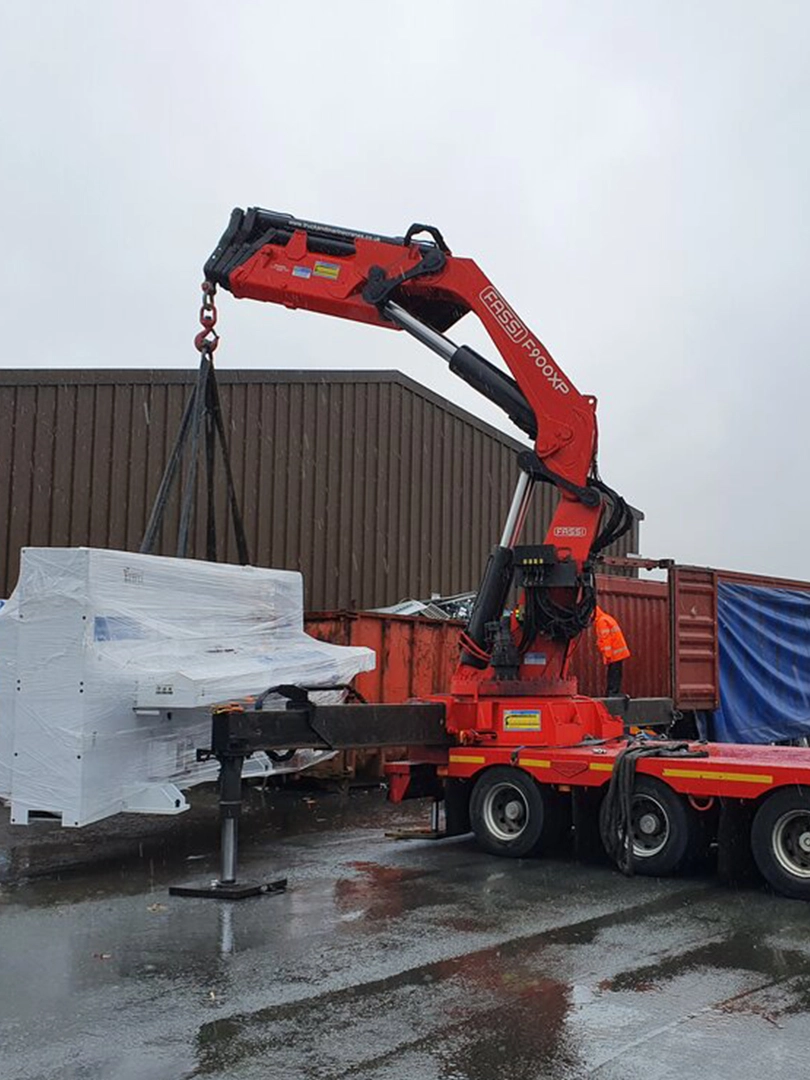
Conway’s freight access is shaped by NH-16, the White Mountain Highway corridor, and connections toward Route 302 and Route 113. Those roads matter because oversized load trucking in this area has to account for lane width, roadside development, and the way traffic changes between local travel and through-movement. Heavy equipment transport often requires more than a straight-line map route. A tractor, excavator, transformer, or industrial component may need a path that avoids tight village centers, low-clearance spots, and sharp turns that are common in older New England road networks. Flatbed transportation, step deck hauling, and RGN trailer transport each serve different freight profiles, and the trailer choice depends on height, weight, and loading geometry. For some projects, double drop trailer transport is a better fit when vertical clearance is limited. When a move extends beyond the immediate Conway area, long haul trucking across New Hampshire and into neighboring states can involve permit review, escort coordination, and schedule planning tied to road conditions.
Freight Demand in the Local Economy in Conway, New Hampshire
Conway is not a heavy industrial center, but it still sits within a freight network that supports construction, public works, hospitality infrastructure, utility upgrades, and regional service operations. Those sectors create steady demand for machinery transport services and industrial equipment hauling. A contractor may need construction equipment shipping for compactors, loaders, or paving machines moving between job locations. Utility crews may move poles, trenching equipment, or replacement components tied to grid work and municipal upgrades. Seasonal development in the Mount Washington Valley also brings commercial freight transport needs for site equipment and materials associated with road work, building projects, and facility expansion. Heavy machinery movers in this region often deal with freight that is not especially repetitive but does require flexible scheduling and route-specific planning. That can include oversized equipment transport for project cargo, flatbed freight hauling for steel or packaged machinery, and specialized trucking companies capable of matching the trailer to the cargo instead of forcing the cargo to fit a standard lane.
Route Planing In Conway, New Hampshire
Transporting heavy machinery and oversized freight through and around Conway, New Hampshire, involves a meticulous route planning process that prioritizes efficiency and safety. When selecting routes, our drivers and planners analyze the local highway system, utilizing key corridors such as Route 16 and Route 302, which provide direct access to major interstate highways like I93 and I95. These highways are crucial for moving oversized loads, as they can handle the weight and dimensions of specialized trailers, such as lowboys and RGNs, while allowing us to avoid the congested urban roads that can hinder progress. In planning, we assess the specific dimensions of each load, as the choice of flatbed, step deck, or double drop trailers depends on the cargos height and width. Oversized permit routing is a critical aspect, ensuring that our routes comply with local regulations and that we have the necessary escorts for particularly large shipments. This planning process also takes into account road widths and weight restrictions, especially in residential areas and near industrial sectors where access might be more limited. For instance, when moving freight from a manufacturing facility to a major highway, we strategically select routes that minimize urban congestion and maximize the efficiency of the haul. Our team continually monitors traffic patterns and road conditions to adapt our routes as needed, ensuring that we maintain an optimal path for our oversized loads. The careful coordination of these elements allows us to navigate the region effectively, connecting industrial areas with key transport routes while adhering to all safety protocols and legal requirements.
Oversized Loads and Permit Planning in Conway, New Hampshire
Oversize freight transport in Conway depends on more than load size alone. Width, height, axle weight, road geometry, and destination access all shape the move. A super load hauling project may require state permits, route review, and escort vehicles depending on the dimensions involved. Even a moderate over-dimensional hauling job can trigger restrictions on travel times or road segments, especially when a route crosses bridges or passes through areas with narrow shoulders. Heavy Haul Transporting coordinates these road-only shipments with the realities of New Hampshire permitting and the practical limits of mountain-region trucking. RGN trailer transport is often used for tracked machinery or tall equipment that needs a lower deck profile. Step deck hauling can help with height-sensitive freight, while double drop trailer transport is suited to taller industrial pieces that still need stable highway movement. When the cargo is a transformer, press, generator, or other large component, the route has to be selected with the same care as the trailer.
Heavy Haul Trucking Companies
Heavy Haul Transporting
Leading Heavy Hauling Solutions: Top Trucking Companies for Flatbed and Oversized Freight
Construction and Site Equipment Movement in Conway, New Hampshire
Construction activity in and around Conway tends to be tied to roads, lodging, commercial properties, municipal work, and residential development spread across the valley. That creates a practical need for heavy equipment shipping and construction equipment shipping rather than broad industrial freight claims. Excavators, skid steers, compact dozers, lifts, and paving units often move on flatbed trucking companies or specialized trailers depending on size and axle configuration. For larger machines, heavy haul carriers may use a low-profile trailer to keep overall height within legal limits. The local terrain also affects delivery timing because equipment may need to reach sites with limited staging space or narrow access roads. That is where industrial freight transport and equipment hauling services become more than generic shipping terms. The move has to fit the job site, the road network, and the schedule. In a region where weather can change quickly, planning around road surface conditions and visibility is part of the transport decision, especially for oversized machinery transportation.
HEAVY HAUL SOLUTIONS IN CONWAY
Connecting Conway with Nationwide Transport Solutions
Conway Metro Coverage
We serve the bustling areas of Conway, including Downtown Conway and Conway Industrial Zone, as well as the surrounding regions like West Conway and Conway Commerce District. Our coverage extends to major districts such as West Conway and Conway Transport Terminal in Conway, and the industrial areas of Old Industrial Park and Conway Business Center.
Regional Route Access
We efficiently transport heavy equipment via key Conway transport corridors including NH-90 and I-45. Our logistics team specializes in route planning that includes New Hampshire Highway, County Line Parkway, and other strategic roadways to avoid delays.
Port & Industry Support
Conway's growing economy is powered by industries like Conway Logistics Terminal and Conway Energy Complex, which rely on our specialized transport solutions. We also support major projects in Conway Industrial Park, providing critical equipment movement for New Hampshire's infrastructure development.
Real-Time GPS Tracking on Every Load
Our Safety-First Approach to Heavy Hauling
Fully Insured, Always Compliant
Professional Drivers with Decades of Experience
City of Conway
- Permit rules for height/width: Loads exceeding 15 feet in width or 16 feet in height require special permits
- Issuing department: Conway Department of Transportation
- Notice period: Minimum 4 business days prior to move
- Fee/cost: Permit fees range from $167 to $610 depending on the type and size of the load
- Escort requirements: Police escort required for oversized loads on certain routes
Conway County
- County-specific permits: Additional permits may be required for moves through certain Conway areas
- Routing restrictions: Avoidance of certain streets and areas including pedestrian zones and during street festivals
- Documentation required: Proof of insurance and detailed route plans, certified by a professional engineer
New Hampshire Highways
- Oversized load rules: Loads over 11 feet wide or 10 feet high require permits from the New Hampshire Department of Transportation
- Escort requirements: Escort vehicles required for loads exceeding 17 feet in width or height
- Multi-state support: We coordinate permits for interstate moves through our network of logistics partners
Heavy Haul Transportation Requirements
for Conway, New Hampshire
General Requirements for Heavy Haul in Conway, New Hampshire
Conway, New Hampshire regulations require all heavy haul operations to comply with the New Hampshire Department of Transportation (NHDOT) guidelines as well as local ordinances administered by the Conway Department of Transportation (CONDOT).
Heavy haul permits are required for any load exceeding 13 feet in width, 15 feet 6 inches in height, or 226,458 lbs in gross vehicle weight. These dimensions are strictly enforced throughout Conway, particularly in high-traffic areas.
Special consideration must be given to route planning to avoid the Conway Financial Center and the vicinity of Conway Industrial Park, which have infrastructure limitations or heavy pedestrian traffic that may impede oversized loads.
The purpose of the permit is to direct vehicles to the most efficient route through Conway to avoid damage to City facilities, unnecessary traffic delays, and disruption to residential neighborhoods like those in the Conway Financial Center and near Conway Industrial Park.
Escort Requirements in Conway
New Hampshire law mandates escort vehicles for any load exceeding 16 feet in width or 14 feet 0 inches in height. When traveling through Conway, these requirements may be more stringent depending on the specific streets and neighborhoods traversed.
The Conway Department of Transportation requires a minimum of 48 hours advance notice to coordinate police escorts, which are mandatory for super-loads or when traveling through congested areas of Conway.
Application Process for Oversize Load Permits
Permit applications in Conway must be submitted through the NHDOT's online permitting system. Carriers should be prepared to provide comprehensive vehicle specifications, proposed routes, and transport schedules.
Applications must include certified weight tickets, dimensional diagrams, and route surveys. For loads that may impact traffic flow in Conway, a traffic management plan may also be required as part of the application process.
Applicants must provide at least 5 business days advance notice to obtain an oversize load permit for standard moves, and up to 8 business days for complex or super heavy loads.
Local Restrictions in Conway
Conway has strict time-of-day restrictions for oversize loads, generally prohibiting movements during peak hours (7-8 am and 3-5 pm, Monday-Friday).
Seasonal restrictions apply during major events like the the Conway Cultural Parade and the the Conway Holiday Celebration, which may impact routing and scheduling.
Certain neighborhoods, such as Downtown Conway and areas around Conway Shopping District, have restricted access for oversize loads. Alternative routes should be planned in advance to avoid these areas.
Fee Structure for Oversize Load Permits
The base permit fee for an oversize load in New Hampshire is $40, with additional fees for super heavy loads (over 200,000 lbs) ranging from $150 to $350 depending on the complexity of the move.
For movements within Conway, Conway Department of Transportation may charge additional fees for city-specific permits, which can range from $75 to $500 or more for particularly complex routes.
Standard permit fee: $40 plus any additional fees based on route complexity and load specifications. Escort fees and other services are billed separately.
Industry Data & Demand
Market Overview
The specialized freight trucking industry in the United States is a significant economic force, worth over $125 billion annually. This robust sector is experiencing steady growth, driven primarily by nationwide infrastructure projects and the increasing demand for renewable energy transport.
Industry experts project the heavy haul sector to expand at a consistent rate of 5.7% each year until 2028.
Industry Scale
Scale is a defining characteristic of this industry, with more than 10 million oversize/overweight permits issued annually across the country. These permits primarily facilitate the transport of construction equipment, generators, turbines, and agricultural machinery.
Most heavy hauls involve substantial loads weighing between 40,000 to 120,000 pounds and spanning up to 20 feet wide, highlighting the specialized expertise required for safe and efficient transport.
Regional Insights
California stands out among the top three states for oversize transport demand, a position attributed to its bustling ports, extensive agricultural operations, and thriving technology manufacturing centers.
Effective route planning has proven valuable, capable of reducing delivery delays by up to 22%.
Coastal states like California face additional complexity due to environmental protection zones along transport routes, with approximately 15% of heavy hauls involving marine-related industries.
Customer Expectations
Customer expectations in this specialized industry are clear and demanding. A recent industry survey revealed that 92% of heavy equipment buyers consider on-time delivery and damage-free transport their top priorities.
Companies that offer route consultation and permit management are 65% more likely to win repeat business from satisfied clients.
Testimonials
What Our Clients Are Saying about Heavy Haul Transporting Services in Conway, New Hampshire
"Excellent Communication"
"We always knew what was happening. Their updates were clear, timely, and gave us peace of mind the whole way."
"Reliable and Compliant"
"Each job's been on schedule and fully compliant. No red tape, no delays—we're in good hands."
"Impressive Equipment Knowledge"
"They knew our equipment like it was their own. The loading and lashing were perfect."
"Flexible and Responsive"
"We had to switch our delivery location last minute—they accommodated immediately without a hitch."
Success Stories
Heavy Haul Transport Solutions in Conway, New Hampshire
Hospital Renovation
Conway → Miami, FL
Equipment
Electric Boom Lift
Challenge
Needed quiet, emissions-free equipment delivered to a busy hospital campus.
Solution
Provided electric lift and arranged delivery during low-traffic hours.
No disruption to hospital operations
Equipment fit perfectly in tight spaces
"Very considerate and efficient service."
Downtown Office Build
Conway → New York, NY
Equipment
Rough Terrain Forklift
Challenge
Tight delivery window and congested city streets.
Solution
Pre-planned route and used a driver familiar with NYC traffic patterns.
On-time delivery despite traffic
No damage to equipment
"They know how to handle city jobs!"
Regulatory Resources & Compliance for Conway, New Hampshire
Federal Transportation
-
U.S. Department of Transportation
Official federal transportation policies
-
FMCSA Regulations
Safety regulations and compliance
-
CSA - Compliance, Safety, Accountability
FMCSA's data-driven safety compliance program
Permits & Registration
-
Oversize/Overweight Permits
Federal permit guidelines
-
USDOT Registration
Registration requirements
Highway Safety Resources
- FMCSA Safety and Fitness Electronic Records (SAFER) SystemFederal Motor Carrier Safety Administration company safety data
New Hampshire Transportation Associations
- New Hampshire Public Transportation AssociationAn organization representing public transportation providers in New Hampshire, promoting efficient, affordable, and accessible transportation options for residents.
Flatbed Trucking Associations
- New England Motor Freight AssociationAn association representing motor carriers and trucking companies in the New England region, advocating for the interests of the trucking industry and promoting safety and efficiency.
Trucking Career Resources
- Professional Truck Driver InstituteTruck driver training standards and certification
Motor Carrier Associations
- American Trucking AssociationsNational trade association for the trucking industry
Conway Local Transportation
- New Hampshire Public Transportation AssociationAn organization representing public transportation providers in New Hampshire, promoting efficient, affordable, and accessible transportation options for residents.
Explore Local Landmarks
Discover Conway, New Hampshire
While Conway is better known for tourism and mountain access than large-scale farming, the surrounding region still uses agricultural equipment, forestry machinery, and land management freight that moves by truck. Tractors, mulchers, log handling equipment, and maintenance machines may travel between rural properties, contractors, and regional supply yards. That kind of freight often benefits from flatbed freight hauling or Heavy haul trucking when the machine exceeds standard dimensions. In northern New Hampshire, equipment transportation can also support land clearing, trail work, and seasonal property operations that rely on durable machinery rather than warehouse-style logistics. Oversized equipment transport in this setting may involve a short in-state move or a longer regional transfer, but the same principles apply: secure routing, trailer selection, and awareness of road grades. Heavy equipment transport for rural and forestry-related cargo is different from urban freight because the delivery point may be off the main corridor and closer to secondary roads with tighter access.
Heavy Haul Transportation FAQ
Your Heavy Equipment Shipping Questions Answered for Conway, New Hampshire
Five years of land transportation experience as logistics coordinator
Michael's understanding of transportation and logistics guarantees our counsel is informed and useful.