

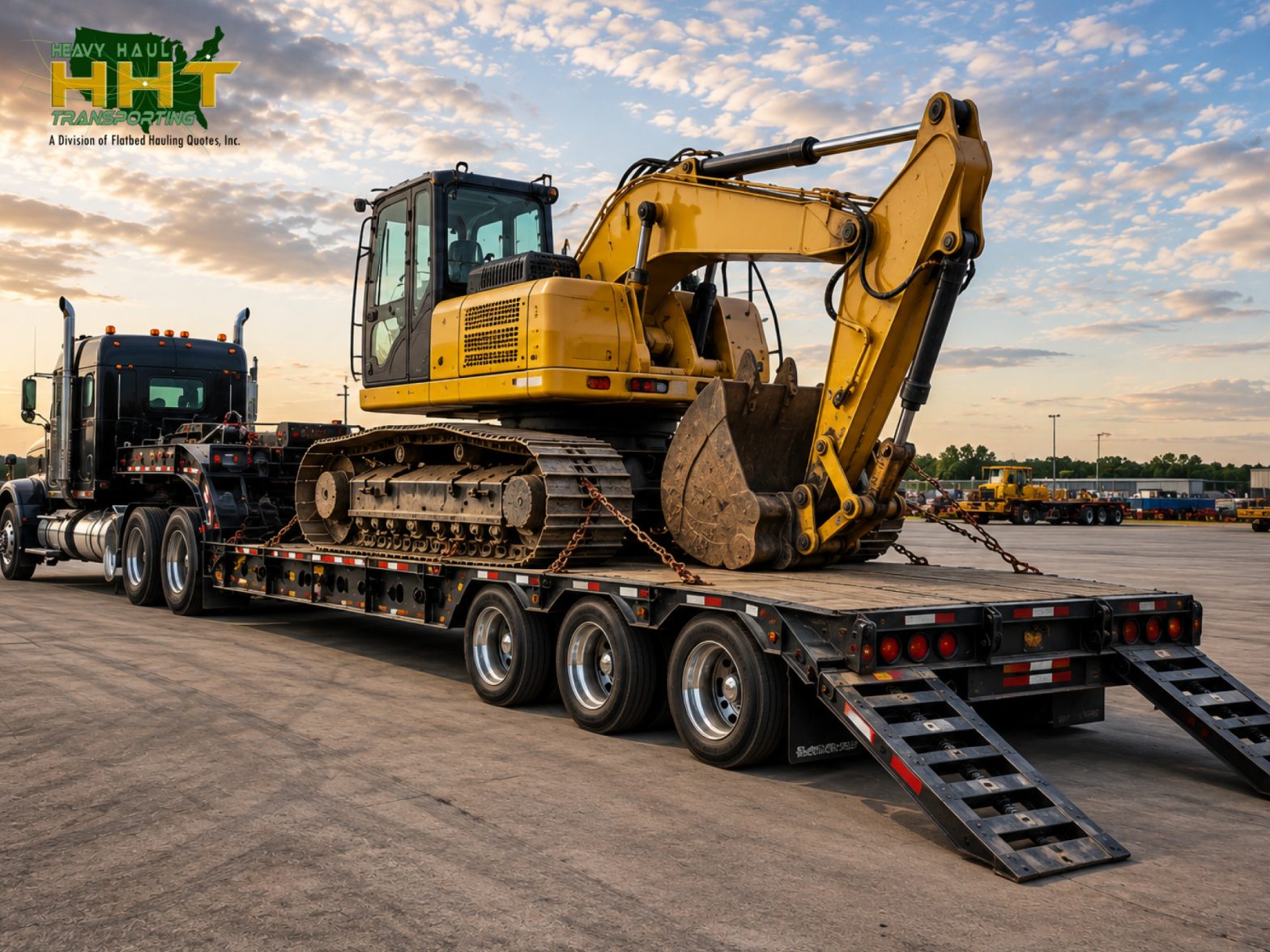
Choosing a trailer for heavy equipment is not simply a matter of finding one that can carry the machine. The right setup needs to match the equipment’s weight, dimensions, loading requirements, and the route it will travel. A trailer that works well for a medium-sized excavator may not be the right choice for a large bulldozer or industrial machine.
This is why knowing how to choose an RGN trailer can make a significant difference when planning a heavy equipment move. RGN trailers are widely used for machinery that is heavy, tall, oversized, or difficult to load using conventional methods. Their removable gooseneck design provides ground-level access, which can make loading large self-propelled equipment much easier.
For contractors, construction companies, equipment dealers, manufacturers, and other businesses, selecting the right trailer can help avoid loading problems, unnecessary delays, and transportation complications.
What Is an RGN Trailer?
An RGN trailer, short for Removable Gooseneck trailer, is a specialized trailer designed for transporting heavy machinery and oversized equipment. The gooseneck at the front can be detached from the trailer deck, allowing the deck to lower close to ground level.
This design gives an RGN trailer for heavy equipment a major advantage when the machine can be driven onto the trailer under its own power. Excavators, bulldozers, wheel loaders, graders, and other construction machinery can often be loaded directly onto the lowered deck.
Once the equipment is positioned correctly, the gooseneck is reattached and the load is secured for transportation.
RGN trailers are available in different configurations, so selecting one should always start with the equipment being moved rather than simply choosing the trailer with the largest advertised capacity.
Why RGN Trailers Are Used for Heavy Equipment
Heavy machinery often creates transportation challenges that ordinary freight trailers cannot handle. A large excavator, for example, may be too tall, too heavy, or too wide for conventional transportation.
An RGN trailer addresses several of these challenges at once.
The removable gooseneck allows for ground-level loading, while the low deck can help reduce the loaded height of the equipment. Depending on the trailer configuration, additional axles can also be used to distribute heavier loads across the trailer.
For RGN heavy equipment transportation, these features make the trailer suitable for many construction, industrial, agricultural, mining, and infrastructure applications.
However, an RGN is not automatically the right choice for every shipment. The equipment specifications and transportation conditions still need to be evaluated.
Start With the Equipment Weight
The first thing to determine when selecting an RGN trailer is the weight of the equipment.
Equipment weight directly affects the required RGN trailer weight capacity, axle configuration, and overall transportation setup. A small wheel loader will have very different requirements from a large mining machine or industrial press.
It is also important to consider whether attachments will remain on the machine during transportation. Buckets, booms, blades, counterweights, and other components can contribute to the total shipment weight.
The carrier needs accurate information about the operating weight of the equipment before choosing the trailer.
Weight distribution matters as well. The equipment should be positioned so that the load is properly distributed across the trailer and axles rather than concentrating excessive weight in one area.
Check the Equipment Dimensions
Weight is only part of the equation. Equipment dimensions can determine whether a particular RGN configuration is suitable.
Before arranging transportation, measure the equipment’s overall:
- Length
- Width
- Height
- Weight
- Ground clearance
Also account for attachments or components that remain installed.
Equipment dimensions affect the required trailer deck length and width as well as the overall loaded height. These measurements may also determine whether an oversized load permit or additional route planning is necessary.
Accurate measurements make it easier for a carrier to recommend the appropriate RGN trailer for oversized equipment.
Consider RGN Trailer Capacity
One common mistake is assuming that the trailer with the highest capacity is automatically the best choice.
Trailer selection is more complicated than that.
The RGN trailer capacity needs to match the actual equipment weight while also taking axle configuration, weight distribution, and transportation regulations into consideration.
For heavier machinery, a carrier may use an RGN with additional axles to distribute the load more effectively. The appropriate configuration depends on the equipment and the route.
A trailer should provide enough capacity without creating an unnecessarily complicated transportation setup.
This is one reason it is better to provide complete equipment specifications before requesting a transportation quote.
Pay Attention to Trailer Deck Height
Trailer deck height is particularly important when transporting tall machinery.
An RGN trailer has a low deck profile, and its design can help keep the overall loaded height lower than it might be with a conventional trailer. This can be valuable when moving excavators, loaders, bulldozers, and other tall construction equipment.
However, a low deck does not automatically eliminate height restrictions.
The carrier still needs to calculate the complete loaded height, including the equipment and trailer. Route clearances, bridges, utility lines, and state requirements may also need to be considered.
For oversized equipment transportation, a few inches can sometimes make a meaningful difference in route planning.
Look at the Loading Method
One of the strongest reasons to choose an RGN is its loading design.
When the removable gooseneck is detached, the trailer deck can rest at ground level. This creates a gradual path for self-propelled equipment to move onto the trailer.
For machines such as excavators and bulldozers, this can make heavy equipment loading much more practical.
Ground-level loading can also be useful at locations where conventional loading ramps are difficult to use. Construction sites, equipment yards, and industrial facilities do not always have ideal loading conditions.
Before transportation, it is still important to confirm that the pickup location has enough room for the truck and trailer to position safely.
Consider the Type of Equipment
The type of machinery being transported should influence your trailer decision.
RGN trailers are commonly used for:
- Excavators
- Bulldozers
- Wheel loaders
- Motor graders
- Scrapers
- Asphalt pavers
- Cranes
- Mining equipment
- Forestry equipment
- Agricultural machinery
- Industrial equipment
For example, excavator transportation often benefits from an RGN’s ground-level loading capability because many excavators can be driven directly onto the trailer.
Large bulldozers and tracked construction equipment can also be suitable candidates for RGN transportation.
That does not mean every excavator or bulldozer requires an RGN. The equipment’s actual dimensions, weight, loading conditions, and route determine the appropriate setup.
Think About the Pickup Location
A trailer may be technically suitable for the equipment but difficult to use at the pickup site.
Before scheduling transportation, consider the available space around the machine. Is the surface level? Can the tractor-trailer reach the equipment? Is there enough room for the driver to position the trailer? Can the equipment safely move onto the deck?
These questions are particularly important for remote construction sites, industrial yards, farms, and active job sites.
The ground-level loading feature of an RGN can be especially useful when the site does not provide an ideal environment for conventional ramp loading.
Sharing photographs or detailed information about the pickup location with the transportation company can also help identify potential problems before the truck arrives.
Don’t Forget Route and Permit Requirements
Choosing an RGN trailer is only one part of heavy haul transportation.
If the equipment is oversized or overweight, the carrier may need to arrange permits and evaluate the transportation route. Depending on the shipment, the route may involve restrictions related to bridges, road construction, height clearances, weight limits, or local regulations.
The equipment’s final loaded dimensions matter here.
A carrier needs to know the equipment’s dimensions and weight along with the trailer configuration to determine the complete size and weight of the shipment.
This is especially important when equipment crosses state lines because transportation requirements can vary between jurisdictions.
Proper Load Securement Is Essential
After choosing the right trailer and loading the equipment, the next priority is securing the machinery properly.
Load securement helps prevent equipment from shifting during braking, acceleration, turns, and changing road conditions.
Depending on the equipment, securement may involve heavy-duty chains, binders, blocking, wheel chocks, and other appropriate tie-down systems.
The equipment should also be positioned carefully so that its weight is distributed appropriately across the trailer.
A suitable trailer alone does not guarantee safe transportation. Proper loading and securement are equally important.
RGN vs. Lowboy: Which Should You Choose?
If you’re deciding between an RGN and a lowboy, the loading method is one of the biggest considerations.
An RGN offers the advantage of a removable gooseneck and ground-level loading. This can be particularly useful for large self-propelled machinery.
A lowboy trailer, meanwhile, uses a different loading arrangement and can be an excellent option for many types of heavy construction equipment.
There is no universal answer to which trailer is better. The best choice depends on the machine, its dimensions and weight, the pickup location, and transportation requirements.
For a more detailed comparison of the two trailer types, read our guide to RGN vs. Lowboy Trailer for Heavy Equipment.
Choosing an RGN Transportation Company
Even when you know the type of trailer you need, choosing the right transportation provider is important.
Look for a company with experience handling heavy machinery and oversized equipment. Ask whether the carrier can accommodate the equipment’s weight and dimensions, assist with permits, plan the route, and handle proper load securement.
A professional carrier should be willing to discuss the equipment before providing a final transportation plan.
This is especially important for complex shipments involving oversized loads, overweight loads, or long-distance transportation.
RGN Heavy Equipment Transportation in Chicago
Chicago is a major transportation and industrial hub, and businesses in the area regularly move construction machinery, industrial equipment, agricultural equipment, and other heavy loads.
If your project requires specialized transportation, selecting the appropriate trailer is only the beginning. The carrier also needs to consider permits, route restrictions, loading conditions, equipment dimensions, and weight distribution.
For companies looking for RGN and lowboy transportation in Chicago, Heavy Haul Transporting provides specialized transportation solutions for heavy and oversized equipment.
You can learn more about the available Chicago services through the RGN and lowboy transportation in Chicago service page.
Final Thoughts
The best RGN trailer for heavy equipment is the one that matches the actual requirements of the shipment.
Start with accurate equipment dimensions and weight. Then consider trailer capacity, deck height, axle configuration, loading conditions, route requirements, and load securement.
For self-propelled machinery, an RGN’s removable gooseneck can make loading considerably easier by bringing the trailer deck close to ground level. For oversized and overweight equipment, the right configuration can also help with weight distribution and transportation planning.
The key is not to choose a trailer based on a single specification. A successful heavy equipment move requires the equipment, trailer, loading site, route, and transportation requirements to work together.
When those factors are evaluated before the shipment begins, it becomes much easier to select the appropriate RGN setup and plan the move with fewer surprises.
Frequently Asked Questions
How do I choose an RGN trailer?
To determine how to choose an RGN trailer, start with the equipment’s weight and dimensions. Then consider deck length, width, capacity, axle configuration, loading method, route requirements, and applicable permits.
What is the best RGN trailer for heavy equipment?
The best RGN trailer for heavy equipment depends on the machine being transported. Weight, dimensions, attachments, loading conditions, and route requirements all influence the appropriate trailer configuration.
Can an RGN trailer transport oversized equipment?
Yes. An RGN trailer for oversized equipment can be used for many large construction, mining, agricultural, and industrial machines. The shipment may require permits or specialized route planning depending on its dimensions and weight.
Why is a removable gooseneck useful?
A removable gooseneck trailer for heavy equipment allows the front section to detach so the trailer deck can be lowered close to the ground. This makes it easier for many self-propelled machines to drive onto the trailer.
What information should I provide before booking RGN transportation?
Provide the equipment’s make and model, operating weight, overall length, width, height, attachments, pickup location, delivery location, and any known loading restrictions. These details help the carrier determine the appropriate transportation setup.
Is an RGN always better than a lowboy?
No. An RGN may be preferable for equipment that benefits from ground-level loading, while a lowboy can be a practical choice for many other heavy equipment shipments. The right trailer depends on the specific load and transportation conditions.