
Heavy Haulers Port of New Orleans, LA
Moving Oversized Freight Beyond the Port
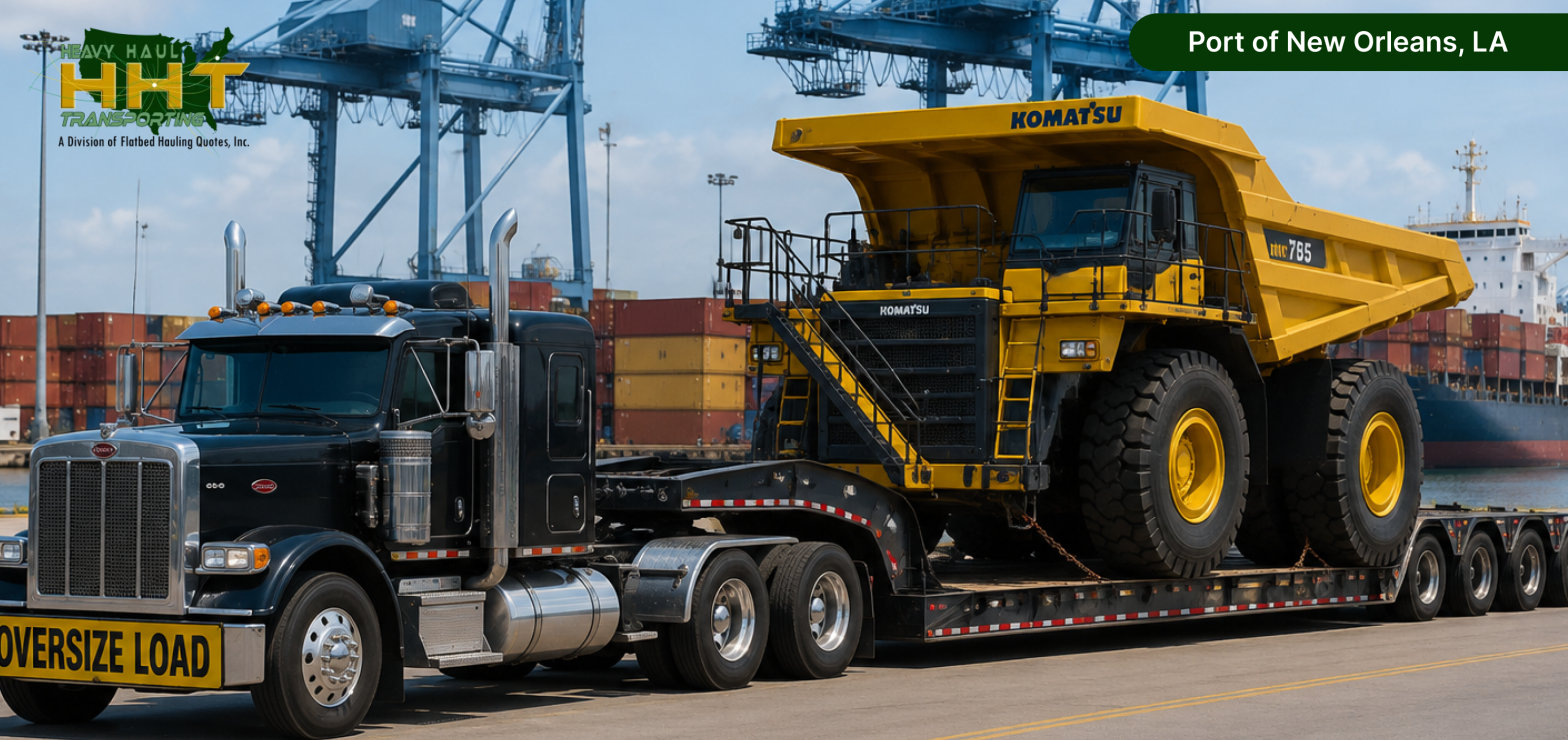
Heavy Haulers Port of New Orleans work starts where the cargo leaves the gate and needs a road plan that fits real-world limits. At Port of New Orleans, LA, Heavy Haul Transporting moves oversized freight by truck across Louisiana and into the wider U.S. network after the shipment is ready for over-the-road travel.
Port of New Orleans, LA sits in a strong Gulf Coast trade lane, which makes it important for manufacturing, energy, construction, defense contracting, and international trade. Cargo moving through the New Orleans port area often includes heavy machinery, industrial modules, steel, and power equipment that cannot move like standard freight. That is where heavy haul trucking becomes essential.
The work here is not about marine logistics, customs brokerage, or warehousing. Heavy Haul Transporting only handles over-the-road transportation after cargo clears the port gate. That means route planning, permit compliance, trailer selection, and timing matter from the first mile. Heavy equipment transportation companies that work this corridor need to understand bridge clearances, Louisiana oversize permits, and the traffic patterns around I-10, US-90, and I-310. In a city shaped by trade and industry, the right truck plan keeps oversized load transport moving without unnecessary delays.
Port Industries and Economic Impact
Port of New Orleans, LA supports a mix of cargo that feeds Gulf Coast industry and inland construction demand. Heavy Haulers Port of New Orleans are often called in when manufacturing plants, oil refineries, and alternative energy projects need equipment moved from the New Orleans terminal to job sites across Louisiana and beyond. This port also serves consumer goods transport, but the heavier freight side is what creates the most planning work for flatbed trucking companies and heavy equipment haulers.
Industrial growth in the region drives steady demand for Heavy Equipment Transport and Heavy Machinery Transportation. Steel fabricators, power developers, and contractors often move structural steel beams, electrical substation modules, large generators, and industrial boilers. Those loads are common for heavy haul transportation because they exceed standard dimensions or weights and need specialized trailers and route checks.
The Gulf Coast economy also supports offshore drilling, fossil fuel operations, and defense suppliers, all of which generate oversized freight shipping needs. When a project involves modular structures, control rooms, or power stations, flatbed transportation companies and oversize freight shipping carriers must coordinate carefully. Heavy Haul Transporting sees that demand in the New Orleans port area because the cargo often leaves the gate ready for direct road movement to plants, yards, and construction sites.
As economic development continues around Port of New Orleans, LA, the need for heavy haul truckers grows with it. More industrial investment means more oversized load transport, more route reviews, and more pressure on carriers that understand Louisiana regulations and the practical limits of moving heavy freight through a busy metro corridor.
Heavy Freight Moving Through the Port
Heavy Haulers Port of New Orleans handle a wide range of freight that needs the right trailer and the right road plan. At Port of New Orleans, LA, common moves include construction equipment shipping for excavators, bulldozers, articulated dump trucks, cranes, and motor graders. Heavy machinery haulers also move rock crushers, screening plants, boring and drilling machines, and tunnel boring machines when projects call for oversized load transport.
Energy freight is another major category in the New Orleans port area. Heavy equipment transportation companies often move power transformers, gas and steam turbines, large generators, industrial press machines, cooling towers, and oil and gas rig components. For those loads, flatbed heavy haulers may use flatbeds for simpler dimensions, step deck trailers for taller freight, lowboy trailers for high-clearance equipment, and RGN trailers when a machine needs a lower deck and easier loading angle.
Double Drop trailers help with extra-tall cargo, while multi-axle trailers spread weight for heavier pieces such as nuclear reactor components, large metal forgings, or complete bridge sections. Schnabel trailers are less common, but they matter for extreme over-dimensional hauling when the load itself becomes part of the support system. Heavy Haul Transporting matches the trailer to the freight so the move stays within Louisiana weight and height rules.
Transportation, aerospace, and military freight also pass through this corridor. That can include spacecraft and rocket components, aircraft fuselages, armored military vehicles, and large telecommunication towers. In each case, flatbed shippers and heavy haul shipping companies must think beyond size alone and focus on axle counts, turning radius, and route access from Port of New Orleans, LA to the final destination.
Transportation Challenges and Route Planning
Heavy Haulers Port of New Orleans face a planning process that starts with Louisiana oversize permits and ends with a route that can actually handle the load. At Port of New Orleans, LA, the biggest issues usually involve weight and height restrictions, bridge clearances, and the need to avoid tight turns or low structures in the New Orleans port area. Heavy haul trucking also has to account for local traffic, construction zones, and the timing of moves near busy interchanges.
Route surveys matter because oversized load transport is only as good as the path under the tires. A survey helps identify lane width, overhead obstructions, utility lines, and bridge approaches before the truck rolls. Louisiana transportation regulations can also require specific escort setups, travel windows, and documentation depending on the dimensions and weight of the freight. Heavy equipment transportation companies that skip this step risk delays or reroutes.
Weather adds another layer. Gulf Coast wind, rain, and storm systems can affect tall freight like electrical cabinets, storage silos, and large telecommunication antennas. Fuel prices also influence heavy haul transportation because long-distance moves from Port of New Orleans, LA may require careful scheduling to control operating costs. Heavy Haul Transporting plans with those realities in mind, especially when a load must move on a narrow permit window.
For flatbed transportation companies and oversize equipment and machinery hauling services, the challenge is not just getting out of the gate. It is getting from the New Orleans terminal to the destination safely, legally, and without avoidable downtime.
Heavy Haul Transporting supports Heavy Haulers Port of New Orleans with road-only service across the United States. From Port of New Orleans, LA, our fleet handles flatbeds, step deck trailers, lowboys, RGN trailers, double drop trailers, multi-axle trailers, and Schnabel trailers for oversized freight that must move by truck after it leaves the port gate. We do not handle loading, unloading, customs brokerage, warehousing, ocean freight, or freight forwarding. Our drivers focus on over-the-road transport for heavy equipment transportation companies, flatbed shippers, and oversized load transport needs tied to the New Orleans port area.
Heavy Haulers Port of New Orleans keep industrial freight moving from a major Gulf Coast trade hub into the rest of the country. At Port of New Orleans, LA, the mix of manufacturing, energy, construction, and defense cargo creates steady demand for Heavy Equipment Transport and oversized load transport. Heavy Haul Transporting is ready when a shipment needs a road plan that respects permits, bridge limits, and route conditions. If your freight is leaving the New Orleans port area and needs a truck-based move, the right carrier makes all the difference.
Planning Heavy Haul Transport From Port of New Orleans, LA?
Heavy Haul Transporting helps businesses coordinate the movement of oversized freight, industrial machinery, construction equipment, and project cargo throughout North America.
Primary Road Corridors Out of Port of New Orleans, LA
The Port of New Orleans, LA connects oversized freight to major transportation corridors across Texas and the United States. These highways are frequently used for moving construction equipment, refinery components, heavy machinery, wind energy equipment, and oversized industrial cargo after it leaves the port area.
I-10 is one of the most important outbound routes for Port of New Orleans, LA, and Heavy Haulers Port of New Orleans use it for freight headed east, west, and into inland Louisiana. Heavy Haulers Port of New Orleans often move power equipment, industrial modules, and construction machinery on this corridor because it connects the New Orleans port area to major industrial and distribution points. For Heavy Haulers Port of New Orleans, I-10 matters because it supports oversized load transport with direct access to wider interstate lanes, but bridge clearances and traffic timing still need close attention.
US-90 gives Heavy Haulers Port of New Orleans another practical path for cargo leaving Port of New Orleans, LA, especially when freight needs to reach industrial sites, refineries, or project yards along the Gulf Coast. Heavy Haulers Port of New Orleans use this route for steel, equipment transport, and heavy machinery transportation that may not fit well on smaller local streets. For Heavy Haulers Port of New Orleans, US-90 matters because it can support over-dimensional hauling when the move needs a more direct surface-street connection from the port region.
I-310 helps Heavy Haulers Port of New Orleans connect Port of New Orleans, LA freight to the west bank and to routes that feed larger regional moves. Heavy Haulers Port of New Orleans rely on this corridor for flatbed trucking companies moving industrial equipment, structural steel, and oversized freight shipping loads that need a cleaner path away from dense city streets. For Heavy Haulers Port of New Orleans, I-310 matters because it can reduce congestion exposure while still requiring careful permit planning and route checks.
LA-47 and nearby connectors around Port of New Orleans, LA are important for Heavy Haulers Port of New Orleans when freight needs to exit the New Orleans port area and reach staging points before a longer road move. Heavy Haulers Port of New Orleans use these roads for heavy equipment haulers moving compact but dense freight such as generators, tanks, and fabricated modules. For Heavy Haulers Port of New Orleans, these connectors matter because they link the port gate to the interstate network while still demanding attention to turns, clearances, and local traffic patterns.
Frequently Asked Questions About Port of New Orleans, LA Transportation
The Port of New Orleans, LA, primarily handles oversized freight such as heavy machinery, construction equipment, and large industrial components. These items often require specialized transport solutions, making heavy haulers essential for safe and efficient delivery.
In Louisiana, heavy haulers must obtain specific permits for oversized loads. It's crucial to check local regulations and route restrictions to ensure compliance. Heavy Haul Transporting can assist with the necessary permits for routes originating from the Port of New Orleans, LA.
For heavy loads departing from the Port of New Orleans, LA, lowboy and flatbed trailers are commonly used. These trailers provide the necessary support and stability for oversized freight, ensuring safe transport across various terrains.
The Port of New Orleans, LA, serves various industries, including manufacturing, construction, and energy. This diverse cargo base means heavy haulers often transport critical equipment and materials essential for these sectors' operations.
Once cargo exits the Port of New Orleans, LA, heavy haulers coordinate the transport to its final destination. This involves route planning, scheduling, and ensuring compliance with local regulations to facilitate smooth road transport.
Yes, Louisiana has specific route restrictions for heavy haulers, particularly on certain highways and bridges. It's important to consult local guidelines and plan routes accordingly when transporting oversized freight from the Port of New Orleans, LA.
Heavy haulers at the Port of New Orleans, LA, may encounter challenges such as navigating tight spaces, managing traffic congestion, and adhering to local regulations. Proper planning and coordination can help mitigate these issues.
Heavy haulers typically use specialized equipment such as multi-axle trailers, dollies, and rigging gear to transport oversized loads. This equipment is crucial for ensuring the safety and stability of cargo moving from the Port of New Orleans, LA.
NOAA Port Intelligence Related Pages
RELATED POSTS
Why Heavy Haulers Port of Baton Rouge (Intracoastal) Keep Baton Rouge Freight Moving
Heavy Haulers Port of Biloxi Keep Gulf Coast Oversize Freight Moving
Heavy Haulers Port of Fernandina Beach Guide for Oversized Freight by Road