

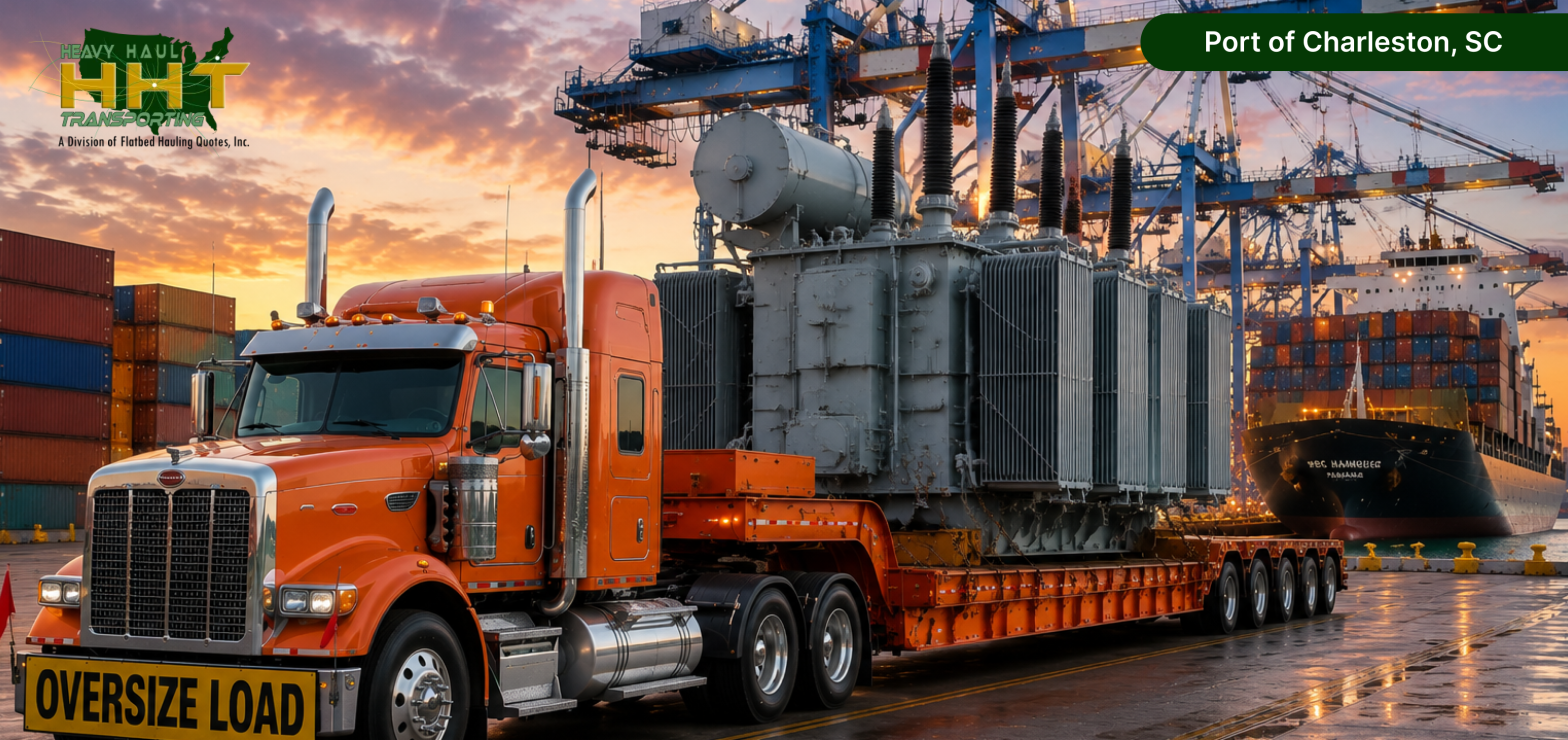
Heavy Haulers Port of Charleston, SC
Moving Oversized Freight Beyond the Port
Heavy Haulers Port of Charleston is a phrase we hear often because Port of Charleston, SC sits at a busy crossroads for oversized freight moving into the Southeast. Heavy Haul Transporting works with shippers that need road transport after cargo clears the gate, and that is where the real planning starts. Charleston handles a wide mix of freight tied to manufacturing, construction, energy, defense, and international trade, so the loads coming out of the Charleston port area are rarely simple. You see everything from structural steel and industrial equipment to power components, modular units, and machinery built for job sites across the region.
Port of Charleston, SC matters because it connects import and export activity with inland demand in South Carolina and beyond. Once freight leaves the terminal, it still has to move through local streets, state highways, and interstate corridors without delay or damage. That is why heavy haul trucking becomes such a critical step. Our team focuses on over-the-road transport only, which means we handle the move after cargo is ready to roll and before it reaches the next job site, plant, or distribution point. In a port market like Charleston, timing, route planning, and permit compliance all shape the move.
Port Industries and Economic Impact
Heavy Haulers Port of Charleston supports a freight base that reflects the wider economy around Charleston and the Southeast. Port of Charleston, SC serves manufacturing plants that bring in industrial equipment, metal fabrications, and production machinery. It also supports construction demand tied to commercial growth, infrastructure work, and large-scale site development. Those sectors create steady needs for Heavy Equipment Transport, Heavy Machinery Transportation, and Oversize Load Trucking because the cargo often exceeds standard legal dimensions.
Economic development in the Charleston port area also drives movement for energy projects, alternative energy builds, and utility upgrades. Solar farms, power stations, and substation work can require transformers, switchgear, electrical cabinets, and other oversized components. Defense contracting and aerospace suppliers add another layer, especially when shipments include sensitive equipment, large assemblies, or modular structures. Heavy equipment haulers often see the same pattern here: as investment rises, the freight gets larger.
Port of Charleston, SC also supports consumer goods transport and industrial supply chains that depend on flatbed trucking companies and heavy haul transportation for the final inland leg. When warehouses, factories, and construction sites need oversized freight moved quickly after port release, the demand for flatbed shippers and heavy haul shipping companies grows. That is why Heavy Haulers Port of Charleston remains tied to both local growth and regional distribution.
Heavy Freight Moving Through the Port
Heavy Haulers Port of Charleston handles a wide range of freight that fits the port’s industrial profile. At Port of Charleston, SC, common moves include excavators, bulldozers, cranes, motor graders, concrete pumpers, and rock crushers for construction and mining work. We also see power transformers, industrial boilers, large generators, and electrical substation modules for energy and utility projects. In the manufacturing and industrial space, shipments may include industrial press machines, large metal forgings, storage tanks, and pre-fabricated building modules.
Heavy machinery haulers and Flatbed Heavy Haulers often choose the trailer based on size, weight, and center of gravity. Flatbeds work well for steel, packaged equipment, and many industrial loads. Step Deck trailers help with taller freight that needs extra clearance. Lowboy trailers and RGN trailers are common for heavier machines like excavators and articulated dump trucks. Double Drop trailers can handle taller cargo with a lower deck height, while Multi-axle trailers spread weight for very heavy pieces. For extreme dimensions, Schnabel trailers may be the right fit.
Heavy Haul Transporting matches the trailer to the freight, not the other way around. That matters at Port of Charleston, SC because oversize freight shipping often involves mixed cargo streams, from construction equipment shipping to oversized load transport for energy and defense projects. The right trailer keeps the move legal and practical once the load leaves the gate.
Transportation Challenges and Route Planning
Heavy Haulers Port of Charleston moves through a region where planning matters as much as horsepower. At Port of Charleston, SC, oversize permits in South Carolina must match the load dimensions, axle weights, and travel windows. State transportation regulations can also affect escort needs, holiday restrictions, and approved travel times. For heavy haul trucking, even a small mistake in paperwork can slow the move before it reaches I-26, I-526, or US-17.
Bridge clearances and height restrictions are a major concern in the Charleston port area. Some routes work for standard flatbed transportation companies but become tight once a load rises above normal limits. That is why route surveys matter. Our drivers and planners check turning radius, overhead obstructions, lane width, and pavement conditions before a load rolls. In over-dimensional hauling, the safest route is not always the shortest route.
Weather also changes the plan. Wind can affect tall freight, especially modular structures, tanks, and large telecommunication towers. Rain can reduce traction and make tight turns more difficult. Fuel prices matter too, because long detours, escort coordination, and idle time all affect heavy haul shipping companies and their customers. Heavy Haulers Port of Charleston keeps those variables in view so oversize equipment and machinery hauling services stay practical from the first mile out of the port.
Heavy Haul Transporting provides road-only service for freight moving out of Port of Charleston, SC and across the United States. We do not load or unload cargo at the terminal, and we do not handle customs, warehousing, or freight forwarding. Our work starts after the load is ready for over-the-road movement. That focus helps keep the process clear for shippers that need flatbed equipment movers, heavy equipment transportation companies, or heavy haul truckers for the inland leg.
Our fleet includes flatbeds, step deck trailers, lowboys, RGNs, double drops, multi-axle trailers, and Schnabel trailers for oversized load transport. Heavy Haulers Port of Charleston often requires that mix because freight leaving the Charleston port area can range from industrial equipment to large structural assemblies.
Heavy Haulers Port of Charleston plays a major role in moving industrial freight from a busy East Coast seaport into the inland economy. Port of Charleston, SC continues to support manufacturing, construction, energy, and defense shipments that need careful over-the-road planning after they clear the gate. Heavy Haul Transporting is ready for those moves when the load calls for route checks, permits, and the right trailer. If your freight needs heavy haul transportation out of Charleston, the next step is making sure the road plan fits the load from start to finish.
Planning Heavy Haul Transport From Port of Charleston, SC?
Heavy Haul Transporting helps businesses coordinate the movement of oversized freight, industrial machinery, construction equipment, and project cargo throughout North America.
Primary Road Corridors Out of Port of Charleston, SC
The Port of Charleston, SC connects oversized freight to major transportation corridors across Texas and the United States. These highways are frequently used for moving construction equipment, refinery components, heavy machinery, wind energy equipment, and oversized industrial cargo after it leaves the port area.
I-26 is one of the most important outbound routes for Port of Charleston, SC because it connects the Charleston port area with inland South Carolina and beyond. Heavy Haulers Port of Charleston uses this corridor for industrial equipment, power components, and construction machinery that need a direct path toward manufacturing sites and distribution points. For heavy haul trucking, I-26 matters because it supports long-distance movement after the load clears the gate, especially when oversized freight has to reach job sites fast.
I-526 links the Charleston terminal with key industrial and port-adjacent roads, making it a core route for Port of Charleston, SC freight. Heavy Haulers Port of Charleston often relies on this beltway for flatbed loads, modular structures, and oversized load transport that must move around the metro area before heading inland. It matters because route timing, merge points, and local traffic all affect how smoothly heavy equipment transport can leave the port zone.
US-17 is a practical corridor for Port of Charleston, SC when freight needs to move through the Charleston port area on a more local path. Heavy Haulers Port of Charleston uses this route for construction equipment shipping, steel, and industrial machinery that may need access to nearby yards, plants, or project sites. It matters for heavy haul transportation because it can connect port releases with short-haul moves that still require permits, escorts, and careful bridge clearance checks.
SC 61 and nearby connector roads help move freight away from Port of Charleston, SC when oversized loads need to avoid tighter downtown streets. Heavy Haulers Port of Charleston uses these routes for heavy machinery haulers moving generators, tanks, and fabricated steel into the broader Charleston region. They matter because flatbed transportation companies and heavy haul shipping companies need alternate paths when height, width, or turning limits make the main corridors less practical.
Frequently Asked Questions About Port of Charleston, SC Transportation
The Port of Charleston, SC frequently handles oversized freight such as heavy machinery, construction equipment, and large industrial components. These items often require specialized transport solutions, making heavy haulers like Heavy Haul Transporting essential for safe and efficient delivery.
In South Carolina, heavy haulers must obtain specific permits for oversized loads. It's crucial to check local regulations and route restrictions before planning your transport. Heavy Haul Transporting can assist with the necessary permits to ensure compliance while operating from the Port of Charleston, SC.
For heavy loads leaving the Port of Charleston, SC, lowboy and flatbed trailers are commonly used. These trailers provide the necessary support and stability for oversized freight. Heavy Haul Transporting can recommend the right trailer type based on your cargo's dimensions and weight.
The Port of Charleston, SC serves various industries, including construction, manufacturing, and energy. These sectors often require heavy haul transport for large machinery and equipment. Heavy Haul Transporting specializes in meeting the unique needs of these industries when shipping from the port.
After cargo exits the Port of Charleston, SC, heavy haulers coordinate road transport to the final destination. This involves route planning, securing necessary permits, and ensuring compliance with local regulations. Heavy Haul Transporting manages these logistics to facilitate smooth transport.
Yes, South Carolina has specific route restrictions for heavy haulers, particularly on certain highways and bridges. It's essential to plan your route carefully to avoid obstacles. Heavy Haul Transporting is experienced in navigating these restrictions when transporting from the Port of Charleston, SC.
Safety measures for heavy haulers include proper load securing, regular vehicle inspections, and adherence to weight limits. When transporting from the Port of Charleston, SC, it's vital to follow all safety regulations. Heavy Haul Transporting prioritizes safety throughout the transport process.
To track your heavy haul shipment from the Port of Charleston, SC, you can request updates from your transport provider. Heavy Haul Transporting offers tracking options to keep you informed about your cargo's status during transit.
NOAA Port Intelligence Related Pages
RELATED POSTS
Heavy Haulers Port of Brownsville Move Oversize Freight Across South Texas
Heavy Haulers Port of Mobile Guide for Oversized Freight Moving Inland
Heavy Haulers Port of Palm Beach Guide for Riviera Beach Oversize Freight Moves