

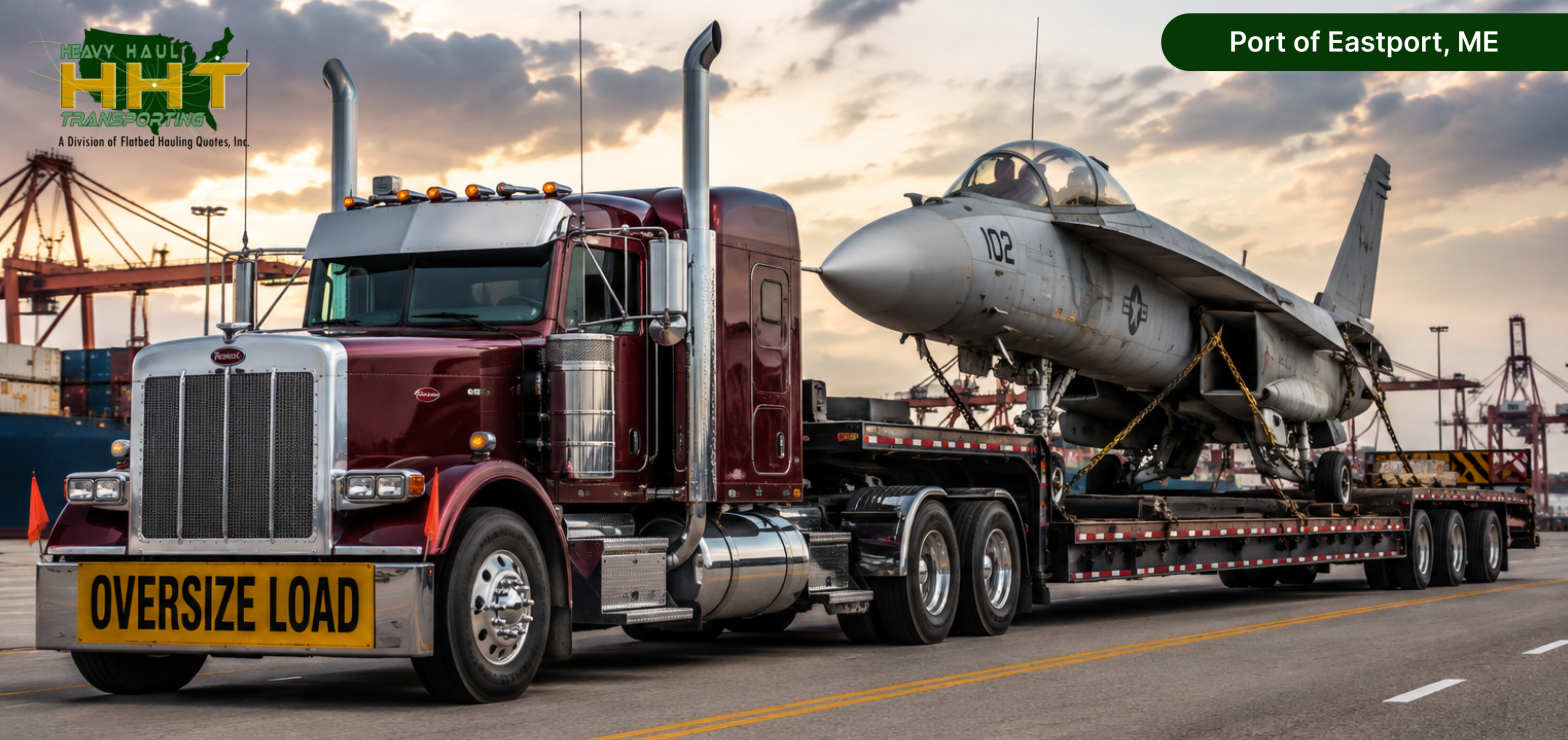
Heavy Haulers Port of Eastport, ME
Moving Oversized Freight Beyond the Port
Heavy Haulers Port of Eastport moves more than cargo; it connects Maine industry to the rest of the country once freight clears the gate. At Port of Eastport, ME, Heavy Haul Transporting handles the over-the-road leg for oversized and heavy freight that needs a careful route, the right trailer, and a driver who understands state rules. That matters here because Eastport sits on the East Coast with access to US-1, and the surrounding region supports manufacturing, construction, energy work, and international trade.
The Port of Eastport, ME can see project cargo tied to industrial upgrades, utility work, and specialized equipment moving toward job sites across the United States. Once cargo leaves the port area, road transport becomes the critical step. Heavy Haul Transporting does not load, unload, broker customs, store freight, or manage ocean freight. Our role starts after the gate, when oversized freight needs to move legally and safely by road.
That is where heavy haul trucking, route planning, and Maine oversize permits come together. From bridge clearances to weather shifts, every move from Eastport port area needs real planning. Heavy Haulers Port of Eastport is often about timing, compliance, and matching freight to the right trailer so the load can keep moving without delays.
Port Industries and Economic Impact
Heavy Haulers Port of Eastport supports a mix of industries that depend on specialized freight movement. In and around Port of Eastport, ME, manufacturing and construction often drive demand for Heavy Equipment Transport, especially when plants, contractors, and utility crews need machines that cannot move on standard trailers. That includes excavators, bulldozers, motor graders, cranes, and industrial components that keep projects on schedule.
Economic development also plays a role. When new facilities, storage yards, or energy sites expand near the Eastport terminal, they create demand for Heavy Machinery Transportation and Oversize Load Trucking. A single project can require multiple moves: structural steel, electrical cabinets, power transformers, or pre-fabricated building modules. Those shipments often need Flatbed Heavy Haulers or Flatbed trucking companies with the right permits and route knowledge.
International trade activity around Port of Eastport, ME can also support consumer goods transport and specialized industrial supply chains. Even when the freight is not going far, it may still be too tall, too wide, or too heavy for standard equipment. That is why heavy equipment haulers and heavy haul transportation providers stay busy in port regions like this.
Heavy Haulers Port of Eastport matters because it links port-side freight to inland job sites, manufacturing plants, and energy projects. As fuel prices change and project schedules tighten, shippers look for equipment transport that can move oversized freight without wasting time on avoidable route problems.
Heavy Freight Moving Through the Port
Heavy Haulers Port of Eastport sees freight that ranges from construction machines to complex industrial pieces. At Port of Eastport, ME, common moves can include excavators, articulated dump trucks, rock crushers, industrial boilers, large generators, and power transformers. Those loads often need Heavy haul trucking with the right trailer match, because one size never fits every shipment.
Flatbed transportation companies are often used for structural steel beams, I-beams, trusses, and other freight that can ride on open decks. For taller or heavier cargo, Step Deck trailers and Lowboy trailers help control overall height. RGN (Removable Gooseneck) trailers are useful for wheeled equipment such as bulldozers, large tractors, and mine haul trucks. Double Drop trailers can help with extra-tall freight, while Multi-axle trailers spread weight for heavy machinery transportation. For unusual long or tall pieces, Schnabel trailers may be the right answer.
Flatbed shippers also handle modular structures, control rooms, and electrical substation modules that move through the Eastport port area. Heavy machinery haulers working from Port of Eastport, ME often coordinate with project managers so the trailer matches the load and the route. Heavy Haul Transporting uses that same approach for Oversized load transport, Oversize freight shipping, and Construction Equipment Shipping.
When freight leaves the gate, the job is to keep it moving legally on the road. That is why heavy haul truckers pay close attention to axle spacing, load height, and the shape of the cargo before the wheels ever roll.
Transportation Challenges and Route Planning
Heavy Haulers Port of Eastport depends on careful planning because Maine does not leave much room for guesswork. At Port of Eastport, ME, oversize permits must match the load dimensions, weight, travel dates, and route. State transportation regulations in Maine can also affect escort needs, travel windows, and whether a shipment can move during certain weather conditions.
Bridge clearances matter a lot in this region. A load that clears the gate at Port of Eastport, ME still has to fit under overhead structures, power lines, and local restrictions once it reaches US-1 and connecting roads. That is why route surveys are a standard part of oversize equipment and machinery hauling services. We check turning radius, shoulder width, pavement condition, and any low-clearance points before scheduling the move.
Weather is another factor. Coastal wind, snow, ice, and fog can change how a load behaves on the road, especially when hauling tall freight on Step Deck trailers or Flatbeds. Fuel prices also affect heavy haul transportation because long-distance moves from Eastport can stretch across several states. When diesel rises, route efficiency and backhaul planning become even more important.
Heavy Haulers Port of Eastport works best when the route is mapped before dispatch. That keeps oversized load transport moving in a way that respects Maine permits, weight and height restrictions, and the real conditions drivers face on the road.
Heavy Haul Transporting provides road-only service from Port of Eastport, ME after freight leaves the gate. We do not handle loading, unloading, customs brokerage, warehousing, ocean freight, or freight forwarding. Our fleet includes Flatbeds, Step Deck trailers, Lowboys, RGN trailers, Double Drop trailers, Multi-axle trailers, and Schnabel trailers for oversized and heavy freight.
Heavy Haulers Port of Eastport often needs the right trailer fast, and our drivers focus on legal over-the-road movement for heavy equipment transportation companies, heavy haul shipping companies, and flatbed trucking companies that need a carrier for the inland leg.
Heavy Haulers Port of Eastport keeps project freight moving from a coastal gateway into the wider U.S. market. At Port of Eastport, ME, demand stays tied to construction, manufacturing, energy, and specialized industrial shipments that need careful road planning after the cargo clears the gate. Heavy Haul Transporting helps move that freight by road with the right trailer, the right permits, and the right route.
If your next move involves oversized load trucking, heavy machinery haulers, or equipment transport from Eastport, the planning starts with the road. Heavy Haulers Port of Eastport will keep mattering as regional projects grow and freight gets more complex.
Planning Heavy Haul Transport From Port of Eastport, ME?
Heavy Haul Transporting helps businesses coordinate the movement of oversized freight, industrial machinery, construction equipment, and project cargo throughout North America.
Primary Road Corridors Out of Port of Eastport, ME
The Port of Eastport, ME connects oversized freight to major transportation corridors across Texas and the United States. These highways are frequently used for moving construction equipment, refinery components, heavy machinery, wind energy equipment, and oversized industrial cargo after it leaves the port area.
US-1 is the key corridor for Port of Eastport, ME because it connects the Eastport port area to other Maine routes and inland destinations. Heavy Haulers Port of Eastport uses this highway for oversized freight such as construction equipment, industrial machinery, and modular loads that need direct road access after leaving the gate. For Heavy Haulers Port of Eastport, US-1 matters because it is often the first stretch where bridge clearances, turning space, and escort planning become real.
ME-190 can support local movement around Port of Eastport, ME when freight needs to reach staging points, contractor yards, or nearby industrial sites. Heavy Haulers Port of Eastport may use this route for flatbed freight, electrical cabinets, and smaller heavy equipment shipments that still need oversize permit review. For Heavy Haulers Port of Eastport, ME-190 is useful because it helps connect port-side cargo to the broader road network without unnecessary detours.
ME-214 is part of the local routing picture near Port of Eastport, ME and can matter when heavy loads need to move through tighter community roads before reaching larger corridors. Heavy Haulers Port of Eastport often studies this kind of route for width limits, shoulder conditions, and weather exposure. Heavy Haulers Port of Eastport uses roads like ME-214 for freight such as small industrial modules, machinery parts, and flatbed cargo that still requires careful movement.
The Downeast Connector and nearby access roads help shape how freight exits Port of Eastport, ME and reaches US-1. Heavy Haulers Port of Eastport pays close attention to these links because they can affect route surveys, pilot car needs, and the timing of oversized load transport. For Heavy Haulers Port of Eastport, these roads matter when moving heavy machinery transportation loads, structural steel, and other freight that must stay compliant from the port area to the next major highway.
Frequently Asked Questions About Port of Eastport, ME Transportation
At the Port of Eastport, ME, you can expect to see a variety of oversized freight, including heavy machinery, industrial equipment, and large construction components. Heavy Haulers Port of Eastport specializes in transporting these types of loads efficiently.
In Maine, you'll need specific permits for heavy haul transport, especially for loads exceeding standard dimensions. It's crucial to coordinate with local authorities to ensure compliance with state regulations when planning your route from the Port of Eastport, ME.
For oversized loads from the Port of Eastport, ME, flatbed trailers and lowboy trailers are commonly used. These trailers provide the necessary support and stability for heavy haulers, ensuring safe transport of large equipment and machinery.
The Port of Eastport, ME, serves various industries, including construction, energy, and manufacturing. Heavy Haul Transporting often handles shipments related to these sectors, facilitating the movement of large and heavy equipment.
After cargo departs the Port of Eastport, ME, it typically moves directly to its destination via designated routes. Heavy Haulers Port of Eastport coordinates transport logistics to ensure timely delivery while adhering to local regulations.
Yes, Maine has designated routes for heavy haul trucking that accommodate oversized loads. It's important to plan your route carefully, considering weight limits and bridge clearances, especially when transporting from the Port of Eastport, ME.
Transporting heavy machinery from the Port of Eastport, ME, requires specialized equipment such as heavy-duty flatbeds and lowboy trailers. Additionally, securing the load properly is essential to ensure safety during transit.
Absolutely! Heavy Haul Transporting offers logistics planning services tailored to shipments from the Port of Eastport, ME. We help you navigate the complexities of heavy haul transport, ensuring efficient and compliant delivery.
NOAA Port Intelligence Related Pages
RELATED POSTS
Heavy Haulers Port of Victoria Guide for Oversized Freight Moving by Road
Heavy Haulers Port of Hampton Roads (Norfolk) Keep Norfolk Freight Moving by Road
Heavy Haulers Port of Charleston Moves Oversize Freight Across South Carolina Roads