

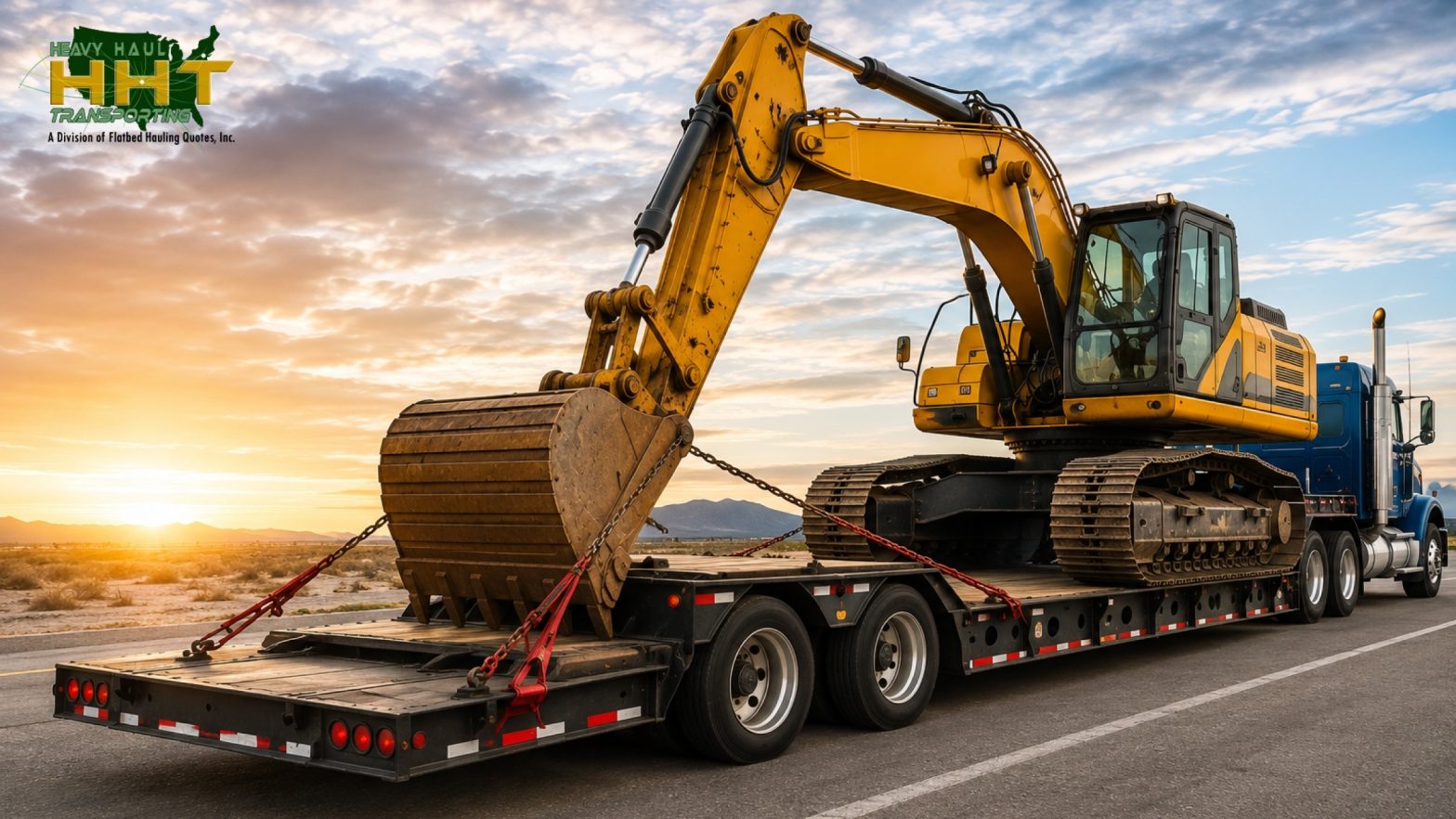
Before moving heavy equipment over a long distance, inspect the machine, document its dimensions and weight, secure movable components, and choose the right trailer and transportation method. Proper preparing heavy equipment for transport helps reduce damage, delays, and loading or unloading problems.
How Do You Prepare Heavy Equipment for Transportation?
The best way to prepare heavy equipment for transportation is to follow a structured heavy equipment shipping checklist. The preparation should cover the equipment itself, transportation requirements, documentation, loading, securement, and the planned route.
Here are the key steps:
- Inspect the equipment.
- Record its dimensions and operating weight.
- Remove or secure loose components.
- Drain or manage fluids when required.
- Disconnect batteries when appropriate.
- Lower movable parts and attachments.
- Protect vulnerable components.
- Select the appropriate trailer.
- Confirm permits and route requirements.
- Load and secure the equipment properly
What Should You Check Before Transporting Heavy Equipment?
Inspect the Equipment
Start with a complete inspection before heavy equipment transportation begins. Look for existing damage, leaks, loose parts, worn components, and anything that could move during transit.
Take photographs from multiple angles before loading. These photos can provide a useful condition record when the equipment is delivered.
Check:
- Tires or tracks
- Hydraulic systems
- Attachments
- Buckets and blades
- Mirrors and lights
- Doors and access panels
- Hydraulic lines
- Fuel and fluid leaks
- Loose or removable components
This initial inspection is one of the most important parts of preparing heavy equipment for transport.
Measure the Equipment
Accurate measurements help determine the appropriate trailer and transportation requirements.
Record:
- Overall length
- Overall width
- Overall height
- Operating weight
- Attachment dimensions
- Ground clearance
Accurate dimensions are particularly important when transporting oversized equipment because the load may require special permits, route planning, or additional safety measures.
How Do You Prepare Construction Equipment for Transport?
Remove Loose or Detachable Components
Before heavy machinery transportation, remove components that can be safely detached and transported separately when appropriate.
Examples may include:
- Buckets
- Counterweights
- Extensions
- Mirrors
- Tools
- Accessories
- Other removable attachments
Removing certain components can reduce the overall dimensions of the shipment and make loading easier.
Secure Movable Parts
Lower booms, blades, buckets, ramps, and other movable components whenever the equipment manufacturer’s instructions and transportation requirements allow it.
Any component that could move during transit should be properly secured.
This is an essential part of equipment preparation for shipping because movement can create safety risks and potentially damage both the equipment and trailer.
Should You Drain Fluids Before Shipping Heavy Equipment?
Fluid preparation depends on the equipment, transportation method, manufacturer requirements, and applicable regulations.
Check the manufacturer’s transportation instructions before draining fuel, hydraulic fluid, coolant, or other fluids.
Also inspect the machine for leaks before loading. A leaking machine can create problems during heavy equipment hauling and may require additional preparation before transportation.
How Do You Protect Heavy Equipment During Transportation?
Protect Vulnerable Components
Certain parts of construction machinery may require additional protection during a long-distance shipment.
Protect or secure:
- Hydraulic cylinders
- Control panels
- Glass
- Mirrors
- Exhaust components
- Electronic equipment
- Exposed attachments
Use appropriate covers or protective materials where needed, while ensuring that the equipment remains safely secured and compliant with transportation requirements.
Disconnect or Secure the Battery
Depending on the equipment and manufacturer’s instructions, the battery may need to be disconnected or otherwise secured for transportation.
The goal is to prevent accidental activation and protect electrical components during transit.
How Do You Choose the Right Trailer for Heavy Equipment?
Trailer selection should be based on the equipment’s weight, dimensions, height, configuration, and transportation requirements.
Different types of equipment may require different trailer configurations.
Common transportation options include:
- Flatbed trailers
- Step-deck trailers
- Double-drop trailers
- Lowboy trailers
- RGN trailers
For particularly heavy or oversized machinery, specialized equipment may be necessary.
Working with experienced heavy equipment haulers can help determine which transportation setup is appropriate for the shipment.
How Do You Secure Heavy Equipment on a Trailer?
Proper load securement is a critical part of heavy equipment transportation.
After loading, the equipment should be positioned appropriately on the trailer and secured using suitable restraints.
Depending on the equipment and applicable requirements, securement may involve:
- Chains
- Binders
- Straps
- Blocking
- Chocks
- Manufacturer-approved attachment points
The equipment should be checked after securement to ensure it cannot shift, roll, or move during transportation.
Why Is Load Securement Important?
Poorly secured machinery can shift during braking, acceleration, turning, or uneven road conditions.
Proper heavy equipment load securement helps protect:
- The equipment
- The trailer
- The driver
- Other road users
For this reason, loading and securement should be handled by qualified personnel familiar with the applicable transportation requirements.
What Documents Are Needed to Transport Heavy Equipment?
Documentation requirements vary depending on the equipment, shipment dimensions, weight, origin, destination, and route.
Before transportation, confirm whether the shipment requires:
- Equipment specifications
- Weight information
- Dimensions
- Registration or ownership documentation
- Transportation permits
- Route information
- Insurance documentation
- Special transportation authorizations
For oversized shipments, route and permit requirements should be confirmed before the equipment is dispatched.
How Do You Prepare Oversized Equipment for Long-Distance Transport?
Oversized equipment requires additional planning because its dimensions or weight may exceed standard transportation limits.
Before shipping, determine:
- Equipment dimensions and weight
- Trailer requirements
- Permit requirements
- Route restrictions
- Bridge and clearance considerations
- Loading and unloading locations
- Escort or pilot-car requirements, where applicable
- Delivery-site access
Route planning is especially important for long-distance transportation because restrictions can vary between jurisdictions.
Experienced heavy equipment transport companies can coordinate these transportation requirements before the shipment begins.
What Should You Check During a Long-Distance Equipment Shipment?
Preparation doesn’t stop once the equipment is loaded.
Before departure, perform a final inspection of:
- Load position
- Chains and binders
- Straps and restraints
- Equipment attachments
- Trailer condition
- Clearance
- Lights and visibility
- Documentation
- Required permits
For longer shipments, the load should also be checked as appropriate during transit.
This additional attention is especially important when using heavy equipment shipping services for large construction machinery.
Heavy Equipment Transportation Checklist
Use this quick heavy equipment transportation checklist before dispatch:
- Inspect equipment
- Photograph existing condition
- Record weight
- Measure length, width, and height
- Secure movable components
- Remove appropriate attachments
- Check for fluid leaks
- Protect vulnerable components
- Select suitable trailer
- Confirm permits
- Plan transportation route
- Load equipment correctly
- Secure the load
- Complete final inspection
- Confirm delivery access
When Should You Hire a Heavy Equipment Transport Company?
If the equipment is large, heavy, oversized, or traveling a long distance, professional transportation support can simplify the process.
A qualified transportation provider can help coordinate trailer selection, loading, securement, route planning, permits, and delivery logistics.
Instead of treating transportation as simply moving a machine from Point A to Point B, professional heavy equipment transport companies can plan the shipment around the equipment’s specific requirements.
How Heavy Haul Transporting Can Help
When you need to move construction machinery, industrial equipment, or oversized loads over long distances, Heavy Haul Transporting provides transportation solutions designed around the size, weight, and requirements of the shipment.
You can learn more about heavy equipment transportation, available equipment hauling options, and transportation services through Heavy Haul Transporting.
Frequently Asked Questions
How far in advance should heavy equipment transportation be planned?
Long-distance shipments should be planned early enough to confirm equipment dimensions, trailer availability, permits, route requirements, loading arrangements, and delivery access.
What is the most important step when preparing heavy equipment for transportation?
Accurate equipment measurements and weight information are among the most important starting points because they influence trailer selection, permits, route planning, and load securement.
Can heavy equipment be transported on a flatbed trailer?
Some equipment can be transported on a flatbed, but the appropriate trailer depends on the machine’s weight, dimensions, height, and configuration.
How do you secure heavy equipment for transportation?
Heavy equipment should be positioned correctly and secured with appropriate restraints and securement methods based on the equipment and applicable transportation requirements.
What information should I provide a heavy equipment hauler?
Provide the equipment’s weight, dimensions, pickup location, delivery location, attachments, and any special loading or unloading requirements. Photos can also help the transportation provider understand the equipment configuration.
Final Takeaway
Proper preparing heavy equipment for transport involves much more than simply loading a machine onto a trailer. Inspect the equipment, document its specifications, secure movable components, select the right trailer, confirm permits and route requirements, and complete a final load inspection before departure.
For large, oversized, or long-distance shipments, working with experienced heavy equipment haulers can help coordinate the transportation process from pickup through delivery.