

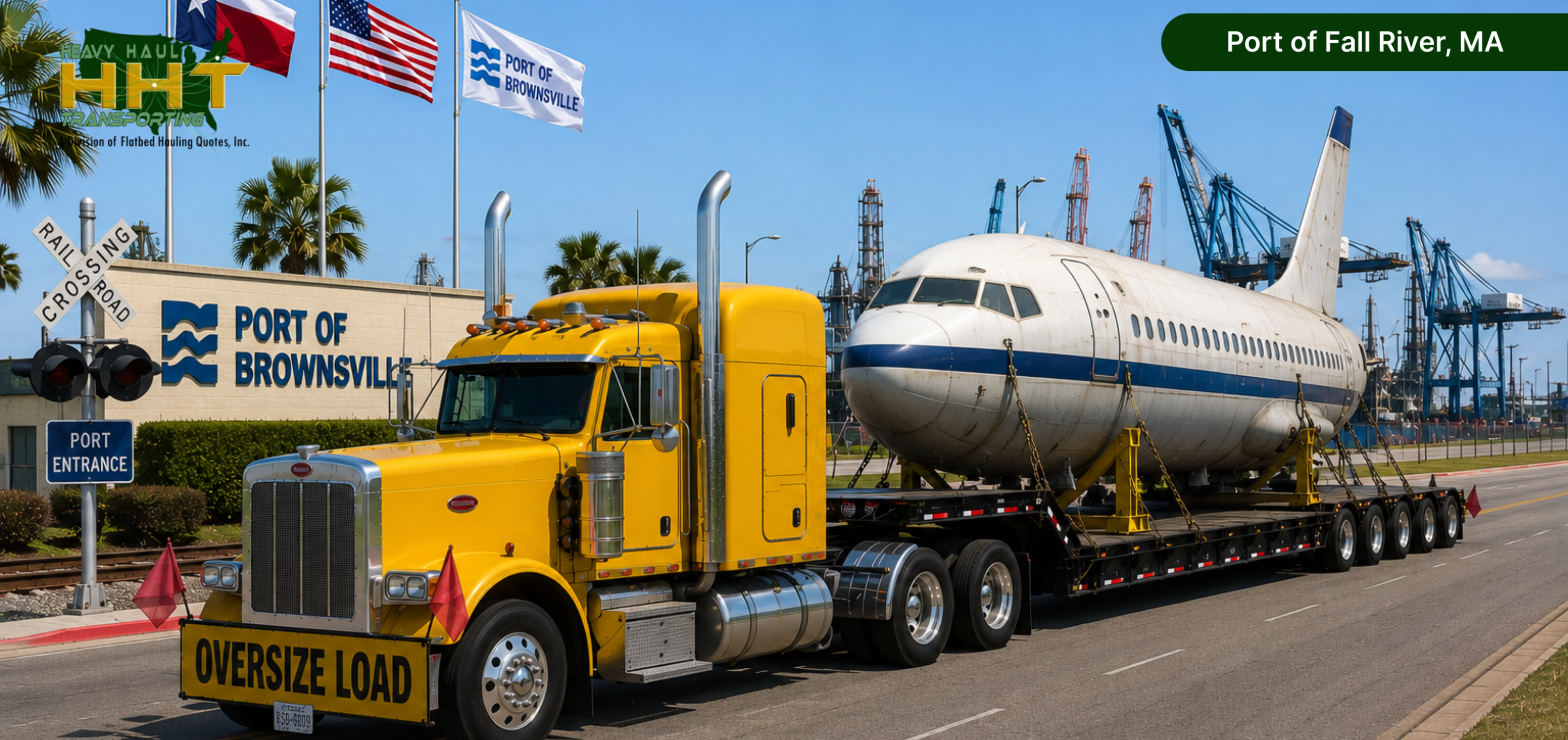
Heavy Haulers Port of Fall River, MA
Moving Oversized Freight Beyond the Port
Heavy Haulers Port of Fall River moves oversized freight that needs careful road planning once it clears the gate. At Port of Fall River, MA, Heavy Haul Transporting supports shippers that depend on over-the-road transport for the next leg of the journey, especially when cargo is too tall, too wide, or too heavy for standard service.
Port activity in Fall River connects regional manufacturing, construction, and energy projects to broader U.S. supply chains. That matters because heavy freight does not stop needing attention just because it reaches a port area. Once cargo leaves Port of Fall River, MA, it still has to fit Massachusetts route rules, bridge limits, and local traffic patterns before it can reach a jobsite, plant, or yard.
That is where heavy haul trucking becomes a practical part of the move. Heavy Haulers Port of Fall River often handles equipment and structures that support industrial growth, infrastructure work, and specialized production across New England and beyond. Heavy Haul Transporting only provides road transport after cargo leaves the port gate, so our team focuses on permits, routing, trailer selection, and safe over-dimensional hauling from the start.
Port Industries and Economic Impact
Heavy Haulers Port of Fall River plays a role in moving freight tied to manufacturing, construction, and economic development across southeastern Massachusetts. Port of Fall River, MA serves shippers that move industrial and consumer goods, and that creates steady demand for oversized load transport when plants, contractors, and project owners need equipment moved by road.
Manufacturing operations often depend on heavy equipment transportation companies to move presses, tanks, electrical cabinets, and industrial machinery. Construction firms also rely on flatbed trucking companies and heavy equipment haulers for structural steel beams, bridge sections, concrete pumpers, and modular structures. In a market where projects can change quickly, Heavy Haulers Port of Fall River helps keep those moves aligned with jobsite schedules and state transportation regulations in Massachusetts.
The Fall River port area also supports freight linked to energy and power infrastructure. That can include power transformers, large generators, substation modules, and cooling towers for utility upgrades or industrial facilities. Alternative energy projects add more demand, especially for solar equipment, electrical components, and control rooms that move as oversized freight shipping jobs.
When cargo is too large for standard trailers, Heavy Haulers Port of Fall River becomes part of the planning process. Heavy haul transportation in this region often reflects the needs of contractors, fabricators, and distributors that depend on flatbed transportation companies and oversize freight shipping to keep projects on schedule.
Heavy Freight Moving Through the Port
Heavy Haulers Port of Fall River regularly handles freight that needs the right trailer for the load, not just the destination. At Port of Fall River, MA, that can mean construction and mining machinery, excavators, bulldozers, articulated dump trucks, and cranes that require careful weight distribution and route planning.
Heavy machinery transportation also covers industrial and manufacturing equipment such as industrial boilers, large metal forgings and castings, storage silos, and pre-fabricated building modules. For larger or taller pieces, Heavy Haulers Port of Fall River may use flatbeds for simpler moves, Step Deck trailers for extra height clearance, Lowboy trailers for tall machinery, and RGN trailers for self-propelled equipment. Double Drop trailers help with taller freight, while Multi-axle trailers spread weight across more axles for heavier loads. When a shipment is unusually shaped, Schnabel trailers can support specialized over-dimensional hauling.
Flatbed Heavy Haulers and flatbed shippers also move I-beams, trusses, catch basins, manhole covers, and large telecommunication towers. Heavy equipment transportation companies serving the Fall River port area often see demand from defense contracting, aerospace, and military suppliers too, including armored vehicles, spacecraft components, and large assemblies that need secure transport by road.
Heavy Haul Transporting works with these freight types every day, so our drivers match the trailer to the load and the route instead of forcing a one-size-fits-all move.
Transportation Challenges and Route Planning
Heavy Haulers Port of Fall River has to account for more than distance. At Port of Fall River, MA, oversize permits in Massachusetts can change based on load width, height, axle weight, and travel timing. That is why route planning starts early, especially for oversized load transport that may need escort vehicles or restricted travel windows.
Bridge clearances matter a lot in the Fall River port area. A load that clears one stretch of road may still run into trouble on a lower bridge, tighter turn, or utility crossing. Heavy haul trucking also has to account for local traffic patterns, school zones, and road work near I-195, MA-79, and MA-138. Route surveys help identify pinch points before a truck ever leaves the yard.
Weather adds another layer. Wind can affect tall freight, especially on flatbeds, Step Deck trailers, and Double Drop trailers carrying modular structures or electrical substation modules. Rain and winter conditions can also slow heavy haul shipping companies that are moving equipment through southeastern Massachusetts. Fuel prices matter too, because long detours, escort needs, and idle time can change the cost of a move quickly.
For Heavy Haulers Port of Fall River, the goal is to keep the load legal, clear, and moving on the right route. That means respecting Massachusetts transportation rules while choosing the safest path for over-dimensional hauling.
Heavy Haul Transporting serves Port of Fall River, MA with road-only oversized freight moves after cargo leaves the gate. Heavy Haulers Port of Fall River is part of our daily work, and our fleet includes flatbeds, lowboys, RGNs, Step Deck trailers, Double Drop trailers, Multi-axle trailers, and Schnabel trailers for specialized loads.
We do not handle loading, unloading, customs brokerage, warehousing, ocean freight, or freight forwarding. Our focus stays on over-the-road heavy haul transportation for freight that needs to move from the Fall River port area to sites across the United States.
Heavy Haulers Port of Fall River supports the kind of freight that keeps construction, manufacturing, and energy projects moving across the region. At Port of Fall River, MA, oversized cargo still needs a careful road plan after it clears the gate, and that is where route knowledge and trailer selection matter most.
If your shipment needs heavy haul trucking from the Fall River port area, Heavy Haul Transporting can help plan the road move with the right equipment and permit approach. Heavy Haulers Port of Fall River remains a strong fit for future project freight, especially as industrial and infrastructure demand continues to grow.
Planning Heavy Haul Transport From Port of Fall River, MA?
Heavy Haul Transporting helps businesses coordinate the movement of oversized freight, industrial machinery, construction equipment, and project cargo throughout North America.
Primary Road Corridors Out of Port of Fall River, MA
The Port of Fall River, MA connects oversized freight to major transportation corridors across Texas and the United States. These highways are frequently used for moving construction equipment, refinery components, heavy machinery, wind energy equipment, and oversized industrial cargo after it leaves the port area.
I-195 is one of the most important corridors for Port of Fall River, MA because it connects the port area to Providence, southeastern Massachusetts, and other regional freight lanes. Heavy Haulers Port of Fall River often uses this route for construction equipment, industrial machinery, and modular freight that needs direct access to wider highway networks. The corridor matters because it helps oversized load transport reach job sites without relying on smaller local streets for long stretches.
MA-79 serves as a practical connector for Port of Fall River, MA when heavy freight needs to move between industrial zones, local yards, and nearby highway access points. Heavy Haulers Port of Fall River uses this route for flatbed freight, steel components, and heavy equipment transportation jobs that need a short but controlled path through the city. It matters because route choice on MA-79 can affect turning room, bridge clearance, and permit compliance.
MA-138 is important near Port of Fall River, MA for freight that needs to move through the Fall River port area toward regional manufacturing and construction destinations. Heavy Haulers Port of Fall River may use this corridor for oversized machinery, tanks, and structural steel that can travel on permitted road moves. It matters because the route can influence escort needs, height checks, and safe access to nearby industrial customers.
US-6 and nearby connector roads give Port of Fall River, MA additional access for heavy freight moving toward commercial and industrial destinations in the region. Heavy Haulers Port of Fall River often depends on these links for equipment transport, especially when a load must transition from the port area to a longer interstate move. It matters because local connectors can be the difference between a clean departure and a route that creates clearance or turning problems.
Frequently Asked Questions About Port of Fall River, MA Transportation
The Port of Fall River, MA, handles various oversized freight, including heavy machinery, construction equipment, and large industrial components. Heavy Haulers Port of Fall River specializes in transporting these types of cargo efficiently to their destinations.
In Massachusetts, heavy haul transport requires specific permits based on the load's weight and dimensions. It's essential to check with local authorities to ensure compliance. Heavy Haul Transporting can assist with the necessary permits for routes originating from the Port of Fall River, MA.
For oversized loads departing from the Port of Fall River, MA, specialized trailers like lowboys and flatbeds are commonly used. These trailers provide the necessary support and stability for heavy cargo, ensuring safe transport.
The Port of Fall River, MA, primarily serves industries such as construction, manufacturing, and energy. Heavy machinery and large components for these sectors frequently pass through, making it a vital hub for heavy haul transport.
Once cargo leaves the Port of Fall River, MA, it is typically transported directly to its destination via designated routes. Heavy Haul Transporting coordinates logistics to ensure timely and safe delivery, navigating any necessary permits and road restrictions.
Yes, Massachusetts has designated routes for heavy haul trucks to ensure safe passage. These routes are designed to accommodate oversized loads, and it's crucial to plan ahead. Heavy Haul Transporting can assist in identifying the best routes from the Port of Fall River, MA.
Transporting oversized freight from the Port of Fall River, MA, can present challenges such as navigating low bridges and tight turns. Heavy Haul Transporting is experienced in addressing these issues and can help you plan effectively.
To ensure safe transport of your cargo from the Port of Fall River, MA, work with experienced heavy haul companies like Heavy Haul Transporting. They understand the unique requirements of oversized freight and can provide tailored solutions.
NOAA Port Intelligence Related Pages
RELATED POSTS
Heavy Haulers Port of Palm Beach Guide for Riviera Beach Oversize Freight Moves
Heavy Haulers Port of Tillamook and the road moves that keep freight flowing
Why Heavy Haulers Port of Muskegon Keep Oversize Freight Moving Across Michigan