

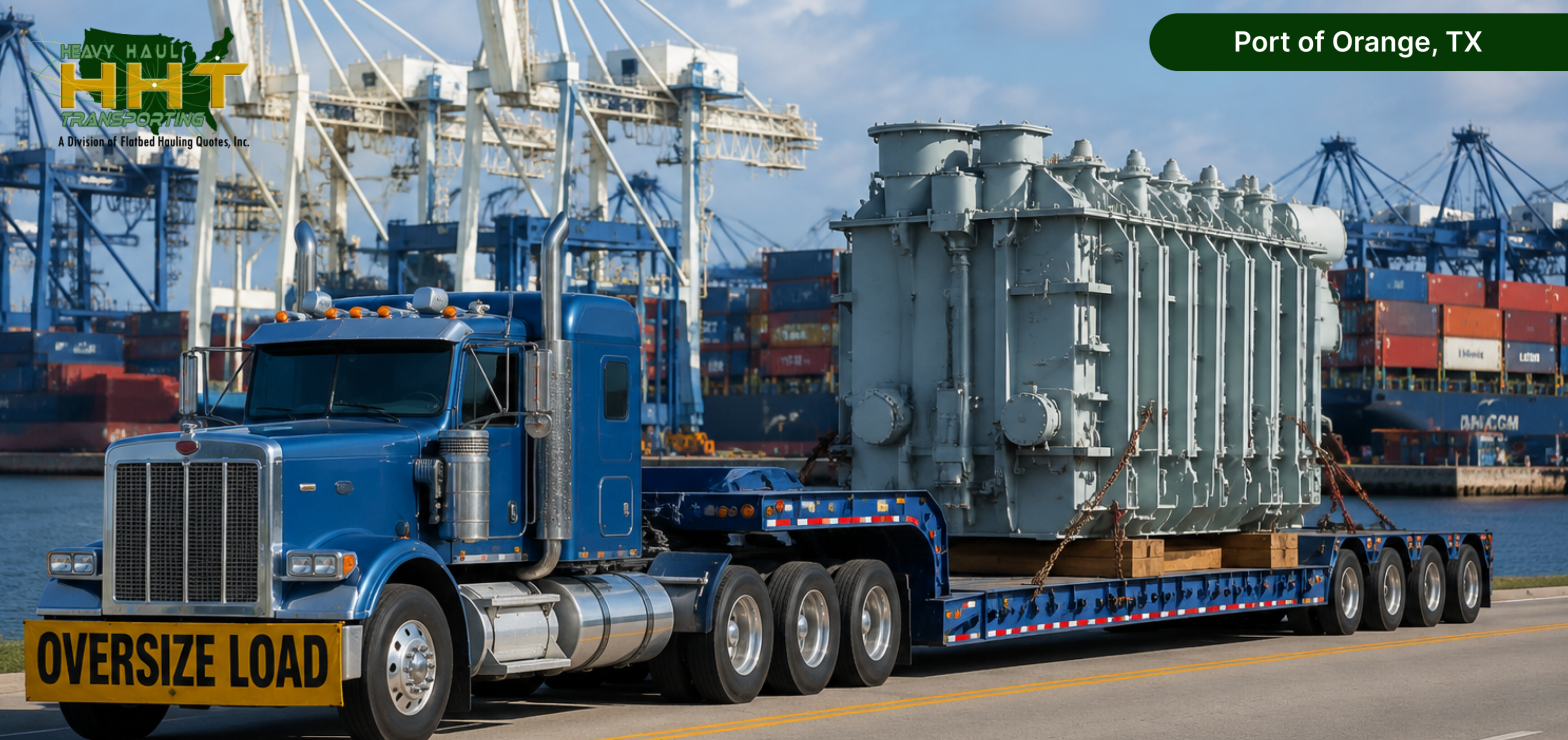
Heavy Haulers Port of Orange, TX
Moving Oversized Freight Beyond the Port
Heavy Haulers Port of Orange matter because Orange sits on a busy Gulf Coast trade lane where oversized freight needs careful road movement after it leaves the gate. At Port of Orange, TX, Heavy Haul Transporting helps move heavy cargo by road for shippers tied to manufacturing, construction, energy, and industrial projects across the United States. The Orange port area supports cargo that feeds refineries, fabrication yards, utility work, and large-scale construction, so the freight mix often includes steel, machinery, modules, and power equipment. That kind of freight does not fit standard trucking. It needs route planning, Texas oversize permits, and trailer selection that matches the load’s weight, height, and length.
Port activity in Orange also connects to broader US trade patterns along the Gulf Coast. Cargo arriving here often moves quickly into Texas and beyond, which makes over-the-road transport the critical next step once freight clears the gate. Heavy Haul Transporting does not handle loading, unloading, customs brokerage, warehousing, ocean freight, or freight forwarding. Our work starts after the cargo is released for highway movement. That is where heavy haul trucking, bridge checks, and permit compliance matter most.
Port Industries and Economic Impact
The industrial base around Port of Orange, TX creates steady demand for Heavy Haulers Port of Orange services. Manufacturing plants, metal fabricators, construction contractors, and energy suppliers all move oversized freight through the Orange terminal and nearby industrial yards. When a project calls for structural steel, electrical modules, large generators, or industrial press machines, the shipment usually needs heavy equipment transportation companies that understand Texas road rules and local access limits.
The Gulf Coast economy around Orange also supports oil refineries, offshore drilling supply chains, and alternative energy work. That mix drives demand for oversize freight shipping and heavy haul transportation because many components are too tall, too wide, or too heavy for standard trailers. In practice, that means flatbed trucking companies and heavy equipment haulers see frequent moves for power transformers, storage tanks, pipe strings, and control rooms. It also means oversized load transport has to account for jobsite timing, fuel prices, and route windows.
Heavy Haulers Port of Orange work is also tied to economic development. As new industrial projects grow in Southeast Texas, the need for flatbed transportation companies and heavy haul shipping companies grows with them. The Orange port area supports that growth by serving as a transfer point for industrial cargo that must continue by road to plants, yards, and construction sites inland.
Heavy Freight Moving Through the Port
Heavy Haulers Port of Orange shipments often include construction and mining machinery, excavators, bulldozers, articulated dump trucks, cranes, and hydraulic mining shovels. We also see motor graders, soil compactors, concrete pumpers, and asphalt pavers moving out of Port of Orange, TX for roadbuilding and site prep work. In the energy sector, heavy machinery haulers handle industrial boilers, large generators, gas and steam turbines, electrical substation modules, and oil and gas rig components.
For larger or awkward freight, trailer choice matters. Flatbeds work for many steel and industrial loads, while Step Deck trailers help with taller cargo that still stays within legal height limits. Lowboy trailers are common for heavy equipment transportation companies moving excavators, dozers, and drilling rigs. RGN (Removable Gooseneck) trailers and Double Drop trailers help with tall machinery and over-dimensional hauling, while Multi-axle trailers spread weight for heavier pieces. For extreme loads, Schnabel trailers can support specialized moves that need custom axle arrangements.
Heavy Haul Transporting uses these trailer types to match freight to the route and the load profile. Heavy haul trucking near the Orange terminal often includes oversized load transport for pre-fabricated building modules, industrial boilers, and large metal forgings. Flatbed Heavy Haulers also move structural steel beams, tanks, and manufacturing equipment that must stay secure over long highway runs. That is why equipment transport from Port of Orange, TX depends on planning as much as horsepower.
Transportation Challenges and Route Planning
Heavy Haulers Port of Orange moves require more than a truck and trailer. Texas oversize permits must match the load dimensions, axle weights, and travel schedule before the freight leaves Port of Orange, TX. Weight and height restrictions can change the route, especially when bridge clearances, utility lines, and turning space come into play. That is why route surveys matter. Our team checks the Orange port area, nearby industrial streets, and the highway path before dispatch so the load can clear safely.
Weather is another factor on the Gulf Coast. Rain, wind, and sudden storms can affect oversize load trucking, especially for tall freight like electrical cabinets, cooling towers, and modular structures. Wind can also create problems for flatbed shippers carrying light but bulky cargo. On top of that, fuel prices influence heavy haul trucking decisions, since long-distance moves from Orange may need extra planning for cost and timing.
Texas transportation regulations also shape how heavy equipment transportation companies operate. Escort requirements, travel-hour limits, and seasonal restrictions can all affect oversized load transport. Heavy Haulers Port of Orange work is smoother when the route is built around the load first, then matched to the road network second. That approach helps keep heavy haul transportation practical for industrial shippers moving out of Southeast Texas.
Heavy Haul Transporting handles road-only moves from Port of Orange, TX after freight clears the gate. Heavy Haulers Port of Orange customers use our fleet for flatbeds, step decks, lowboys, RGNs, double drops, multi-axle trailers, and Schnabel setups when the load calls for specialized support. We focus on over-the-road equipment transport across Texas and throughout the United States, not port loading, unloading, warehousing, customs, or freight forwarding. That keeps the service clear and direct for oversized freight that needs highway movement.
Heavy Haulers Port of Orange play a key role in moving industrial freight from a Gulf Coast trade hub into Texas and beyond. At Port of Orange, TX, the mix of manufacturing, energy, and construction cargo keeps demand strong for oversized load transport and heavy equipment haulers. Heavy Haul Transporting is ready for road-only moves that need permits, route checks, and the right trailer for the job. If your freight is leaving the Orange port area and needs highway transport, that is where planning starts and where opportunity keeps growing.
Planning Heavy Haul Transport From Port of Orange, TX?
Heavy Haul Transporting helps businesses coordinate the movement of oversized freight, industrial machinery, construction equipment, and project cargo throughout North America.
Primary Road Corridors Out of Port of Orange, TX
The Port of Orange, TX connects oversized freight to major transportation corridors across Texas and the United States. These highways are frequently used for moving construction equipment, refinery components, heavy machinery, wind energy equipment, and oversized industrial cargo after it leaves the port area.
I-10 is the main east-west corridor for Port of Orange, TX freight, and Heavy Haulers Port of Orange often use it for oversized machinery, steel, and energy equipment moving deeper into Texas. Heavy haul trucking on this route matters because it connects the Orange port area to industrial yards, refineries, and construction sites with fewer local turns than smaller roads.
TX-87 is important for Port of Orange, TX moves that need a shorter path between the waterfront industrial zone and nearby load points. Heavy Haulers Port of Orange rely on this route for flatbed transportation companies hauling modules, pipe, and fabrication pieces that must stay close to the Orange terminal before joining larger highways.
US-90 gives Port of Orange, TX shippers another practical corridor for heavy equipment transportation companies moving industrial freight toward Beaumont-area connections. Heavy Haulers Port of Orange use this road for oversized load transport when the shipment includes tanks, structural steel, or equipment that needs a controlled route before entering busier interstate traffic.
TX-62 supports Port of Orange, TX freight that needs access to regional industrial sites and staging areas away from the busiest interstate lanes. Heavy Haulers Port of Orange depend on this corridor for heavy machinery transportation, especially when moving excavators, generators, or modular structures that require careful turns and route planning.
Frequently Asked Questions About Port of Orange, TX Transportation
At the Port of Orange, TX, you can expect to see heavy equipment, machinery, and large construction materials being transported. These items often require specialized handling due to their size and weight, making heavy haulers essential for efficient transport.
In Texas, heavy haulers need to obtain specific permits for oversized loads. The Texas Department of Transportation provides guidelines on dimensions and weight limits, which are crucial for planning your route from the Port of Orange, TX.
For transporting heavy loads from the Port of Orange, TX, lowboy trailers are commonly used due to their ability to carry tall and heavy equipment. Additionally, specialized flatbed trailers can accommodate various oversized cargo types.
The Port of Orange, TX primarily serves the petrochemical, construction, and manufacturing industries. Heavy equipment and large components for these sectors frequently move through the port, necessitating heavy haulers for transport.
Once cargo exits the Port of Orange, TX, heavy haulers coordinate with logistics managers to ensure efficient transport. This includes route planning, scheduling, and compliance with local regulations to facilitate smooth delivery.
Yes, heavy haulers must consider bridge heights, weight limits, and road conditions when planning routes in Texas. It's essential to consult local regulations and maps to ensure safe and compliant transport from the Port of Orange, TX.
Heavy haulers operating from the Port of Orange, TX often face challenges such as navigating narrow roads and managing strict weight limits. Additionally, coordinating with local authorities for permits can add complexity to the transport process.
Heavy Haul Transporting prioritizes safety by utilizing experienced drivers and well-maintained equipment. They conduct thorough inspections and plan routes carefully to ensure that heavy loads are transported safely from the Port of Orange, TX.
NOAA Port Intelligence Related Pages
RELATED POSTS
Heavy Haulers Port of Marysville Guide for Oversized Freight by Road
Heavy Haulers Port of Victoria Guide for Oversized Freight Moving by Road
Heavy Haulers Port of Hilo Guide for Oversized Freight Moving Across Hawaii