

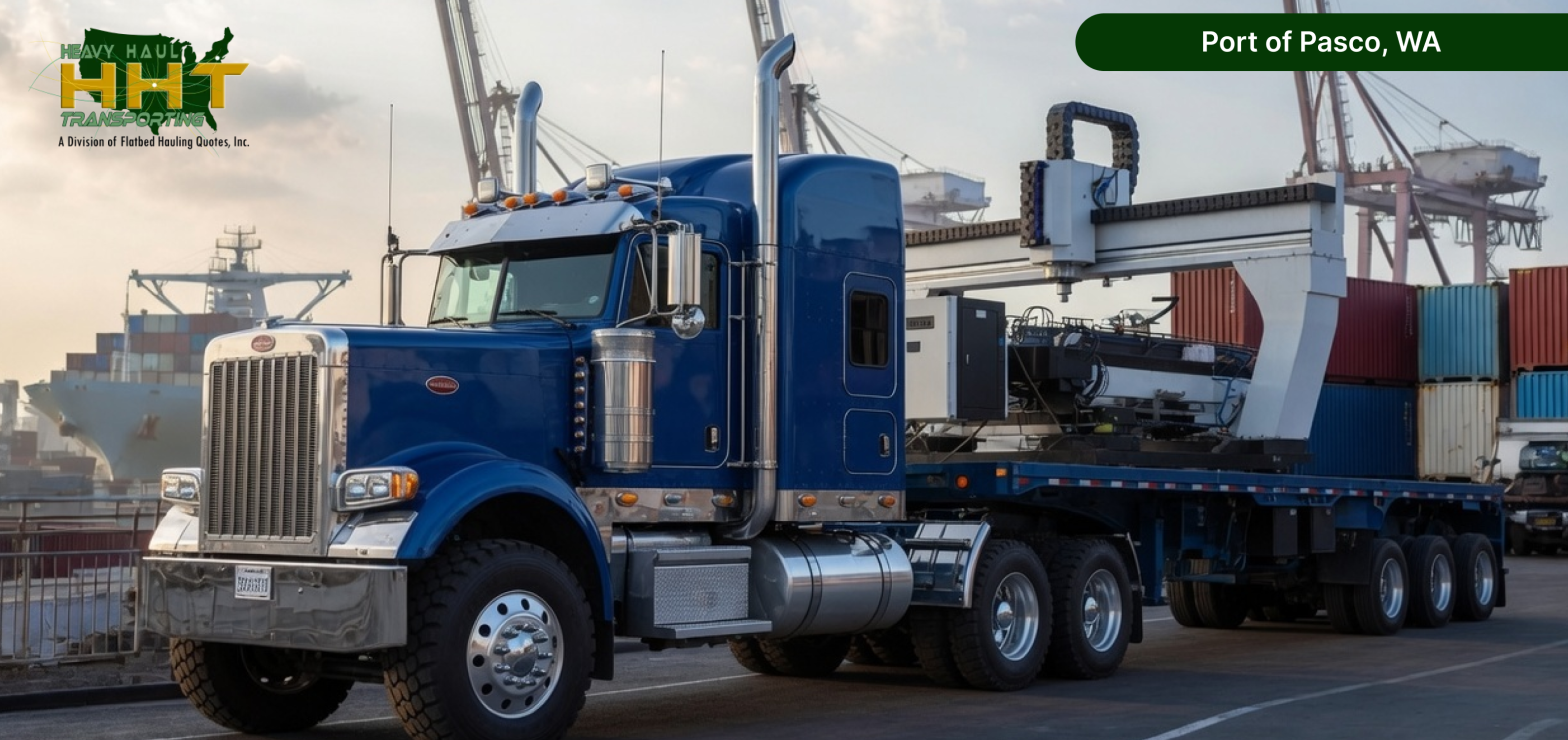
Heavy Haulers Port of Pasco, WA
Moving Oversized Freight Beyond the Port
Heavy Haulers Port of Pasco moves a lot of oversized freight once cargo leaves the gate, and that is where road planning starts to matter. At Port of Pasco, WA, Heavy Haul Transporting helps move heavy freight by road across Washington and beyond, using the right trailer, permit, and route plan for each load.
Pasco sits in a strong logistics position in the Columbia Basin, with access to manufacturing, agriculture, construction, and energy projects that need Heavy Equipment Transport and Heavy Machinery Transportation. The Pasco port area also connects to regional trade flows that support industrial growth, consumer goods transport, and project cargo moving into inland markets. For shippers handling oversized load trucking needs, the real challenge is not just weight. It is getting the load from the port gate to the next jobsite without clearance issues, permit delays, or route conflicts.
That is why road transport matters so much here. Heavy haul trucking from Port of Pasco, WA must account for Washington oversize permits, bridge clearances, height limits, and the best corridor for the load. Heavy Haul Transporting focuses only on over-the-road movement after cargo leaves the port gate. We do not handle loading, unloading, customs brokerage, warehousing, ocean freight, or freight forwarding. Our job is to move the freight safely on the highway with the right equipment and a route that fits the load.
Port Industries and Economic Impact
Port of Pasco, WA supports a mix of industries that keep oversized freight moving year-round. Manufacturing plants, construction firms, agricultural processors, and energy developers all create demand for Heavy Equipment Transport and Oversize Load Trucking. When a project calls for new process equipment, structural steel, or large utility components, the load often needs Flatbed Heavy Haulers or specialized Heavy equipment haulers to get it out of the Pasco port area and onto the road network.
The region’s economic base also drives steady demand for Heavy haul transportation tied to industrial expansion. Agricultural operations move large tractors, combine harvesters, and specialty machinery. Construction and civil contractors bring in excavators, bulldozers, motor graders, and concrete pumpers. Energy and power projects add power transformers, electrical substation modules, large generators, and other oversized freight that cannot move on standard trailers. That is where Heavy Haulers and Flatbed trucking companies become part of the supply chain.
Port of Pasco, WA also serves project cargo tied to economic development, including modular structures, control rooms, storage tanks, and industrial equipment for plants and infrastructure upgrades. These shipments often need Oversized load transport because dimensions matter as much as weight. In practice, that means route planning, permit timing, and trailer selection all have to match the freight. Heavy haul shipping companies that work this corridor need to understand local access roads, turning space, and the state transportation rules that shape every move.
For shippers and contractors, the value of Port of Pasco, WA is simple: it gives inland projects a place where large freight can enter the region and then move by road to the next phase of work. That creates ongoing demand for Heavy machinery haulers, Flatbed transportation companies, and Oversize freight shipping across Washington and the western states.
Heavy Freight Moving Through the Port
Heavy Haulers Port of Pasco often handles freight that is too tall, too wide, or too heavy for standard trucking. In the Pasco port area, common moves include Construction & Mining Machinery, excavators, articulated dump trucks, hydraulic mining shovels, rock crushers, and drilling rigs. We also see Energy & Power Infrastructure loads such as power transformers, industrial boilers, large generators, and electrical cabinets. For industrial clients, Heavy Equipment Transport may involve steel beams, trusses, tanks, press machines, or pre-fabricated building modules.
Trailer choice matters just as much as cargo type. Flatbeds work well for many general oversized loads, while Step Deck trailers help with height-sensitive freight. Lowboy trailers are common for taller machines like cranes, bulldozers, and tunnel boring machines. RGN trailers and Double Drop trailers handle heavier or taller equipment that needs a lower deck height. Multi-axle trailers spread weight for massive pieces, and Schnabel trailers may be used for extreme loads that require specialized support. Heavy haul trucking from Port of Pasco, WA depends on matching the trailer to the freight, the route, and the permit limits.
Heavy Haul Transporting also sees demand for Flatbed shippers moving industrial and manufacturing equipment, plus Oversize Equipment and Machinery Hauling Services for project cargo that cannot travel on standard lanes. Loads like I-beams, catch basins, manhole covers, large metal castings, and commercial water treatment tanks all require careful securement and route awareness. In some cases, Heavy haul truckers must plan around axle spacing, load height, and turning radius before the truck even leaves the Pasco terminal.
Because the freight mix changes by season and project cycle, Heavy machinery transportation here has to stay flexible. One week may bring agricultural equipment, and the next may bring modular structures or power station components. That is why experienced Flatbed Equipment Movers and Heavy machinery haulers stay busy around Port of Pasco, WA.
Transportation Challenges and Route Planning
Heavy Haulers Port of Pasco requires more than a truck and trailer. Washington oversize permits must match the exact dimensions and weight of the load, and that includes axle configuration, travel windows, and any escort requirements. In the Pasco port area, weight and height restrictions can change the route quickly, especially when a load is close to bridge clearance limits or needs extra room at intersections. Oversize freight shipping from Port of Pasco, WA also depends on route surveys that check shoulders, turning paths, utility lines, and overhead structures before dispatch.
Weather matters too. Wind can affect tall freight, especially on open stretches near the river and across exposed highway segments. Rain and winter conditions can change braking distance and visibility, which is why Heavy haul transportation plans often build in extra time. Fuel prices also play a role. When diesel costs rise, long-distance Heavy haul shipping companies have to watch deadhead miles and route efficiency more closely.
State transportation regulations in Washington add another layer. Permits, escort rules, and travel restrictions must line up with the load and corridor. That is especially important for oversized load transport moving out of Port of Pasco, WA toward regional jobsites. A load that fits on paper may still need a different trailer or a different route once bridge clearances and road geometry are reviewed. Heavy haul trucking works best when the route is chosen before the freight is loaded onto the trailer, not after.
For that reason, Heavy equipment transportation companies serving this market need hands-on knowledge of local roads, permit timing, and the practical limits of each move. That is how oversized freight gets from the port gate to the jobsite without unnecessary delays.
Heavy Haul Transporting moves road-only freight from Port of Pasco, WA using Flatbeds, Step Deck trailers, Lowboy trailers, RGN trailers, Double Drop trailers, Multi-axle trailers, and Schnabel trailers. Heavy Haulers Port of Pasco service stays focused on over-the-road transport after the cargo clears the gate, with no loading, unloading, warehousing, customs brokerage, or freight forwarding. That keeps the work centered on safe highway movement for oversized and heavy freight.
Port of Pasco, WA continues to support oversized freight tied to construction, agriculture, manufacturing, and energy projects across the inland West. That steady mix keeps demand strong for Heavy Haulers Port of Pasco and for the route planning that comes with every permit, clearance check, and trailer match. Heavy Haul Transporting is ready to move the next load by road when the cargo leaves the gate and the highway work begins. If your shipment needs careful oversize planning from Port of Pasco, WA, the right road strategy makes all the difference.
Planning Heavy Haul Transport From Port of Pasco, WA?
Heavy Haul Transporting helps businesses coordinate the movement of oversized freight, industrial machinery, construction equipment, and project cargo throughout North America.
Primary Road Corridors Out of Port of Pasco, WA
The Port of Pasco, WA connects oversized freight to major transportation corridors across Texas and the United States. These highways are frequently used for moving construction equipment, refinery components, heavy machinery, wind energy equipment, and oversized industrial cargo after it leaves the port area.
I-182 is one of the most important connectors for Port of Pasco, WA because it links the Pasco port area to regional freight lanes and nearby industrial sites. Heavy Haulers Port of Pasco often uses this corridor for oversized load transport carrying excavators, modular structures, electrical cabinets, and industrial equipment that needs a direct path into the Tri-Cities market. For Heavy haul trucking, I-182 matters because it helps shorten local moves and gives dispatchers a practical route for loads that must stay on a tight permit schedule.
US-395 carries a lot of heavy freight traffic around Port of Pasco, WA, especially when loads need to move north or south through eastern Washington. Heavy Haulers Port of Pasco uses this route for Heavy Equipment Transport such as bulldozers, cranes, power transformers, and agricultural machinery. The corridor matters because it connects project cargo to broader state and interstate freight patterns, which is useful when a load needs a clean path after leaving the Pasco terminal.
SR-397 is a key local route for Port of Pasco, WA because it supports industrial access and helps move freight between the port area and nearby commercial zones. Heavy Haulers Port of Pasco may use this road for Flatbed Heavy Haulers carrying steel beams, tanks, catch basins, and other oversized freight that needs short-haul precision. For heavy haul trucking, SR-397 matters because local turns, lane widths, and permit timing can shape the whole move.
Around Port of Pasco, WA, freight often shifts between I-182, US-395, and SR-397 depending on the load size and destination. Heavy Haulers Port of Pasco uses these connections for Oversize Load Trucking tied to construction equipment, industrial machinery, and power infrastructure components. That network matters because route choice affects bridge clearances, wind exposure, and the time it takes to get oversized freight out of the port area and onto the next jobsite.
Frequently Asked Questions About Port of Pasco, WA Transportation
The Port of Pasco, WA, frequently handles oversized freight such as heavy machinery, agricultural equipment, and large industrial components. These items often require specialized transport solutions, making heavy haulers essential for efficient movement.
For heavy hauling in Washington, you typically need an oversize/overweight permit. The requirements can vary based on the load dimensions and route. It’s advisable to check with local authorities or consult with Heavy Haul Transporting for specific guidance.
Common trailer types for heavy hauling from the Port of Pasco, WA, include flatbeds, lowboys, and step decks. The choice depends on the cargo dimensions and weight, so consult with Heavy Haul Transporting for the best fit.
The Port of Pasco, WA, serves industries such as agriculture, construction, and manufacturing. These sectors often require heavy haulers for transporting large equipment and materials essential for their operations.
After cargo leaves the Port of Pasco, WA, heavy haulers coordinate road transport to its final destination. This involves route planning, ensuring compliance with local regulations, and optimizing load distribution for safety.
Yes, Washington has specific route restrictions for heavy hauling, especially on state highways and local roads. It's crucial to plan your route carefully and consult with Heavy Haul Transporting to avoid any obstacles.
To schedule heavy haul transport from the Port of Pasco, WA, contact Heavy Haul Transporting with your cargo details. They’ll provide a tailored plan, including equipment and route options to ensure a smooth transport.
Yes, Heavy Haul Transporting offers tracking options for your heavy haul shipment from the Port of Pasco, WA. You can stay updated on your cargo's location and estimated arrival time throughout the journey.
NOAA Port Intelligence Related Pages
RELATED POSTS
Heavy Haulers Port of Port Lavaca-Point Comfort for Texas Oversize Freight
Heavy Haulers Port of Mayaguez Moves Oversized Freight Across Puerto Rico
Heavy Haulers Port of Sault Ste. Marie Keep Oversized Freight Moving Across Michigan