

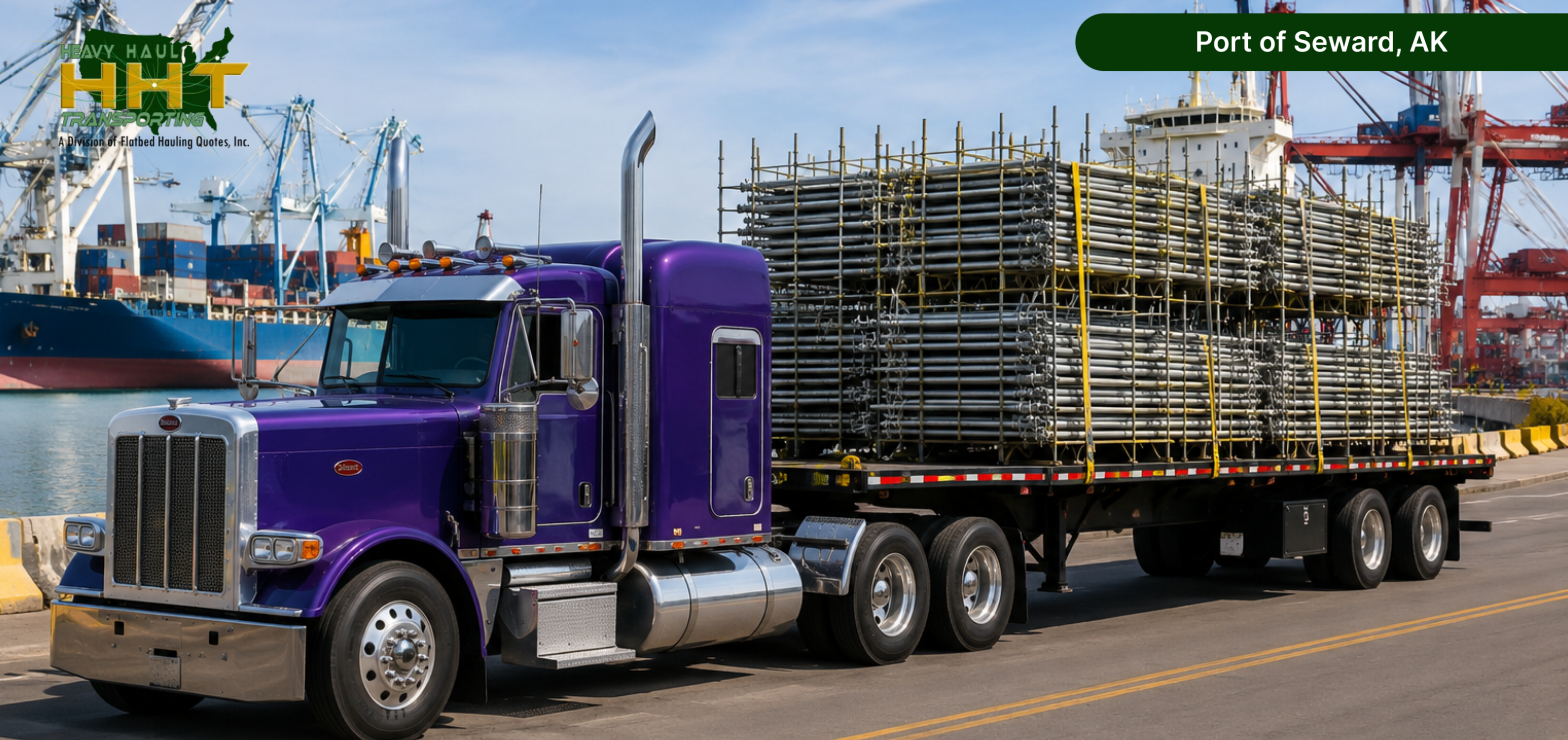
Heavy Haulers Port of Seward, AK
Moving Oversized Freight Beyond the Port
Heavy Haulers Port of Seward projects often start with a simple question: how do you move oversized freight once it clears the gate? At the Port of Seward, AK, Heavy Haul Transporting handles the road leg for heavy cargo that needs to reach jobsites, yards, and industrial sites across Alaska and beyond. The Seward terminal matters because it supports construction, energy, manufacturing, and consumer goods transport that feed local growth and broader U.S. trade activity.
Port of Seward, AK serves as a key point for freight that cannot move like standard palletized cargo. Large machinery, modular structures, and industrial components need careful route planning, the right trailer, and a driver who understands Alaska oversize permits. That is where road transport becomes essential after cargo leaves the port gate. Heavy Haul Transporting does not handle loading, unloading, customs brokerage, warehousing, ocean freight, or freight forwarding. We focus only on over-the-road transportation for oversized and heavy freight.
In a region shaped by weather, distance, and limited corridor options, the right trucking plan protects schedules and reduces avoidable delays. Heavy haul trucking from Seward also supports projects tied to mining equipment, power infrastructure, defense suppliers, and energy development. When freight must move from the Seward port area to another Alaska destination or connect with long-distance routes, the details matter from the first mile.
Port Industries and Economic Impact
Heavy Haulers Port of Seward work reflects the mix of industries that depend on oversized freight in Southcentral Alaska. Port of Seward, AK supports construction activity, economic development, and international trade flows that bring in machinery and project cargo for inland delivery. As projects expand, demand increases for Heavy Equipment Transport, Heavy Machinery Transportation, and Oversize Load Trucking that can handle large, awkward, and weight-sensitive freight.
Construction firms moving excavators, bulldozers, cranes, and concrete pumpers often need Flatbed Heavy Haulers and Heavy equipment haulers who can manage route limits and timing. Mining operations also create steady demand for Heavy haul trucking, especially when they bring in hydraulic mining shovels, mine haul trucks, rock crushers, and screening plants. Those loads are rarely simple, and they usually require Flatbed transportation companies that understand how to match freight to the right trailer.
Port of Seward, AK also supports energy and industrial supply chains. Power transformers, industrial boilers, large generators, electrical substation modules, and gas and steam turbines often move through the Seward port area before continuing by road. Alternative energy projects add more demand too, especially for solar equipment, control rooms, and modular structures. Heavy Haul Transporting sees similar needs from defense contracting, aerospace, and military suppliers when oversized components must move inland.
Because Alaska’s economy depends on project cargo and seasonal construction windows, Heavy haul transportation from Seward helps keep work moving. Flatbed shippers and heavy haul shipping companies often rely on carriers that can adapt to changing freight mixes, fuel prices, and permit timing. That flexibility matters when a project schedule depends on one oversized delivery arriving on time.
Heavy Freight Moving Through the Port
Heavy Haulers Port of Seward shipments often include freight that needs more than a standard trailer. At Port of Seward, AK, we regularly see Construction Equipment Shipping needs for excavators, articulated dump trucks, motor graders, soil compactors, and asphalt pavers. We also handle industrial freight such as storage silos, industrial press machines, large metal forgings, and pre-fabricated building modules that require careful loading geometry and securement.
The trailer choice depends on weight, height, and axle spread. Flatbeds work well for structural steel beams, I-beams, and lighter industrial equipment. Step Deck trailers help with taller freight that needs extra vertical clearance. Lowboy trailers are common for bulldozers, cranes, and drilling rigs because they keep the load lower to the ground. RGN trailers and Double Drop trailers support taller or heavier machinery, while Multi-axle trailers help distribute extreme weight. For the largest or most specialized moves, Schnabel trailers can be part of the plan.
Heavy Haul Transporting also sees demand for Oversized load transport tied to power stations, oil and gas rig components, pipe strings, and electrical cabinets. In some cases, freight includes transportation, aerospace, and military items like spacecraft and rocket components, armored vehicles, or aircraft sections. That mix is why Flatbed trucking companies and Heavy equipment transportation companies must understand both cargo dimensions and road limits.
From the Seward port area, the freight profile can change fast with project cycles. One week may bring Heavy machinery haulers with mining gear, and the next may involve Oversize freight shipping for modular buildings or utility equipment. The common thread is that each load needs a carrier that knows how to move it by road after it leaves the port gate.
Transportation Challenges and Route Planning
Heavy Haulers Port of Seward moves are shaped by Alaska’s operating rules as much as by freight size. Port of Seward, AK sits in a state where oversize permits, weight limits, and height restrictions can change the entire plan for a move. Before a truck rolls, route surveys help confirm bridge clearances, turning space, shoulder conditions, and any local restrictions that affect safe passage.
Weather matters here more than in many lower-48 corridors. Snow, ice, wind, and reduced visibility can affect scheduling and securement checks. Heavy haul truckers also watch fuel prices closely because long-distance Alaska moves can shift cost models quickly, especially when a route requires extra staging or slower travel. That is why Oversize Equipment and Machinery Hauling Services in Alaska often depend on careful timing rather than speed.
State transportation regulations in Alaska also influence how Heavy haul shipping companies plan each move. A load that fits on paper may still need a different trailer or axle setup once bridge limits and road geometry are reviewed. Flatbed Equipment Movers, Flatbed shippers, and Oversized load transport carriers all have to account for seasonal road conditions and permit windows.
Heavy Haul Transporting approaches Port of Seward, AK freight with that reality in mind. We do not provide warehousing or port handling, and we do not manage customs or marine logistics. Our role begins after cargo leaves the gate, when the route, trailer, and permit plan must all line up for safe over-the-road delivery.
Heavy Haul Transporting moves freight from Port of Seward, AK with a road-only focus that fits oversized project cargo. Heavy Haulers Port of Seward shipments can call for Flatbeds, Step Deck trailers, Lowboy trailers, RGN trailers, Double Drop trailers, Multi-axle trailers, and Schnabel trailers depending on the load. Our fleet serves only over-the-road transport, so every move starts after cargo clears the port gate and is ready for highway delivery.
Heavy Haulers Port of Seward projects will keep growing as Alaska adds more construction, energy, and industrial work. Port of Seward, AK remains an important link for oversized freight that needs careful road transport after it leaves the terminal. Heavy Haul Transporting is ready for the next move when your freight calls for planning, permits, and the right trailer choice. If your cargo needs to move by road from Seward to another Alaska destination, the route starts with a carrier that understands the load and the corridor.
Planning Heavy Haul Transport From Port of Seward, AK?
Heavy Haul Transporting helps businesses coordinate the movement of oversized freight, industrial machinery, construction equipment, and project cargo throughout North America.
Primary Road Corridors Out of Port of Seward, AK
The Port of Seward, AK connects oversized freight to major transportation corridors across Texas and the United States. These highways are frequently used for moving construction equipment, refinery components, heavy machinery, wind energy equipment, and oversized industrial cargo after it leaves the port area.
AK-9 is the main corridor tied to Port of Seward, AK, and it matters every time Heavy Haulers Port of Seward freight needs to leave the waterfront and move inland. Heavy haul trucking on AK-9 often carries excavators, generators, modular structures, and industrial equipment because the route connects Seward with the broader road network. For oversized load transport, this corridor is central to planning axle weights, escort needs, and timing around weather.
The Seward Highway is a major route for Port of Seward, AK freight headed toward Anchorage, and Heavy Haulers Port of Seward moves often depend on it for long-distance delivery. Heavy machinery transportation on this corridor can include bulldozers, cranes, transformers, and project modules that need careful bridge clearance checks and permit compliance. It matters because many Alaska jobsites and industrial yards sit along or beyond the Anchorage connection.
The Sterling Highway connection becomes important when Port of Seward, AK cargo needs to reach Kenai Peninsula projects, and Heavy Haulers Port of Seward shipments often use it for regional distribution. Equipment Transport on this route may include construction machinery, fuel-related components, and utility equipment that serve oilfield support, manufacturing, and development work. The corridor matters because it links the Seward port area to multiple project zones with different weight and height limits.
Port access roads around Port of Seward, AK are where Heavy Haulers Port of Seward loads begin their first miles after leaving the gate. Flatbed Heavy Haulers and heavy equipment haulers use these streets for short moves involving steel, containers, machinery, and oversized project pieces before they reach AK-9 or other outbound routes. This local movement matters because tight turns, staging space, and quick route checks can shape the entire heavy haul plan.
Frequently Asked Questions About Port of Seward, AK Transportation
At the Port of Seward, AK, you'll find heavy haulers transporting oversized freight like construction equipment, large machinery, and industrial components. This port is well-equipped to handle the unique demands of heavy loads, making it a key point for various industries.
Heavy haulers operating in Alaska, including routes from the Port of Seward, AK, typically need special permits for oversized loads. It's essential to check with local authorities to ensure compliance with state regulations and to plan your route accordingly.
For heavy hauling from the Port of Seward, AK, flatbed trailers and lowboy trailers are commonly used. These types provide the stability and capacity needed for oversized cargo, ensuring safe transport across various terrains.
The Port of Seward, AK, serves industries such as construction, mining, and energy. These sectors often require heavy haulers for transporting large equipment and materials essential for their operations.
Once cargo exits the Port of Seward, AK, heavy haulers coordinate road transport to its final destination. This involves route planning, scheduling, and ensuring compliance with local regulations to facilitate a smooth transition.
Yes, heavy haulers in Alaska must consider factors like road conditions, weight limits, and seasonal restrictions. Planning routes from the Port of Seward, AK, requires careful attention to these details to ensure safe transport.
Transporting oversized loads from the Port of Seward, AK, often requires specialized equipment such as escort vehicles, heavy-duty chains, and tarps. These tools help ensure safety and compliance during transport.
Heavy Haul Transporting specializes in managing oversized shipments from the Port of Seward, AK. We handle logistics, route planning, and equipment needs, making it easier for shippers to focus on their core business.
NOAA Port Intelligence Related Pages
RELATED POSTS
Heavy Haulers Port of Redwood City Guide for Oversized Freight Moves
Heavy Haulers Port of Panama City Guide for Oversized Freight Moves
Heavy Haulers Port of Siuslaw (Florence) Guide for Oversized Freight in Oregon