

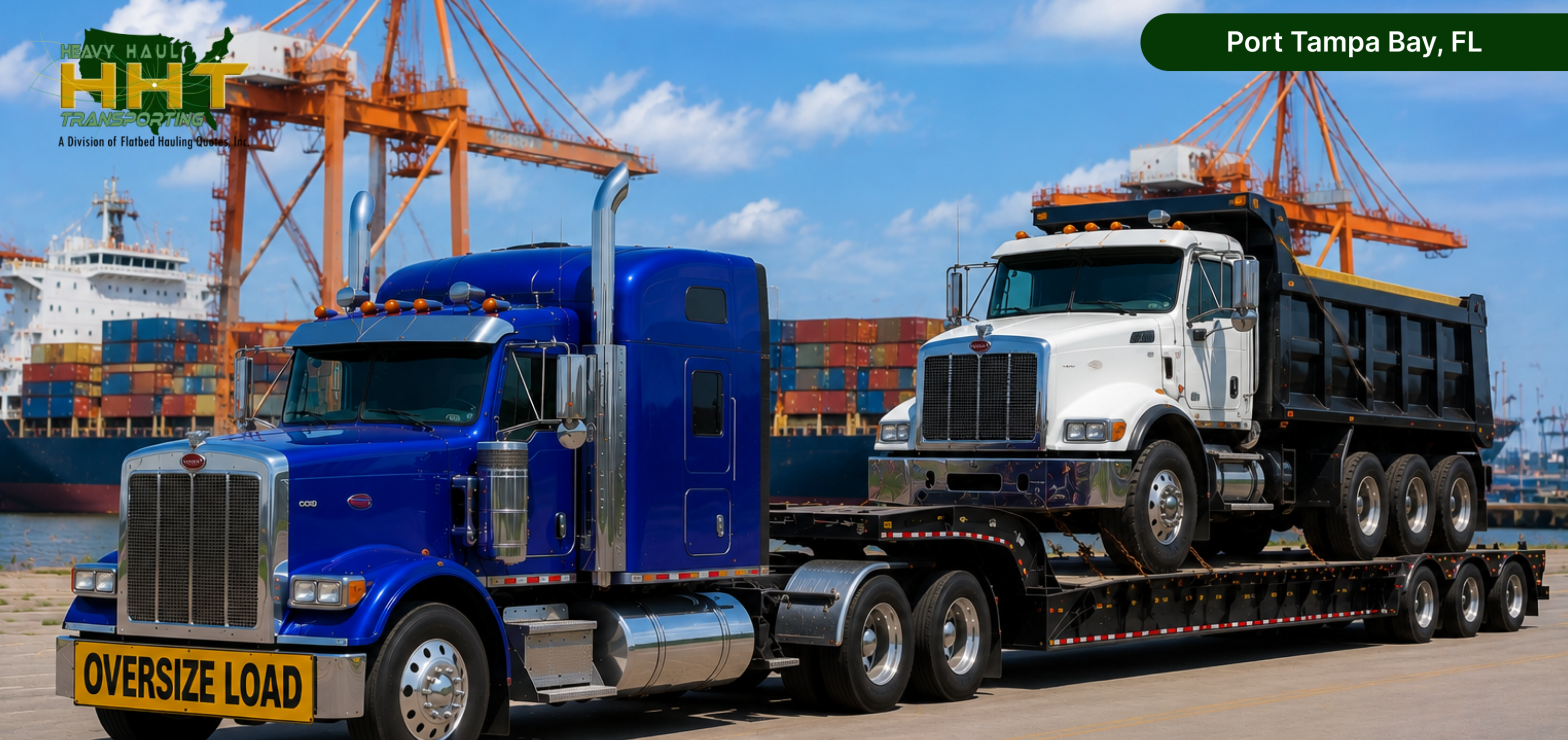
Heavy Haulers Port Tampa Bay, FL
Moving Oversized Freight Beyond the Port
Heavy Haulers Port Tampa Bay support the oversized freight that starts moving once cargo clears Port Tampa Bay, FL. Heavy Haul Transporting works with shippers that need road-only transport after port pickup, especially when the load is too tall, too wide, or too heavy for standard equipment.
Port Tampa Bay, FL sits on the Gulf Coast and plays a major role in Florida commerce, international trade, and regional distribution. The Tampa port area handles cargo tied to manufacturing, construction, energy, defense contracting, and consumer goods transport, which creates steady demand for Heavy Equipment Transport and Heavy Machinery Transportation. Once freight leaves the gate, the job shifts to route planning, permit compliance, and the right trailer match for the load.
That is where Heavy Haul Transporting fits in. Our team moves oversized freight by road across the United States, but we do not handle port cargo loading or unloading, customs brokerage, warehousing, ocean freight, or freight forwarding. We focus on over-the-road transport only, which matters when a project depends on getting heavy equipment from Port Tampa Bay, FL to a jobsite, plant, yard, or terminal without delays. In a busy port market like Tampa, that kind of trucking support keeps industrial schedules moving.
Port Industries and Economic Impact
Heavy Haulers Port Tampa Bay are often called in because the cargo mix around Port Tampa Bay, FL reflects the region’s industrial base. Manufacturing plants, construction firms, energy suppliers, and military contractors all create demand for oversized freight that cannot move on a standard dry van. The Tampa port area also supports economic development tied to warehouses, distribution centers, and project cargo that feeds job sites across Florida and the Southeast.
Heavy haul trucking becomes important when a shipment includes power transformers, electrical substation modules, industrial boilers, large generators, structural steel beams, or pre-fabricated building modules. Those loads often need Flatbed Heavy Haulers, Flatbed transportation companies, or Heavy equipment haulers that understand how to move weight safely on public roads. Port Tampa Bay, FL also serves industries connected to oil refineries, alternative energy, solar, offshore drilling, aerospace, and military suppliers, all of which can generate oversized load transport needs.
As Florida grows, so does the need for Heavy haul transportation and Oversize freight shipping. Construction Equipment Shipping is especially active because contractors bring in excavators, bulldozers, cranes, and other machinery that must move quickly from the Tampa port area to inland projects. Heavy Haul Transporting sees that demand every day in markets where time, routing, and permit timing all affect the final delivery window. That is why Heavy Haulers Port Tampa Bay remain part of the logistics picture for regional growth.
Heavy Freight Moving Through the Port
Heavy Haulers Port Tampa Bay handle a wide range of freight that needs the right trailer and the right route. At Port Tampa Bay, FL, common moves include Construction & Mining Machinery, excavators, articulated dump trucks, motor graders, soil compactors, rock crushers, and boring machines. We also see energy and power freight such as large generators, industrial boilers, gas and steam turbines, and electrical cabinets. In other cases, the Tampa port area sends out industrial and manufacturing equipment, storage silos and tanks, and large metal forgings and castings.
Different loads call for different trailer setups. Flatbeds work for many standard oversized pieces, while Step Deck trailers help with taller freight. Lowboy trailers are a common choice for heavy machinery transportation, especially when height is a concern. RGN (Removable Gooseneck) trailers help with self-loading equipment, and Double Drop trailers can handle extra-tall cargo. Multi-axle trailers spread weight for heavier moves, and Schnabel trailers are used for extreme loads that require specialized support.
Heavy Haul Transporting matches the trailer to the freight, not the other way around. That matters for Oversized load transport, Flatbed trucking companies, Flatbed shippers, and Heavy machinery haulers working near Port Tampa Bay, FL. Loads like tunnel boring machines, complete bridge sections, power station modules, and aerospace components need careful planning before they ever hit the road. When the cargo is large enough to affect lane choice, turning radius, or bridge clearance, the equipment choice becomes part of the move itself.
Transportation Challenges and Route Planning
Heavy Haulers Port Tampa Bay moves depend on more than just a truck and trailer. At Port Tampa Bay, FL, Florida oversize permits shape the schedule, and the load dimensions determine whether the move needs escort vehicles, restricted travel times, or special routing. Weight and height restrictions matter throughout the Tampa port area because bridge clearances, interchange geometry, and local road limits can change the path a load can legally take.
Route surveys are a big part of the process for Oversize Equipment and Machinery Hauling Services. A survey helps identify low bridges, tight turns, utility conflicts, and construction zones before the truck leaves the gate. Weather also plays a role. Strong Gulf Coast winds, summer storms, and wet pavement can affect tall freight and slow down heavy haul trucking. Fuel prices matter too, because long-distance Oversize load trucking and Heavy haul shipping companies often adjust planning when diesel costs rise.
Florida transportation regulations add another layer. Oversize freight shipping from Port Tampa Bay, FL must follow state rules on permits, axle weights, and travel windows, especially when the route crosses busy corridors or urban interchanges. Heavy equipment transportation companies that work here know that a clean route plan can save time and reduce risk. For Heavy Haulers Port Tampa Bay, the real work starts with matching the load to the legal route and the right trailer combination.
Heavy Haul Transporting provides road-only service from Port Tampa Bay, FL to destinations across the United States. For Heavy Haulers Port Tampa Bay, our fleet includes Flatbeds, Step Deck trailers, Lowboy trailers, RGN trailers, Double Drop trailers, and Multi-axle trailers for oversized freight that has already left the port gate. We do not handle loading, unloading, customs, warehousing, or ocean freight; we move heavy cargo by road and keep the trip focused on permits, routing, and delivery.
Heavy Haulers Port Tampa Bay continue to matter because Port Tampa Bay, FL supports freight that feeds Florida construction, manufacturing, energy, and industrial growth. The mix of oversized machinery, structural steel, and project cargo keeps demand strong for Heavy haul trucking and Oversized load transport. If your shipment needs a road-only move after it clears the gate, Heavy Haul Transporting can help plan the trailer, route, and permit path for the trip ahead.
Planning Heavy Haul Transport From Port Tampa Bay, FL?
Heavy Haul Transporting helps businesses coordinate the movement of oversized freight, industrial machinery, construction equipment, and project cargo throughout North America.
Primary Road Corridors Out of Port Tampa Bay, FL
The Port Tampa Bay, FL connects oversized freight to major transportation corridors across Texas and the United States. These highways are frequently used for moving construction equipment, refinery components, heavy machinery, wind energy equipment, and oversized industrial cargo after it leaves the port area.
I-275 is one of the most important corridors for Port Tampa Bay, FL because it connects the Tampa port area to downtown Tampa, the airport side of the metro, and the regional interstate network. Heavy Haulers Port Tampa Bay use this route for machinery, steel, generators, and modular freight that needs quick access to inland distribution points. Heavy haul trucking on I-275 often depends on bridge clearances, lane timing, and permit-approved routing.
I-75 carries a large share of oversized freight moving north and south from Port Tampa Bay, FL. Heavy Haulers Port Tampa Bay rely on this corridor for construction equipment, industrial machinery, and power-sector loads headed toward Central Florida, Georgia, and beyond. The route matters because it supports long-distance Heavy Equipment Transport and gives heavy haul truckers a direct path to major industrial markets.
US-41 is a practical surface route near Port Tampa Bay, FL when a load needs to move through the Tampa port area with careful attention to turns, signals, and local restrictions. Heavy Haulers Port Tampa Bay use US-41 for oversized freight that may not fit every interstate movement, including structural steel, equipment transport, and heavy machinery transportation. It matters because local access roads often determine whether a move can leave the port gate on schedule.
I-4 links Port Tampa Bay, FL to the Orlando market and the broader central Florida freight corridor. Heavy Haulers Port Tampa Bay use this route for aerospace parts, data center equipment, manufacturing machinery, and construction equipment shipping that needs to reach inland jobsites. For oversized load transport, I-4 matters because it connects port freight to one of Florida’s busiest commercial and industrial zones.
Frequently Asked Questions About Port Tampa Bay, FL Transportation
Port Tampa Bay, FL, handles a variety of oversized freight, including heavy machinery, industrial equipment, and large construction components. These items often require specialized transport solutions due to their size and weight.
In Florida, heavy haulers must obtain a special permit for oversized loads. This includes route planning that considers bridge heights and road restrictions. It's essential to check local regulations before planning your transport from Port Tampa Bay, FL.
For transporting heavy equipment from Port Tampa Bay, FL, lowboy trailers are commonly used. They provide a lower center of gravity, making them ideal for oversized loads. Additionally, flatbed trailers can be suitable for certain types of cargo.
Port Tampa Bay, FL, serves industries such as construction, manufacturing, and energy. These sectors frequently ship heavy machinery and components, making the port a vital hub for heavy haulers.
After cargo leaves the gate at Port Tampa Bay, FL, heavy haulers coordinate with logistics teams to ensure timely delivery. They navigate designated routes, often using specialized equipment to handle oversized loads safely.
Yes, Florida has designated routes for heavy haulers that accommodate oversized loads. It's crucial to plan your route carefully to avoid low bridges and weight limits, especially when transporting from Port Tampa Bay, FL.
Heavy Haul Transporting specializes in managing oversized loads from Port Tampa Bay, FL. We handle route planning, equipment selection, and ensure compliance with local regulations, making your logistics smoother.
Heavy haulers at Port Tampa Bay, FL, often face challenges such as navigating traffic, adhering to weight restrictions, and securing the right permits. Proper planning and coordination with logistics providers can mitigate these issues.
NOAA Port Intelligence Related Pages
RELATED POSTS
Industries Driving Heavy Haulers Port of Marcus Hook and Regional Growth
Heavy Haulers Port of Sunnyside Keep Oversized Freight Moving Across Washington
Heavy Haulers Port of Charleston Moves Oversize Freight Across South Carolina Roads