

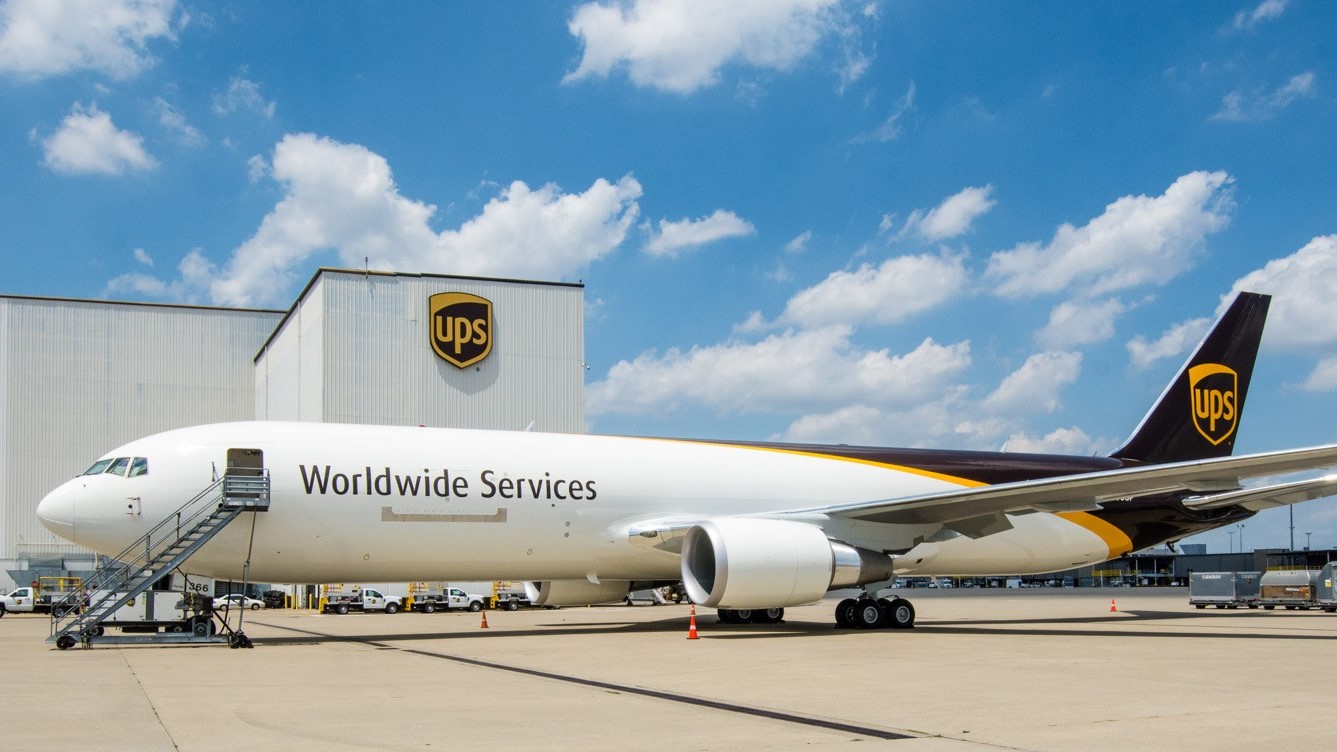
UPS continues to make major airport investments in Asia to support growing cross-border trade in one of the company’s biggest markets even as it reduces overall capital expenditures.
The added capacity, along with technology upgrades, are intended to ensure fast transit times for shippers even as volumes increase, according to the company.
The integrated parcel and freight logistics powerhouse in March began construction on its new hub at Hong Kong International Airport, recently opened a larger facility at Incheon airport in South Korea and plans to move into a new air hub at Clark International Airport in the Philippines later this year, according to a press release.
The new express cargo hub in Hong Kong will be quadruple the size of UPS’s current facility, with the ability to handle nearly 1.1 million tons of cargo annually. It is scheduled to be completed in 2028. The project will allow the carrier to collapse two existing operations into one highly automated airport operation, creating significant operational efficiencies. It also will have better access to freighter aircraft and improve connectivity in the South China and Asia-Pacific regions, according to UPS. The expansion is taking place on a large parcel UPS is leasing from the airport authority.
Hong Kong is the largest cargo airport in the world and an area of continued growth for UPS, which also operates a large terminal at nearby Shenzhen airport in China. The automated facility will be able to sort 15,000 packages per hour, about five times more than the current building, the company has previously said.
Meanwhile, a major expansion of the UPS air cargo terminal at Incheon airport will allow imports from the Asia-Pacific region and Europe to reach businesses in Seoul one day faster, UPS said in a news release earlier this month.
The 68,500-square foot facility, which is leased from the airport, is four times the size of the previous hub and includes an advanced automated sorting that increases hourly parcel processing capacity by 4.5 times. The new facility also has temperature controlled storage ranging from -4 degrees to -13 degrees Fahrenheit. UPS said regional import shipments can now be cleared and delivered on the same day they land, while imports from Europe can be delivered in as little as two business days.
“That speed gives our customers a real edge, especially in fast-moving industries like high-tech and healthcare. It also helps them strengthen their supply chains with speed, agility and connectivity to capture more opportunities in global trade,” said Bobby Seo, managing director, UPS Korea, in a news release.
South Korea’s import flows are driven by industries such as electronics, machinery and transportation. The nation also imported nearly $9.7 billion worth of pharmaceutical products last year, much of it from Europe. Seven of the country’s top 12 import partners are from the Asia-Pacific, according to United Nations data, while trade with Europe continues to grow.
UPS operates 56 flights in and out of Incheon airport each week, allowing businesses to access the company’s global logistics network.
UPS also said it expects to complete the expansion of its air hub in the Philippines late this year. No cost figures for the three projects were disclosed.
Last fall, UPS repositioned more air assets on key intra-Asia routes after trans-Pacific demand waned.
UPS investments in the Asia-Pacific aren’t limited to airports. In March, the company opened its largest regional logistics center in Taiwan.
The investment focus underscores the Asia-Pacific’s importance in global trade flows at a time when UPS is scaling back overall investments as part of a major network rightsizing aimed at boosting profitability. Management had budgeted $3 billion in capital expenditures this year, down from $3.9 billion in 2025 and $5.2 billion in 2024.
Competitor FedEx is similarly investing in airport infrastructure around the world, including $250 million for a new hub in Mumbai, India. That announcement came on the heels of opening a larger terminal at Istanbul airport in Turkey and news that the company plans to build a major regional hub in Riyadh, Saudi Arabia.
DHL Express also continues to invest in airport facilities, including a new facility in Lyons, France, that opened last.
Click here for more FreightWaves/American Shipper stories by Eric Kulisch.
Write to Eric Kulisch at [email protected].
RELATED STORIES:
New UPS distribution center in Taiwan doubles capacity, productivity
UPS boosts intra-Asia air capacity as US volume wanes
FedEx invests $250M for dedicated parcel hub at new Mumbai airport
DHL Express prepares to open $140M cargo facility at Lyons airport
The post UPS projects to boost capacity at 3 Asia air hubs appeared first on FreightWaves.