

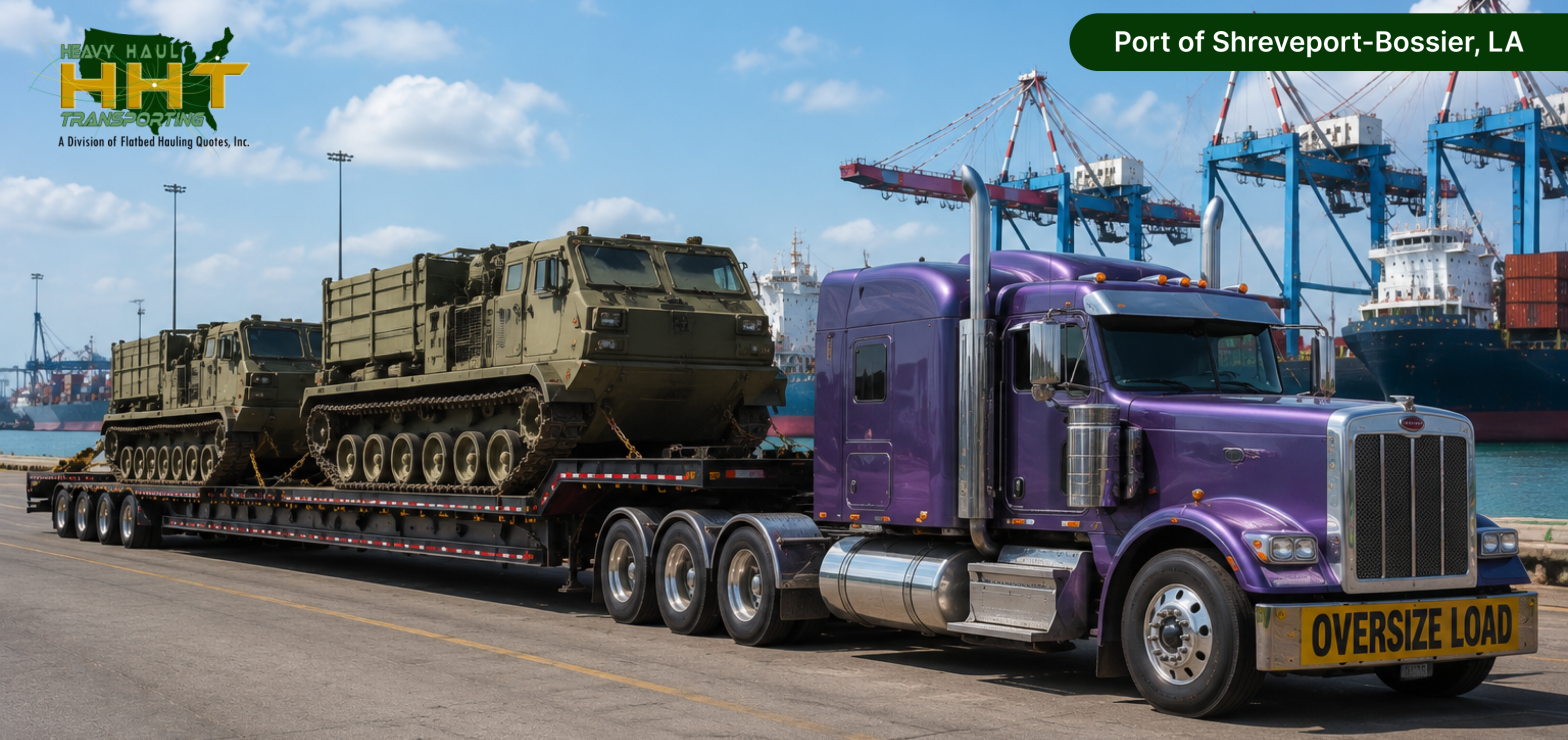
Heavy Haulers Port of Shreveport-Bossier, LA
Moving Oversized Freight Beyond the Port
Heavy Haulers Port of Shreveport-Bossier moves oversized freight through one of Louisiana’s most practical inland gateways. At the Port of Shreveport-Bossier, LA, cargo tied to manufacturing, construction, energy, and industrial projects often needs road transport once it leaves the gate, and that is where Heavy Haul Transporting comes in. We focus only on over-the-road movement, so our work starts after the load is ready to roll and continues across Louisiana and the rest of the United States.
Shreveport sits in a strong freight position for the Gulf Coast region because it connects river commerce, regional industry, and major highway access in one place. That matters for heavy equipment transportation companies, flatbed trucking companies, and heavy haul shipping companies that move large machinery, steel, modules, and power gear. The Shreveport terminal also supports freight tied to oil refineries, alternative energy, defense contracting, and consumer goods transport, all of which can generate oversized load trucking needs.
For shippers, the key question is often how to move a load safely after it clears the port area. That is where route planning, permits, and the right trailer matter. Heavy haul trucking from this region may involve lowboys, step decks, RGNs, or multi-axle trailers depending on height, weight, and axle spread. In a market like Shreveport, timing, road access, and state rules all shape the move.
Port Industries and Economic Impact
The Port of Shreveport-Bossier, LA supports a broad mix of freight activity that reaches far beyond one industry. Manufacturing plants, construction firms, and energy operators all depend on heavy equipment transport when they bring in large components or move finished assets out of the region. That creates steady demand for Heavy Haulers Port of Shreveport-Bossier services, especially when jobs involve oversized load transport that cannot move on standard trailers.
Shreveport’s industrial base also connects to economic development across northwest Louisiana. New warehouses, utility upgrades, and infrastructure work often require heavy equipment haulers for items like power transformers, structural steel beams, industrial boilers, and pre-fabricated building modules. When projects expand, flatbed transportation companies and heavy equipment transportation companies see more demand for over-dimensional hauling because the freight is too tall, too wide, or too heavy for normal lanes.
The Port of Shreveport-Bossier, LA also plays a role in supporting oil and gas activity, alternative energy builds, and military suppliers. Those sectors move drilling rigs, electrical substation modules, large generators, and control rooms that need careful handling on the road. Heavy machinery transportation is not just about size; it is about matching the right trailer, route, and permit to the load.
That is why Heavy Haulers Port of Shreveport-Bossier work often overlaps with flatbed shippers and heavy haul truckers who understand how industrial freight moves through the Gulf Coast supply chain. When a project depends on oversized freight shipping, the port region becomes a launch point for regional growth.
Heavy Freight Moving Through the Port
Heavy Haulers Port of Shreveport-Bossier often handles freight that needs more than a standard flatbed. At the Port of Shreveport-Bossier, LA, common loads include excavators, bulldozers, articulated dump trucks, cranes, rock crushers, and other construction equipment shipping jobs that move into job sites across Louisiana and nearby states. We also see industrial freight such as large generators, gas and steam turbines, storage tanks, and electrical cabinets that support power and manufacturing work.
For taller or heavier cargo, the trailer choice matters. Flatbeds work well for steel, pipe, and lighter machinery. Step Deck trailers help with extra height clearance. Lowboy trailers are common for excavators, motor graders, and other heavy equipment transportation moves that sit low to the ground. RGN trailers make loading easier for tracked equipment, while Double Drop trailers help with taller freight that still needs a lower deck height. Multi-axle trailers handle concentrated weight, and Schnabel trailers are used when a load demands specialized support.
Heavy Haul Transporting matches trailer type to freight type, which is important when moving oversized load trucking freight out of the Shreveport terminal. We also plan for items like tunnel boring machines, mine haul trucks, pipe strings for pipelines, and modular structures that can challenge height and length limits. Heavy machinery haulers working here in Shreveport need to think about turning radius, axle spacing, and bridge crossings before the truck ever leaves the yard.
That is especially true for flatbed heavy haulers moving industrial equipment tied to aerospace, defense contracting, and data center equipment. In this market, the right setup keeps the load moving and helps avoid delays at the start of the route.
Transportation Challenges and Route Planning
Moving freight from the Port of Shreveport-Bossier, LA takes more than a truck and trailer. Heavy Haulers Port of Shreveport-Bossier jobs often need Louisiana oversize permits, and those permits depend on weight, height, width, and route limits. State transportation regulations in Louisiana can change by load class, so planning has to start early.
Bridge clearances are a major concern around Shreveport, especially when a load sits tall on a step deck or double drop. A route survey helps confirm whether the freight can clear overpasses, utility lines, and tight turns before dispatch. That matters for oversized load transport carrying items like transformers, modular buildings, and industrial press machines.
Weather also plays a role. Strong wind can affect tall freight, especially on open stretches near the Gulf Coast region, and rain can slow braking and visibility. Fuel prices matter too, because heavy haul trucking uses more fuel than standard freight and long detours can change the cost of a move quickly. Heavy equipment haulers have to balance route length, permit windows, and road conditions every time.
Heavy Haulers Port of Shreveport-Bossier work is also shaped by weight and height restrictions on local roads and state highways. A load that fits on paper may still need a different route once bridge data and lane width are checked. That is why oversize freight shipping from this area depends on careful planning, not guesswork.
Heavy Haul Transporting moves road-only freight from the Port of Shreveport-Bossier, LA and does not handle port loading, unloading, customs brokerage, warehousing, or ocean freight. Heavy Haulers Port of Shreveport-Bossier service is built around over-the-road transport for oversized and heavy freight after it leaves the gate.
Our fleet includes flatbeds, step decks, lowboys, RGNs, double drops, multi-axle trailers, and specialized equipment for oversized load trucking. That lets us support heavy equipment transportation companies, flatbed shippers, and heavy machinery haulers with the right trailer for the load and the route.
The Port of Shreveport-Bossier, LA keeps northwest Louisiana connected to industrial freight that needs careful road movement after it clears the terminal. Heavy Haulers Port of Shreveport-Bossier work supports construction, energy, manufacturing, and infrastructure projects that depend on oversized load transport. As project demand grows, so does the need for smart routing, permit planning, and the right trailer choice.
If your freight is leaving the port area and needs over-the-road transport, Heavy Haul Transporting can help move it across Louisiana and beyond. Heavy Haulers Port of Shreveport-Bossier service is built for the loads that do not fit standard freight lanes.
Road Corridors
I-20 Corridor
I-20 is one of the most important outbound routes for the Port of Shreveport-Bossier, LA because it links the Shreveport port area to regional manufacturing, energy, and construction markets. Heavy Haulers Port of Shreveport-Bossier often use this corridor for power equipment, steel, and modular freight that needs direct interstate access.
US-80 Corridor
US-80 gives Heavy Haulers Port of Shreveport-Bossier a practical east-west path for moving oversized freight through Shreveport and into nearby industrial zones. At the Port of Shreveport-Bossier, LA, this route can support heavy equipment transport, flatbed trucking companies, and loads that need shorter local access before reaching the interstate network.
US-171 Corridor
US-171 matters for freight leaving the Port of Shreveport-Bossier, LA toward construction, oilfield, and industrial destinations south of the city. Heavy Haulers Port of Shreveport-Bossier use this route for heavy machinery transportation, especially when the load needs a direct path to project sites with limited access.
LA-3132 and LA-1 Connector Routes
LA-3132 and nearby connector roads help Heavy Haulers Port of Shreveport-Bossier reach the Port of Shreveport-Bossier, LA area while avoiding unnecessary congestion. These routes matter for oversized load trucking, especially when moving excavators, transformers, and other freight that needs careful timing and route control.
Planning Heavy Haul Transport From Port of Shreveport-Bossier, LA?
Heavy Haul Transporting helps businesses coordinate the movement of oversized freight, industrial machinery, construction equipment, and project cargo throughout North America.
Primary Road Corridors Out of Port of Shreveport-Bossier, LA
The Port of Shreveport-Bossier, LA connects oversized freight to major transportation corridors across Texas and the United States. These highways are frequently used for moving construction equipment, refinery components, heavy machinery, wind energy equipment, and oversized industrial cargo after it leaves the port area.
I-20 is a key route for the Port of Shreveport-Bossier, LA because it connects oversized freight to Dallas, Monroe, and other Gulf Coast freight lanes. Heavy Haulers Port of Shreveport-Bossier use this corridor for power transformers, industrial machinery, and construction equipment that needs interstate movement after leaving the port area.
US-80 supports local and regional freight flow around the Port of Shreveport-Bossier, LA, especially for heavy equipment transport that needs a direct east-west path through Shreveport. Heavy Haulers Port of Shreveport-Bossier often rely on this route for steel, modular loads, and flatbed freight headed to nearby industrial sites.
US-171 is useful for the Port of Shreveport-Bossier, LA when oversized freight needs to move south toward construction, energy, and industrial destinations. Heavy Haulers Port of Shreveport-Bossier use this corridor for heavy machinery transportation, including excavators, generators, and other project freight.
LA-3132 helps traffic move around the Port of Shreveport-Bossier, LA and gives heavy haul trucking a practical connector to I-20 and nearby distribution points. Heavy Haulers Port of Shreveport-Bossier use this route for oversized load transport when route timing and access control matter.
Frequently Asked Questions About Port of Shreveport-Bossier, LA Transportation
The Port of Shreveport-Bossier, LA handles a variety of oversized freight, including industrial machinery, construction equipment, and large components for energy projects. Heavy haulers often transport these items to various destinations across the country.
In Louisiana, heavy haulers must obtain special permits for oversized loads. The process involves route planning to ensure compliance with state regulations. It's advisable to consult with local authorities or logistics experts for specific requirements when operating from the Port of Shreveport-Bossier, LA.
For transporting cargo from the Port of Shreveport-Bossier, LA, flatbed and lowboy trailers are commonly used. These trailers accommodate oversized and heavy loads, ensuring safe and efficient transport to their final destinations.
The Port of Shreveport-Bossier, LA serves various industries, including manufacturing, construction, and energy. Heavy haul transport plays a crucial role in moving equipment and materials vital for these sectors.
After cargo leaves the Port of Shreveport-Bossier, LA, it typically enters the highway system for road transport. Heavy haul trucking companies like Heavy Haul Transporting coordinate routes, ensuring compliance with weight limits and regulations.
Yes, Louisiana has designated routes for heavy haulers to minimize disruption and ensure safety. It's important to plan your route carefully, especially when transporting from the Port of Shreveport-Bossier, LA, to avoid low bridges and restricted areas.
Heavy hauling from the Port of Shreveport-Bossier, LA requires specialized equipment such as heavy-duty trucks and trailers designed for oversized loads. This equipment ensures that cargo is transported securely and efficiently.
Coordinating logistics for shipping from the Port of Shreveport-Bossier, LA involves working with experienced heavy haulers like Heavy Haul Transporting. They can assist with route planning, equipment selection, and compliance with local regulations.
NOAA Port Intelligence Related Pages
RELATED POSTS
Heavy Haulers Port of Vicksburg Guide for Oversize Freight Moves
Heavy Haulers Port of Tacoma: Moving Oversize Freight Across Washington by Road
Heavy Haulers Port of Anchorage Keep Oversize Freight Moving Across Alaska Roads