

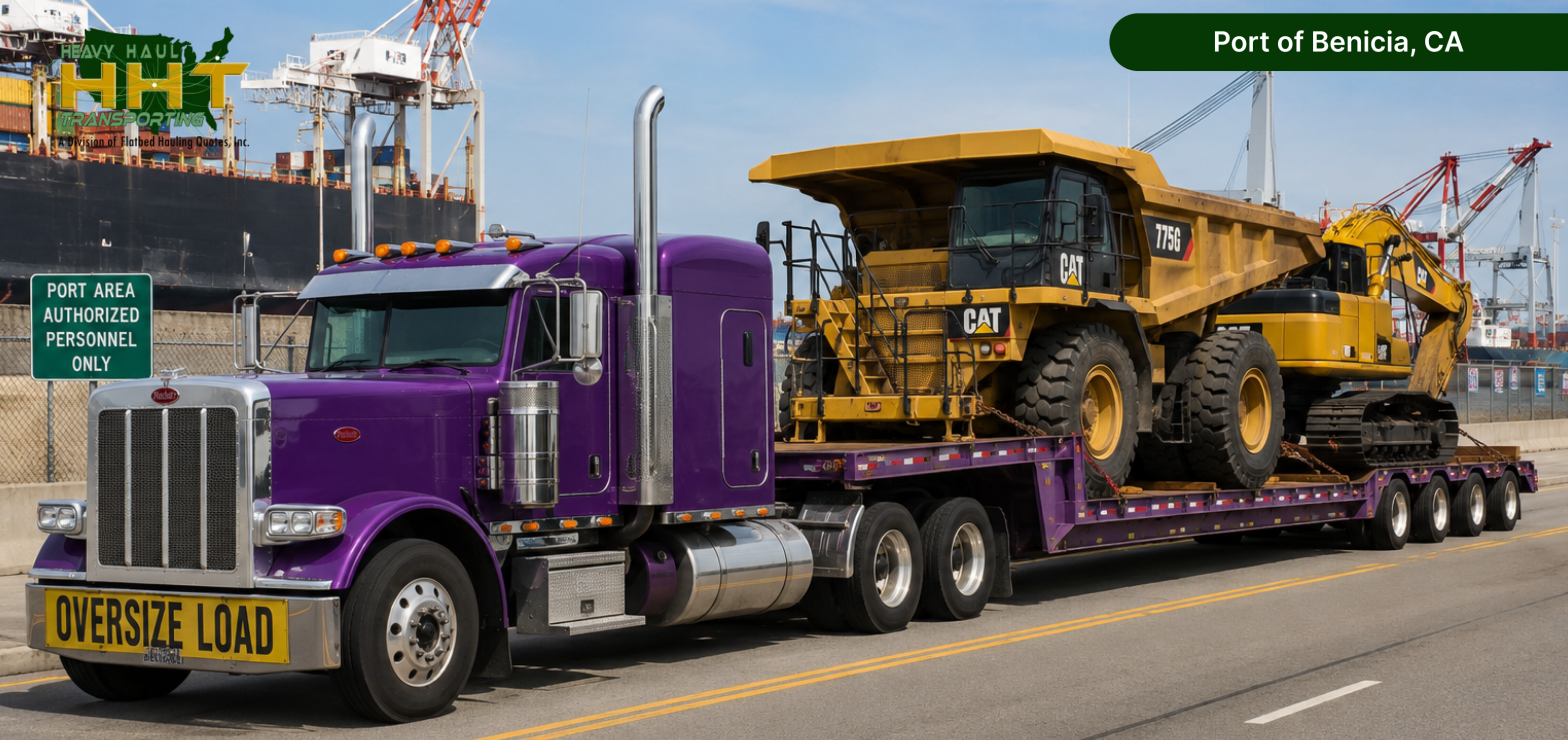
Heavy Haulers Port of Benicia, CA
Moving Oversized Freight Beyond the Port
Heavy Haulers Port of Benicia work starts where the cargo leaves the gate, and that matters in a place like Port of Benicia, CA. Heavy Haul Transporting moves oversized freight by road after it clears the terminal, connecting shippers to job sites, plants, and yards across California and the rest of the United States.
Port of Benicia, CA sits in a practical spot for freight tied to manufacturing, construction, energy, and industrial projects. The Benicia port area supports cargo that often needs special routing, permit planning, and the right trailer before it can move safely on public roads. That is where Heavy Haulers, Flatbed Heavy Haulers, and Heavy haul trucking services come in. We handle the over-the-road leg for heavy cargo that cannot move on standard equipment.
Port activity in Benicia also connects to broader US trade patterns. Industrial imports and domestic project freight often land in the region, then continue by road to refineries, fabrication shops, utility sites, and construction zones. Because Heavy Haul Transporting does not load, unload, store, or handle customs, our role stays focused on road transport only. That keeps the process clear: once freight is ready to roll, our drivers move it with the right trailer, route plan, and permit strategy.
Port Industries and Economic Impact
Port of Benicia, CA supports freight demand tied to several California industries that depend on oversized and heavy cargo. Manufacturing plants need Heavy Equipment Transport for presses, tanks, electrical cabinets, and structural steel. Construction firms rely on Heavy Machinery Transportation for excavators, bulldozers, concrete pumpers, and modular structures. Energy projects also create steady demand for Oversize Load Trucking, especially when power transformers, generators, substation modules, and cooling towers need to move inland.
The Benicia terminal also fits freight linked to oil refineries, alternative energy, and industrial maintenance work. Those sectors often move large metal fabrications, pipe strings, industrial boilers, and gas-related components that require Flatbed trucking companies and Heavy equipment haulers with permit experience. In a region shaped by economic development and infrastructure upgrades, even one project can generate multiple moves for Oversized load transport and Over-dimensional hauling.
Heavy Haulers Port of Benicia freight demand also reflects the way California builds and maintains critical systems. Utility upgrades, warehouse expansion, and transportation projects all need Equipment Transport that can handle size, weight, and route limits. Flatbed transportation companies and Heavy haul transportation providers see this in the Benicia port area because the freight is rarely small, and the destination is often a job site with tight access. That is why Heavy Haulers, Flatbed shippers, and Heavy haul truckers stay busy around Port of Benicia, CA.
Heavy Freight Moving Through the Port
Heavy Haulers Port of Benicia often move freight that is too large for standard dry van service. Around Port of Benicia, CA, common loads include Construction Equipment Shipping for excavators, articulated dump trucks, motor graders, and soil compactors. We also see industrial freight such as large generators, industrial boilers, storage silos, and electrical substation modules. For energy and utility work, Heavy machinery haulers may move power transformers, gas and steam turbines, and large telecommunication towers.
The right trailer depends on the load. Flatbeds work for steel, beams, and lighter machinery. Step Deck trailers help with taller freight that still needs a lower deck height. Lowboy trailers are useful for heavy equipment with extra height or weight. RGN trailers make it easier to load tracked machines, while Double Drop trailers handle taller cargo that needs more clearance. Multi-axle trailers spread weight for very heavy pieces, and Schnabel trailers can support specialized over-dimensional hauling when the load itself becomes part of the transport structure.
Heavy Haul Transporting matches trailer choice to the freight, not the other way around. That matters for Oversize Equipment and Machinery Hauling Services, especially when a load leaves Port of Benicia, CA and heads toward a refinery, fabrication yard, or construction corridor. Flatbed Heavy Haulers and Flatbed Equipment Movers also play a role when the cargo is wide, awkward, or needs secure tie-downs for a long road move.
Transportation Challenges and Route Planning
Heavy Haulers Port of Benicia planning starts with California oversize permits and the route that the load can actually clear. Port of Benicia, CA freight often faces weight and height restrictions, plus bridge clearances that can change the entire move. That is why route surveys matter. A survey helps confirm turns, lane width, overhead obstacles, and whether a load can move safely through the Benicia port area and onto the next segment of highway.
California transportation regulations also affect timing. Some oversize freight needs travel windows, escort vehicles, or restricted movement on certain days. Heavy haul shipping companies working from Port of Benicia, CA must account for local traffic, construction zones, and the geometry of nearby roads. Weather matters too. Wind can affect tall freight, especially on Step Deck trailers or when moving large panels, tanks, or towers. Fuel prices also influence heavy haul trucking decisions because long detours and idle time can change operating costs fast.
For Heavy Haulers Port of Benicia moves, the goal is to keep the route legal and practical from gate to destination. That means checking permit limits, matching the trailer to the load, and planning around the real-world conditions that affect oversize freight shipping in California.
Heavy Haul Transporting handles road-only moves from Port of Benicia, CA to destinations across the United States. For Heavy Haulers Port of Benicia freight, our fleet includes Flatbeds, Step Deck trailers, Lowboy trailers, RGN trailers, Double Drop trailers, Multi-axle trailers, and Schnabel trailers. We do not load or unload cargo, and we do not provide customs brokerage, warehousing, ocean freight, or freight forwarding. Our job is the over-the-road move after the freight is ready to leave the port gate.
Heavy Haulers Port of Benicia support the freight that keeps California projects moving, from industrial equipment to oversized construction loads. Port of Benicia, CA continues to matter because it connects heavy cargo with the road network that serves plants, refineries, utilities, and job sites. Heavy Haul Transporting is ready for the next oversized move when the load needs a legal route, the right trailer, and a carrier that stays focused on road transport only. If your freight is leaving Port of Benicia, CA and needs to move by highway, the planning starts there.
Planning Heavy Haul Transport From Port of Benicia, CA?
Heavy Haul Transporting helps businesses coordinate the movement of oversized freight, industrial machinery, construction equipment, and project cargo throughout North America.
Primary Road Corridors Out of Port of Benicia, CA
The Port of Benicia, CA connects oversized freight to major transportation corridors across Texas and the United States. These highways are frequently used for moving construction equipment, refinery components, heavy machinery, wind energy equipment, and oversized industrial cargo after it leaves the port area.
I-680 is one of the most important routes for Heavy Haulers Port of Benicia because it links Port of Benicia, CA to inland industrial and construction destinations. Heavy Equipment Transport on this corridor often includes transformers, steel, generators, and machinery headed toward fabrication yards or utility sites. The route matters because oversize loads need clean lane choices, permit compliance, and clearance checks before they leave the Benicia port area.
I-780 gives Heavy Haulers Port of Benicia a short connector into the regional highway network around Port of Benicia, CA. Heavy haul trucking on this route often supports equipment moving between the port area, nearby industrial zones, and staging points before a longer trip. Flatbed trucking companies use it for steel, packaged machinery, and other freight that needs quick access to the next permitted route.
CA-12 is important for Heavy Haulers Port of Benicia because it connects Port of Benicia, CA with local manufacturing, agricultural, and construction destinations. Oversized load transport on this corridor can include tanks, modular structures, and heavy machinery that must fit state height and weight rules. The route matters when a load needs to move efficiently out of the Benicia port area without unnecessary detours.
I-80 and nearby connectors help Heavy Haulers Port of Benicia reach broader Northern California markets from Port of Benicia, CA. Heavy haul transportation on these roads often carries industrial equipment, structural steel, and large project freight that needs careful route planning. For Heavy Haul Transporting, these corridors matter because they open access to major distribution and construction zones after the load clears the gate.
Frequently Asked Questions About Port of Benicia, CA Transportation
At the Port of Benicia, CA, you'll find oversized freight like industrial machinery, large construction equipment, and heavy components for energy projects. Heavy haulers frequently transport these goods to various destinations, ensuring they arrive safely and efficiently.
In California, oversized loads require special permits issued by the Department of Transportation. When planning a route from the Port of Benicia, CA, it's essential to check for any specific restrictions or requirements along your intended path.
Heavy haulers typically use flatbed trailers, lowboys, or specialized multi-axle trailers for transporting oversized cargo from the Port of Benicia, CA. The choice depends on the dimensions and weight of the freight being transported.
The Port of Benicia, CA, serves various industries, including construction, energy, and manufacturing. These sectors often require heavy hauling services to transport large equipment and materials essential for their operations.
Once cargo departs the Port of Benicia, CA, heavy haulers coordinate road transport by selecting the best routes and ensuring compliance with local regulations. This step is crucial for delivering oversized freight safely and on time.
Yes, heavy haulers must navigate specific route restrictions in California, especially when transporting oversized loads. It's important to consult local guidelines and plan routes that accommodate your cargo's dimensions and weight.
To schedule heavy haul transport from the Port of Benicia, CA, contact Heavy Haul Transporting to discuss your cargo details. They will help you coordinate logistics, including route planning and necessary permits, ensuring a smooth process.
Safety measures for oversized loads from the Port of Benicia, CA, include route assessments, escort vehicles if needed, and compliance with weight limits. Heavy haulers prioritize safety to protect both the cargo and public roadways.
NOAA Port Intelligence Related Pages
RELATED POSTS
Heavy Haulers Port of Pasco Guide for Oversized Freight Moving by Road
Heavy Haulers Port of Conneaut and the road moves that keep freight flowing
Heavy Haulers Port of Charlotte Amalie Guide for Oversized Freight by Road