
Heavy Haulers Port of Bridgeport, CT
Moving Oversized Freight Beyond the Port
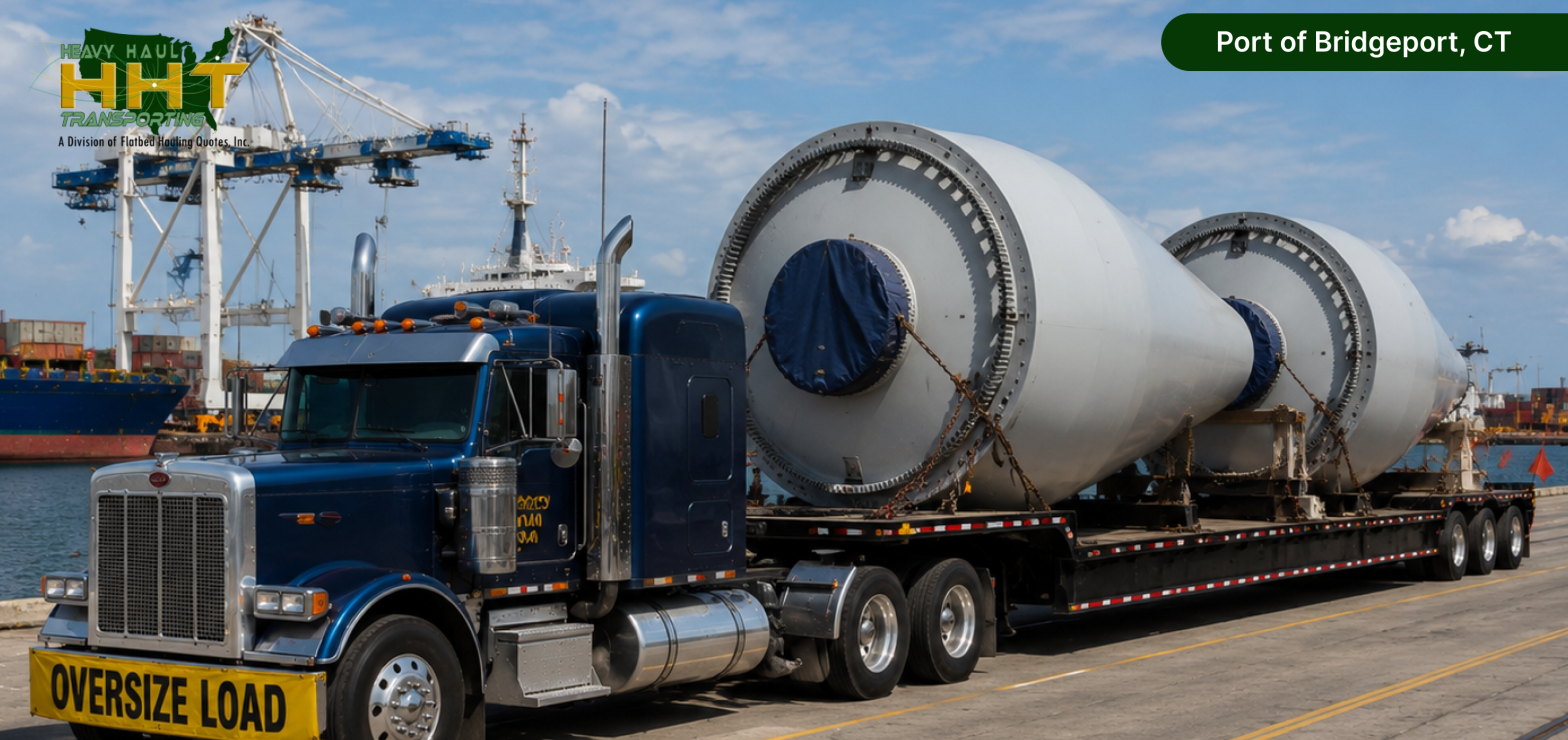
Heavy Haulers Port of Bridgeport is a phrase that fits the work moving out of Bridgeport every day. At the Port of Bridgeport, CT, Heavy Haul Transporting helps move oversized freight by road once cargo clears the gate and is ready for over-the-road delivery. That matters in a place like Bridgeport because the port sits in a busy East Coast trade lane with steady demand from manufacturing, construction, energy, and industrial supply chains.
The Port of Bridgeport, CT supports cargo that often needs more than a standard trailer. Think structural steel, power equipment, modular units, and machinery that cannot be broken down easily. Those loads feed projects across Connecticut and beyond, which is why Heavy Haulers Port of Bridgeport work has to be planned with care from the start. Road transport becomes the key link after port handling ends, especially when freight must move quickly to plants, jobsites, substations, or storage yards across the United States.
Because the Port of Bridgeport, CT connects to major corridors like I-95, CT-8, and US-1, route planning starts early. Clearances, permits, and timing all matter. That is where experienced heavy haul trucking makes a difference.
Port Industries and Economic Impact
The Port of Bridgeport, CT plays a practical role in regional economic development because it supports industries that depend on oversized freight. Manufacturing plants bring in industrial equipment, presses, cabinets, and replacement parts. Construction firms rely on Heavy Equipment Transport and Construction Equipment Shipping for excavators, bulldozers, cranes, and concrete pumpers. Energy projects also create demand for Heavy Machinery Transportation, especially when power transformers, generators, substation modules, and turbine components need road delivery.
Heavy Haulers Port of Bridgeport service also lines up with Connecticut’s broader industrial base. Aerospace and defense suppliers may move large assemblies, military vehicles, or specialized containers. Alternative energy projects can generate demand for solar structures, electrical cabinets, and cooling equipment. Even consumer goods transport can involve oversized machinery used in packaging, warehousing, and production lines. The Port of Bridgeport, CT sits close enough to dense commercial and industrial zones that freight turns over fast.
That steady flow supports Heavy haul transportation and Oversize freight shipping across the state. It also keeps Flatbed trucking companies, Flatbed transportation companies, and Heavy equipment transportation companies active when project schedules tighten. In short, the Port of Bridgeport, CT helps feed a market where oversized cargo is not occasional work; it is part of the local freight rhythm.
Heavy Freight Moving Through the Port
Heavy Haulers Port of Bridgeport often handle freight that needs the right trailer for the load, the route, and the height. At the Port of Bridgeport, CT, that can mean Construction & Mining Machinery like excavators, articulated dump trucks, motor graders, and rock crushers. It can also mean Energy & Power Infrastructure such as large generators, industrial boilers, electrical substation modules, and power transformers. For industrial projects, Heavy equipment haulers may move storage tanks, structural steel beams, industrial press machines, or pre-fabricated building modules.
The trailer choice matters. Flatbeds and Flatbed Equipment Movers work well for many standard oversized pieces. Step Deck trailers help with taller freight that needs extra deck height. Lowboy trailers and Double Drop trailers are common for heavy machinery transportation when height is tight. RGN (Removable Gooseneck) trailers are useful for tracked machines and self-propelled equipment. Multi-axle trailers spread weight for heavier loads, and Schnabel trailers come into play for extreme over-dimensional hauling.
Heavy Haul Transporting uses this mix to match freight to the move, not the other way around. That is important at the Port of Bridgeport, CT because loads can range from industrial equipment to oversized components for defense contracting, aerospace, or power generation. Flatbed Heavy Haulers and Heavy haul truckers need that flexibility to keep freight moving legally and safely by road.
Transportation Challenges and Route Planning
Heavy Haulers Port of Bridgeport work around a tight set of Connecticut rules and real-world road conditions. At the Port of Bridgeport, CT, oversize permits must match the load dimensions, axle weights, and travel route. Weight and height restrictions can change quickly once a load leaves the port area, especially near bridges, ramps, and older urban roadways. Bridge clearances matter on every move, and route surveys help confirm whether a load can pass without delays or detours.
Weather also affects planning. Wind can be a major factor for tall freight like modular structures, tanks, and electrical cabinets. Rain and winter conditions can slow travel and affect braking distance. Fuel prices also shape heavy haul trucking decisions, especially on longer moves that leave Bridgeport for inland Connecticut or other states. Heavy haul shipping companies watch those costs closely because oversized load transport often uses specialized equipment and longer travel windows.
State transportation regulations in Connecticut add another layer. Heavy equipment transportation companies must account for escort needs, travel timing, and route approval before a load rolls. For Heavy Haulers Port of Bridgeport, that means planning every mile with care so freight can move from the port gate to the jobsite without surprises.
Heavy Haul Transporting moves freight by road only, and that matters for shippers using the Port of Bridgeport, CT. Heavy Haulers Port of Bridgeport service here means over-the-road transport after cargo leaves the gate, using Flatbeds, Step Deck trailers, Lowboy trailers, RGN trailers, Double Drop trailers, Multi-axle trailers, and Schnabel trailers when the load calls for it. Our fleet handles oversized load transport for machinery, structural steel, power gear, and other heavy freight that needs careful route planning.
Heavy Haulers Port of Bridgeport support the freight that keeps Connecticut projects moving, from industrial plants to energy sites and construction jobs. At the Port of Bridgeport, CT, oversized cargo creates steady demand for road transport, especially when timing, permits, and clearances all have to line up. Heavy Haul Transporting is ready for that kind of work with a road-only focus and the trailer options needed for heavy freight. If your load is leaving the Port of Bridgeport, CT and needs a planned over-the-road move, the right carrier makes the difference.
Port Industries and Economic Impact
Heavy Haulers Port of Bridgeport also connect to the region’s future growth. The Port of Bridgeport, CT sits near projects tied to alternative energy, data center equipment, and utility upgrades, all of which can generate oversized freight. As manufacturing expands and infrastructure ages, demand rises for Heavy machinery transportation, Flatbed Heavy Haulers, and Oversize Equipment and Machinery Hauling Services. That is why the port continues to matter for economic development across the East Coast.
Planning Heavy Haul Transport From Port of Bridgeport, CT?
Heavy Haul Transporting helps businesses coordinate the movement of oversized freight, industrial machinery, construction equipment, and project cargo throughout North America.
Primary Road Corridors Out of Port of Bridgeport, CT
The Port of Bridgeport, CT connects oversized freight to major transportation corridors across Texas and the United States. These highways are frequently used for moving construction equipment, refinery components, heavy machinery, wind energy equipment, and oversized industrial cargo after it leaves the port area.
I-95 is the main freight spine for the Port of Bridgeport, CT, and it carries a lot of the region’s oversized traffic. Heavy Haulers Port of Bridgeport use this corridor for machinery, steel, generators, and modular freight heading north or south along the coast. For heavy haul trucking, I-95 matters because it connects industrial yards, construction sites, and distribution points while giving access to wider interstate moves.
CT-8 is a key route for the Port of Bridgeport, CT when freight needs to move inland toward manufacturing and construction destinations. Heavy Haulers Port of Bridgeport often rely on this corridor for Heavy Equipment Transport, especially excavators, cranes, and industrial equipment that must avoid slower city streets. CT-8 helps oversized load transport reach jobsites with fewer turns and better access to regional highways.
US-1 stays important around the Port of Bridgeport, CT because it links local industrial areas, marine-adjacent businesses, and urban delivery points. Heavy Haulers Port of Bridgeport use US-1 for shorter heavy haul trucking moves where route control and timing matter. It is a practical corridor for flatbed trucking companies moving steel, cabinets, and other freight that still needs careful handling by road.
CT-25 and nearby connector roads help freight leave the Port of Bridgeport, CT and reach inland routes without unnecessary delay. Heavy Haulers Port of Bridgeport use these roads for over-dimensional hauling tied to manufacturing, construction, and energy projects. They matter because they help heavy equipment haulers connect port freight to the rest of Connecticut while keeping route planning manageable.
Frequently Asked Questions About Port of Bridgeport, CT Transportation
The Port of Bridgeport, CT handles a variety of oversized freight, including heavy machinery, construction equipment, and large industrial components. Heavy Haulers Port of Bridgeport specializes in transporting these types of cargo efficiently to their destinations.
In Connecticut, heavy haulers need specific permits for oversized loads. It's essential to check with the Connecticut Department of Transportation for regulations and necessary permits before planning your route from the Port of Bridgeport, CT.
For cargo leaving the Port of Bridgeport, CT, flatbed trailers and lowboy trailers are commonly used. These trailer types accommodate oversized and heavy loads, ensuring safe and efficient transport.
The Port of Bridgeport, CT primarily serves industries such as construction, manufacturing, and energy. These sectors often require heavy haulers for transporting large equipment and materials critical to their operations.
Once cargo exits the Port of Bridgeport, CT, it is typically loaded onto specialized trailers for road transport. Heavy Haul Transporting coordinates the logistics to ensure timely delivery while adhering to state regulations.
Yes, heavy haulers must follow designated routes that accommodate oversized loads when departing from the Port of Bridgeport, CT. These routes are designed to ensure safety and compliance with local regulations.
Transporting heavy loads from the Port of Bridgeport, CT requires specialized equipment such as hydraulic trailers and heavy-duty trucks. These ensure the safe and efficient movement of oversized cargo to its final destination.
Heavy Haul Transporting manages logistics by coordinating with port authorities and planning efficient routes. Their expertise ensures that heavy haulers navigate the complexities of transporting oversized freight from the Port of Bridgeport, CT.
NOAA Port Intelligence Related Pages
RELATED POSTS
Heavy Haulers Port of Sault Ste. Marie Keep Oversized Freight Moving Across Michigan
Heavy Haulers Port of Richmond Keep Oversize Freight Moving Across Virginia
Heavy Haulers Port of Benicia Keep Oversize Freight Moving on California Roads