
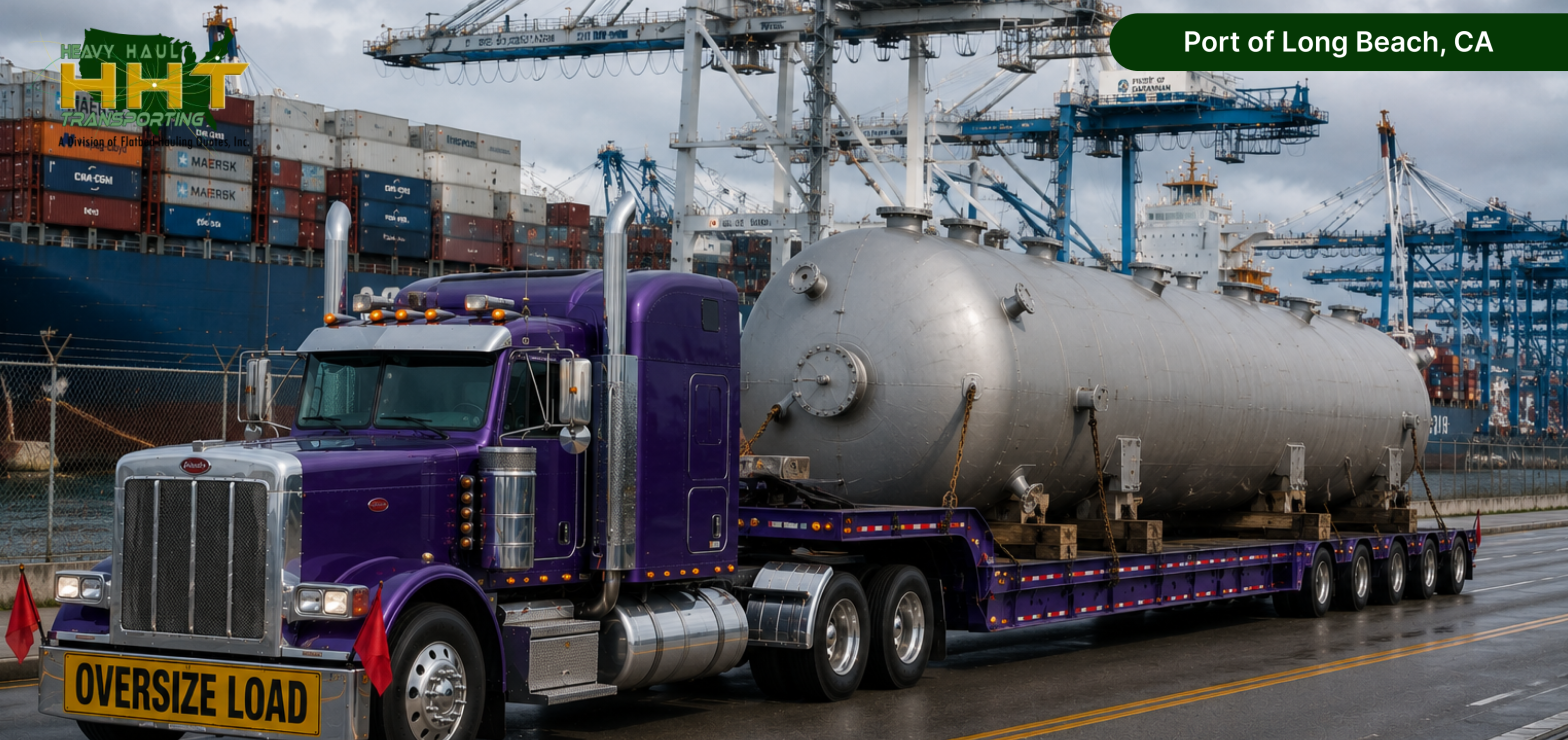
Heavy Haulers Port of Long Beach, CA
Moving Oversized Freight Beyond the Port
Heavy Haulers Port of Long Beach moves start with timing, route planning, and a clear understanding of what can travel by road after cargo leaves the gate. At Port of Long Beach, CA, Heavy Haul Transporting supports oversized freight that needs over-the-road movement across California and beyond. The Long Beach port area plays a major role in U.S. trade, and that activity creates steady demand for Heavy Equipment Transport, Heavy Machinery Transportation, and Oversize Load Trucking.
Manufacturing, construction, energy, aerospace, defense contracting, and consumer goods all feed into the freight mix here. You see everything from industrial equipment and structural steel to power components and modular structures. Once cargo clears the terminal, road transport becomes the practical link to plants, job sites, refineries, data centers, and distribution yards. That is where Heavy Haulers, Flatbed Heavy Haulers, and Heavy haul trucking matter most.
Heavy Haul Transporting only handles over-the-road transportation, not port loading, customs brokerage, warehousing, ocean freight, or freight forwarding. Our work begins after cargo leaves the port gate, when the load is ready for Oversized load transport on California roads. In a busy trade corridor like Port of Long Beach, CA, that road-only step is often the one that keeps projects moving.
Port Industries and Economic Impact
Port of Long Beach, CA supports a wide mix of freight tied to industrial growth, and Heavy Haulers Port of Long Beach services often reflect that mix. Manufacturing plants move presses, tanks, electrical cabinets, and industrial boilers. Construction firms need Heavy equipment transportation companies for excavators, bulldozers, cranes, and concrete pumpers. Energy and utility projects create demand for power transformers, large generators, electrical substation modules, and cooling towers.
The Long Beach port area also connects to aerospace, military suppliers, and advanced manufacturing. That means Heavy machinery haulers often move aircraft fuselage sections, rocket components, control rooms, and large metal forgings. In addition, alternative energy projects bring solar structures, power stations, and oversized electrical gear that must travel with care. These loads are not standard freight, so Flatbed transportation companies and heavy haul transportation carriers need to understand dimensions, weight, and route limits before the truck ever rolls.
International trade keeps the pipeline full, but the local economy benefits too. Construction Equipment Shipping supports warehouses, commercial development, refinery maintenance, and infrastructure upgrades across Southern California. As projects scale up, Oversize freight shipping becomes a regular need, especially for freight that cannot move on standard trailers. That is why Heavy Haulers Port of Long Beach work is tied so closely to economic development, industrial expansion, and the steady flow of oversized cargo leaving the port region.
Heavy Freight Moving Through the Port
Heavy Haulers Port of Long Beach moves a broad range of freight once cargo clears Port of Long Beach, CA and heads into the Long Beach terminal truck network. We commonly see Construction & Mining Machinery, including excavators, articulated dump trucks, motor graders, and rock crushers. Energy projects may require power transformers, gas and steam turbines, industrial boilers, and large generators. For industrial customers, Heavy Machinery Transportation often includes storage silos, pre-fabricated building modules, and industrial press machines.
The trailer choice depends on the load. Flatbeds work for many steel and machinery moves, while Step Deck trailers help with taller freight. Lowboy trailers are often used for cranes, bulldozers, and tunnel boring machines. RGN (Removable Gooseneck) trailers make it easier to load tracked equipment, and Double Drop trailers help with extra height-sensitive cargo. Multi-axle trailers handle heavier weights, and Schnabel trailers are reserved for extreme oversized pieces such as large transformers or reactor components. Heavy haul trucking around Port of Long Beach, CA often requires matching the trailer to the load before route approval is even possible.
Heavy Haul Transporting also plans for freight like Oil & Gas Rig Components, Drilling Rigs & Masts, pipe strings, and electrical modules. Flatbed Heavy Haulers and Flatbed shippers handle many of the shorter, wider moves, while Heavy equipment haulers manage the larger, more complex pieces. Because the Long Beach port area serves both industrial and infrastructure markets, Oversize Equipment and Machinery Hauling Services stay in demand year-round.
Transportation Challenges and Route Planning
Heavy Haulers Port of Long Beach moves are shaped by California rules, local traffic patterns, and the physical limits of the route. Oversize permits specific to California must match the load size, axle weight, travel window, and corridor restrictions. Weight and height restrictions matter a lot near Port of Long Beach, CA, especially when bridge clearances and overhead structures can change the route choice. That is why route surveys are part of the planning process before Oversized load transport leaves the Long Beach port area.
Weather also matters. Wind can affect tall freight like tanks, modules, and equipment on Step Deck trailers or Double Drop trailers. In some cases, a route that works in the morning may not work later in the day if traffic, construction, or wind conditions change. Fuel prices also affect heavy haul trucking, especially on longer moves where multi-axle combinations and escort planning add cost. California transportation regulations can be strict, so timing and documentation need to be right.
Heavy Haulers Port of Long Beach jobs often move along corridors that require careful bridge checks, turn-radius reviews, and staging plans. Flatbed transportation companies and Heavy haul truckers working here need to know where a load can legally fit and where it cannot. That level of planning protects the shipment, the driver, and the schedule.
Heavy Haul Transporting serves Port of Long Beach, CA with road-only oversized freight moves after cargo exits the gate. Heavy Haulers Port of Long Beach work like this depends on the right trailer for the job, and our fleet includes Flatbeds, Step Deck trailers, Lowboy trailers, RGN trailers, Double Drop trailers, Multi-axle trailers, and Schnabel trailers. We handle Heavy haul shipping companies’ style freight without crossing into port loading, customs, warehousing, or marine logistics.
Port of Long Beach, CA keeps Southern California connected to major industrial and trade activity, and that creates steady demand for oversized freight moves by road. Heavy Haulers Port of Long Beach services help move the equipment, steel, and machinery that support construction, energy, manufacturing, and infrastructure work. When a load clears the gate, the next step is careful over-the-road planning through California’s permit and route system.
Heavy Haul Transporting is ready for the freight that needs the right trailer, the right route, and the right timing. If your project depends on Oversize freight shipping from Port of Long Beach, CA, our team can help move it across the country by road.
Planning Heavy Haul Transport From Port of Long Beach, CA?
Heavy Haul Transporting helps businesses coordinate the movement of oversized freight, industrial machinery, construction equipment, and project cargo throughout North America.
Primary Road Corridors Out of Port of Long Beach, CA
The Port of Long Beach, CA connects oversized freight to major transportation corridors across Texas and the United States. These highways are frequently used for moving construction equipment, refinery components, heavy machinery, wind energy equipment, and oversized industrial cargo after it leaves the port area.
I-710 is one of the most important outbound corridors for Port of Long Beach, CA because it links the terminal area to inland industrial zones and warehouse districts. Heavy Haulers Port of Long Beach often uses this route for containers converted to project cargo, steel, machinery, and oversized equipment that must reach nearby yards before a longer trip. For Heavy Haulers Port of Long Beach, the corridor matters because it can support flatbed moves, lowboy freight, and staged oversize departures when permits and traffic windows line up.
I-405 gives Port of Long Beach, CA access to the broader Los Angeles basin and helps move heavy freight toward manufacturing, aerospace, and energy customers. Heavy Haulers Port of Long Beach relies on this corridor for equipment transport that needs to reach job sites across the metro area. Loads like electrical modules, industrial machinery, and construction equipment often move here on Step Deck trailers or RGN trailers when height and weight limits allow.
I-10 connects Port of Long Beach, CA to inland Southern California and farther east, making it a key path for oversized freight heading to plants, refineries, and large development sites. Heavy Haulers Port of Long Beach uses this route for heavy machinery transportation, structural steel, and power equipment that can travel after the gate release. The corridor matters because it supports long-distance heavy haul trucking once California permits and bridge clearances are confirmed.
CA-47 is a useful connector near Port of Long Beach, CA for freight that needs to reach the harbor area, local industrial streets, and nearby interchange points. Heavy Haulers Port of Long Beach often plans around this route when moving oversized load transport that must stay close to the terminal zone. It is especially relevant for flatbed shippers, heavy equipment haulers, and loads that need a short, controlled exit before joining larger interstate routes.
Frequently Asked Questions About Port of Long Beach, CA Transportation
The Port of Long Beach, CA, handles a variety of oversized freight, including heavy machinery, construction equipment, and large industrial components. These items often require specialized transport solutions, making heavy haulers essential for effective delivery.
In California, heavy haul transport requires specific permits based on the dimensions and weight of your cargo. It's crucial to check with local authorities for the latest regulations and secure the necessary permits before planning your route.
For heavy loads moving from the Port of Long Beach, CA, lowboy and flatbed trailers are commonly used. These trailers offer the necessary support and stability for oversized freight, ensuring safe transport to its final destination.
The Port of Long Beach, CA, serves industries such as construction, energy, and manufacturing. These sectors often require heavy haulers for transporting large equipment and materials critical to their operations.
After cargo exits the Port of Long Beach, CA, heavy haulers transport it directly to its destination. This involves route planning to navigate local roads and highways, ensuring compliance with weight restrictions and safety regulations.
Yes, California has designated routes for heavy haulers. It's important to plan your route carefully, considering weight limits and road conditions. Heavy Haul Transporting can assist with route planning to ensure compliance and efficiency.
Heavy haulers typically use specialized equipment such as multi-axle trailers and hydraulic dollies for transporting oversized cargo from the Port of Long Beach, CA. This equipment is essential for handling the unique challenges of heavy freight.
To ensure timely delivery of oversized cargo from the Port of Long Beach, CA, work with experienced heavy haulers like Heavy Haul Transporting. They understand the logistics involved and can navigate potential challenges effectively.
NOAA Port Intelligence Related Pages
RELATED POSTS
Heavy Haulers Port of Fajardo Keep Oversize Freight Moving Across Puerto Rico
Heavy Haulers Port of Sacramento Keep West Sacramento Freight Moving by Road
Heavy Haulers Port of Coos Bay Keep Oversize Freight Moving by Road