

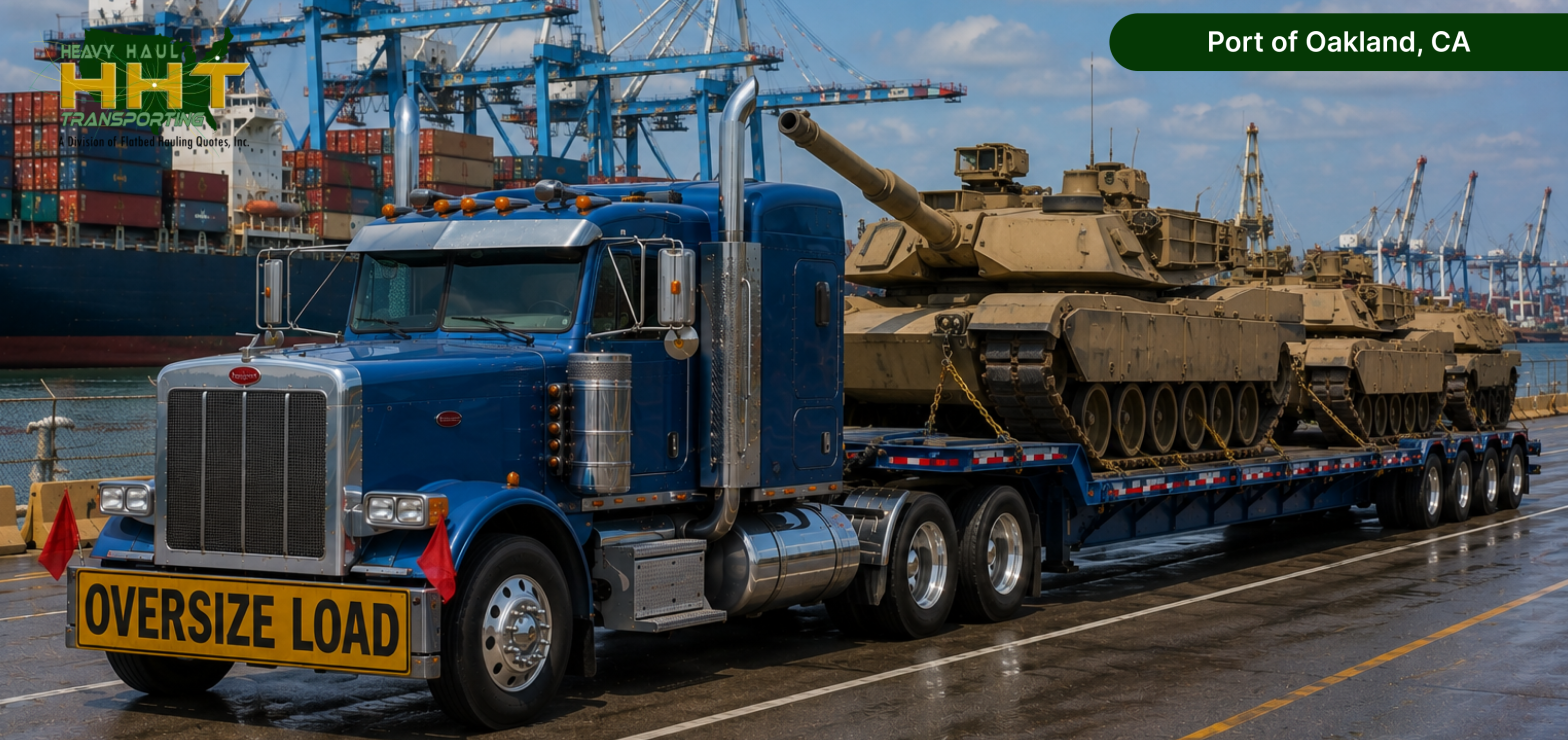
Heavy Haulers Port of Oakland, CA
Moving Oversized Freight Beyond the Port
Heavy Haulers Port of Oakland work starts the moment oversized freight clears the gate at Port of Oakland, CA. Heavy Haul Transporting focuses on over-the-road moves that connect Oakland to job sites, plants, yards, and project locations across the United States. That matters here because the Oakland port area sits inside one of the busiest trade corridors on the West Coast, where manufacturing, construction, energy, and industrial projects all create steady demand for heavy haul trucking.
Port of Oakland, CA handles a wide mix of cargo tied to international trade and regional economic development. In practice, that means more movement of heavy equipment transportation companies, flatbed trucking companies, and oversized load transport providers that can handle large freight after it leaves the terminal. We do not load cargo at the port, unload it, handle customs brokerage, or manage ocean freight. Our job begins after the cargo is released and ready for road transport.
From there, timing matters. Oversize freight shipping from Oakland often depends on permit windows, route planning, and the right trailer choice. Heavy equipment haulers serving this corridor need to understand California regulations, bridge limits, and local traffic patterns. That is especially true when freight must move quickly from Port of Oakland, CA into the Bay Area or out toward inland California and beyond.
Port Industries and Economic Impact
Port of Oakland, CA supports a broad industrial base, and that creates constant demand for Heavy Haulers Port of Oakland services. Manufacturing plants, construction contractors, energy developers, and consumer goods transport all rely on equipment that is too large for standard freight lanes. When a project calls for oversized machinery, the move usually starts with careful planning and the right heavy haul transportation partner.
The Oakland port area also connects to sectors that need specialized freight handling on the road side. Heavy machinery haulers move items like excavators, bulldozers, cranes, power transformers, industrial boilers, and modular structures. Those loads often support alternative energy projects, data center equipment builds, defense contracting, and infrastructure upgrades. In a region where economic development moves fast, flatbed heavy haulers and heavy equipment transportation companies stay busy moving assets that keep projects on schedule.
Port of Oakland, CA also serves freight tied to industrial manufacturing and large-scale construction. That includes structural steel beams, pre-fabricated building modules, electrical substation modules, and large generators. Each of those shipments can require oversize load trucking, over-dimensional hauling, or flatbed transportation companies with the right trailer mix.
Fuel prices also shape demand in this market. When diesel costs rise, shippers look closely at routing, timing, and load consolidation. Heavy Haulers Port of Oakland work becomes even more important because a well-planned road move can reduce delays and keep oversized freight shipping moving through the Bay Area and into California job sites.
Heavy Freight Moving Through the Port
Heavy Haulers Port of Oakland moves a wide range of freight that needs more than a standard trailer. Around Port of Oakland, CA, we often see construction and mining machinery, articulated dump trucks, motor graders, soil compactors, and rock crushers headed to inland projects. We also handle industrial freight such as large metal forgings, storage silos, cooling towers, and electrical cabinets that support manufacturing and utility work.
For larger and taller cargo, trailer selection matters. Flatbeds work well for many loads, while Step Deck trailers help with height-sensitive freight. Lowboy trailers are common for heavy equipment transportation when deck height must stay low. RGN trailers and Double Drop trailers help move tall machinery, and Multi-axle trailers spread weight for heavier shipments. For extreme dimensions, Schnabel trailers can support specialized over-dimensional hauling. Heavy haul trucking from Port of Oakland, CA depends on matching the freight to the trailer, not forcing the freight onto the wrong equipment.
Flatbed shippers in this corridor often move I-beams, trusses, catch basins, manhole covers, and large telecommunication towers. Heavy equipment haulers also see demand for tunnel boring machines, drilling rigs, and pipeline components tied to infrastructure work. Heavy Haul Transporting coordinates these road moves with a focus on the load itself, the route, and the legal limits that apply once the freight leaves the Oakland terminal.
That is why oversized load transport from Port of Oakland, CA is rarely one-size-fits-all. Heavy machinery transportation requires the right axle configuration, securement plan, and driver experience to keep freight moving safely across California and into other states.
Transportation Challenges and Route Planning
Heavy Haulers Port of Oakland planning starts with California oversize permits, and those rules can change based on weight, width, height, and route. Port of Oakland, CA freight often needs route surveys before dispatch because bridge clearances, lane widths, and turning radii can affect the move. That is especially true for over-dimensional hauling near urban streets and freeway connectors around Oakland.
Weather also plays a role. Wind conditions near the Bay can affect tall loads, especially when moving modular structures, electrical substation modules, or large equipment on Step Deck trailers and flatbeds. Height restrictions matter too, since some freight needs a lowboy or Double Drop trailer to stay within legal limits. Heavy haul trucking in California also has to account for time-of-day restrictions, escort needs, and state transportation regulations that can affect when a load can move.
Fuel prices add another layer. Longer detours, idle time, and permit delays all increase operating costs, so route planning has to be tight. Heavy Haulers Port of Oakland moves often depend on the best path out of the Oakland port area, not just the shortest one. That means checking bridge clearances, freeway ramps, and local restrictions before the truck ever rolls.
For oversized load transport leaving Port of Oakland, CA, the goal is simple: choose the right route, keep the load legal, and avoid surprises. Heavy equipment haulers that understand California permitting can move freight with fewer delays and fewer reroutes.
Heavy Haul Transporting serves Port of Oakland, CA with road-only oversized freight moves across the United States. Heavy Haulers Port of Oakland shipments stay on the highway after leaving the gate, and our fleet includes flatbeds, Step Deck trailers, Lowboy trailers, RGN trailers, Double Drop trailers, Multi-axle trailers, and Schnabel trailers. We handle the over-the-road side of heavy haul transportation, not port loading, unloading, warehousing, customs, or freight forwarding.
Port of Oakland, CA keeps generating work for construction, manufacturing, energy, and industrial projects, and that means steady demand for Heavy Haulers Port of Oakland service. As oversized freight continues moving through the Oakland port area, the need for careful permits, route planning, and the right trailer setup will only grow. Heavy Haul Transporting is ready for those road moves after cargo clears the gate. If your freight needs heavy haul trucking from Port of Oakland, CA, the next step is choosing a carrier that understands the route and the load.
Planning Heavy Haul Transport From Port of Oakland, CA?
Heavy Haul Transporting helps businesses coordinate the movement of oversized freight, industrial machinery, construction equipment, and project cargo throughout North America.
Primary Road Corridors Out of Port of Oakland, CA
The Port of Oakland, CA connects oversized freight to major transportation corridors across Texas and the United States. These highways are frequently used for moving construction equipment, refinery components, heavy machinery, wind energy equipment, and oversized industrial cargo after it leaves the port area.
I-880 is one of the main freight paths serving Port of Oakland, CA, and it carries a steady mix of containers, industrial equipment, and oversized freight headed through the East Bay. Heavy Haulers Port of Oakland use this corridor for loads like excavators, generators, steel, and modular units because it links the Oakland port area to major industrial zones and regional distribution points. For heavy haul trucking, I-880 matters because it offers direct access, but it also demands careful timing, lane planning, and permit awareness.
I-580 gives Port of Oakland, CA freight a key eastbound connection toward inland California, where construction, energy, and manufacturing projects often need oversized load transport. Heavy Haulers Port of Oakland rely on this route for equipment like bulldozers, power transformers, and industrial boilers moving out of the Oakland port area. The corridor matters because it links heavy machinery transportation to job sites that sit beyond the Bay Area, making route surveys and clearance checks especially important.
I-80 is a major corridor for Port of Oakland, CA shipments that need to move north, east, or across the state line after leaving the terminal. Heavy Haulers Port of Oakland use this route for flatbed freight, structural steel, and large industrial components that fit broader regional project schedules. For oversized load trucking, I-80 matters because it connects the Oakland port area to dense traffic zones, bridge structures, and long-distance freight lanes that require strong permit planning.
I-238 and nearby US-101 connections help Port of Oakland, CA freight reach alternate Bay Area routes when dispatchers need to avoid congestion or match a load to a specific destination. Heavy Haulers Port of Oakland use these corridors for heavy equipment haulers moving tanks, pre-fabricated modules, and large machinery that may need a different path than the main interstate network. These routes matter because oversized freight shipping often depends on the best legal path, not just the fastest one.
Frequently Asked Questions About Port of Oakland, CA Transportation
The Port of Oakland, CA handles various types of oversized freight, including construction equipment, large machinery, and wind turbine components. Heavy Haulers Port of Oakland specializes in transporting these oversized loads efficiently to meet industry demands.
In California, heavy hauling requires specific permits based on the load's dimensions and weight. It's essential to consult with local authorities to ensure compliance. Heavy Haul Transporting can assist in navigating these requirements for your shipments from the Port of Oakland, CA.
For oversized loads departing from the Port of Oakland, CA, flatbed trailers and lowboy trailers are commonly used. These trailers provide the necessary support and stability for heavy equipment and machinery, ensuring safe transport.
The Port of Oakland, CA primarily serves industries like construction, renewable energy, and manufacturing. These sectors often require heavy hauling services for transporting large and specialized equipment, making Heavy Haulers Port of Oakland a vital partner.
Once cargo leaves the Port of Oakland, CA, it typically transitions to road transport. Heavy Haul Transporting coordinates the delivery to the final destination, ensuring that the oversized loads are transported safely and efficiently.
Yes, California has designated routes for heavy haulers to ensure safe passage. These routes are chosen based on load size and local regulations. Heavy Haul Transporting can help identify the best routes for your shipments from the Port of Oakland, CA.
Shipping from the Port of Oakland, CA can present challenges such as navigating local traffic regulations and ensuring proper permits are in place. Heavy Haulers Port of Oakland is experienced in overcoming these obstacles to facilitate smooth transport.
Tracking your heavy haul shipment from the Port of Oakland, CA is straightforward. Heavy Haul Transporting provides updates and tracking information throughout the transport process, ensuring you stay informed about your cargo's status.
NOAA Port Intelligence Related Pages
RELATED POSTS
Industries Driving Heavy Haulers Port of New London, CT Freight Moves
Heavy Haulers Port of Manitowoc Keeps Oversized Freight Moving by Road
Heavy Haulers Port of Georgetown Guide for Oversized Freight by Road