
Heavy Haulers Port of Port Arthur, TX
Moving Oversized Freight Beyond the Port
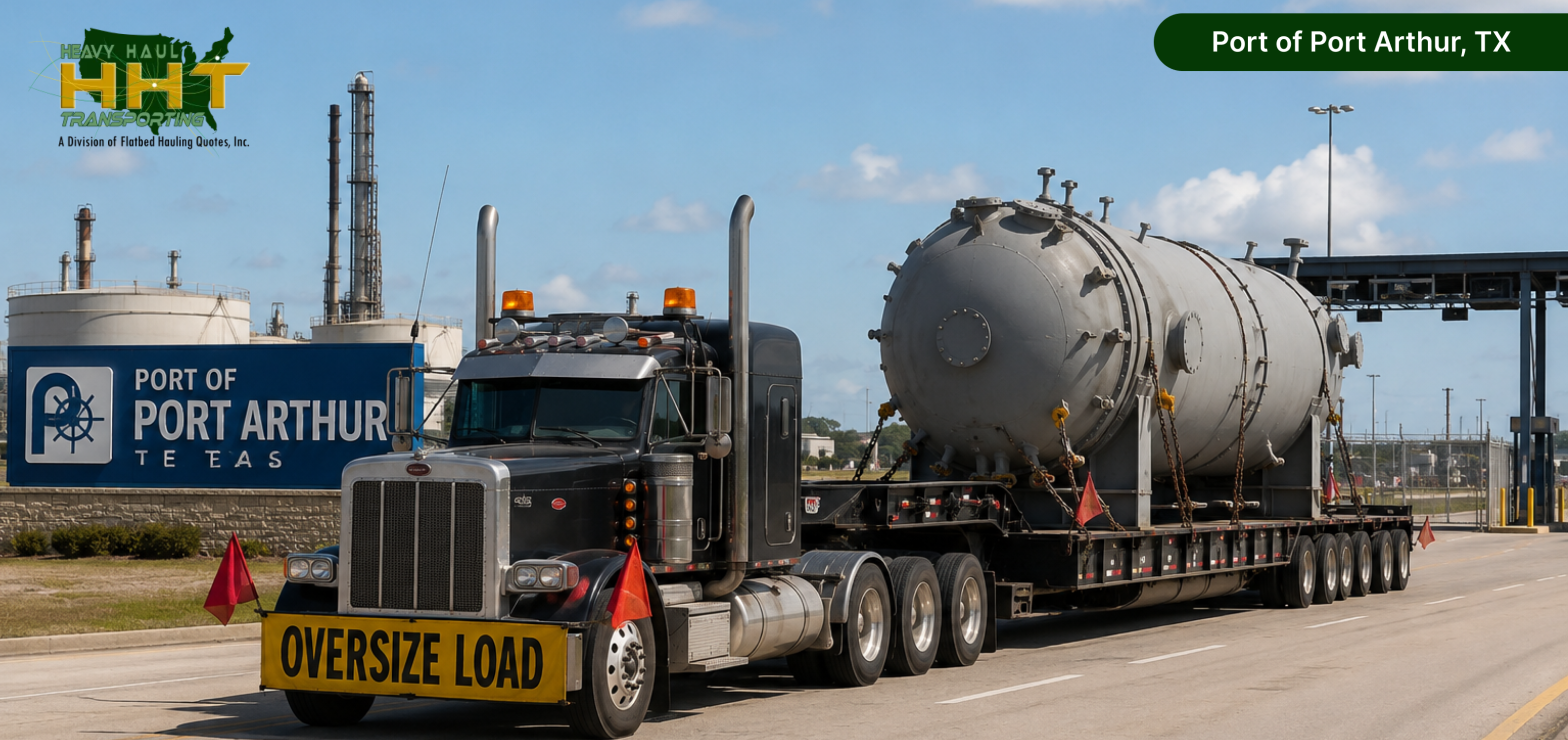
Heavy Haulers Port of Port Arthur moves a lot more than standard freight, and Heavy Haul Transporting helps carry that load once cargo clears the gate. At the Port of Port Arthur, TX, oversized equipment often starts its next leg on Texas roads, where timing, permits, and route planning matter just as much as the cargo itself. This Gulf Coast seaport supports industrial supply chains tied to manufacturing, energy, construction, and international trade, so the freight mix can shift fast from refinery components to structural steel and power equipment.
That matters because road transport is the link between the port and job sites, plants, terminals, and yards across the country. Heavy haul trucking from Port Arthur often involves equipment that cannot move on standard trailers, which is why Flatbed Heavy Haulers, Heavy Equipment Transport, and Oversized load transport all play a role in the region. Heavy Haul Transporting focuses only on over-the-road moves after cargo leaves the port gate. We do not handle loading, unloading, customs brokerage, warehousing, ocean freight, or freight forwarding. Our work starts when the freight is ready to roll out by road.
In a place like Port Arthur, where oil refineries, alternative energy projects, and industrial construction keep demand steady, the right trailer and route can make the difference between a smooth move and a delay.
Port Industries and Economic Impact
The Port of Port Arthur, TX sits in a region where heavy industry drives steady freight demand, and Heavy Haulers Port of Port Arthur is often called on when projects need oversized equipment moved inland. Oil refineries and fossil fuel operations create a constant need for Heavy machinery Transportation, especially for large generators, pressure vessels, pipe strings, and electrical substation modules. At the same time, alternative energy and solar projects add demand for transformers, control rooms, and pre-fabricated building modules that need careful road planning.
Manufacturing also plays a major role around the Port Arthur port area. Plants and fabricators move industrial boilers, large metal forgings, structural steel beams, and industrial press machines through the region, often using Flatbed trucking companies and Heavy equipment haulers that understand Texas oversize rules. Construction and economic development projects add another layer, especially when crews need excavators, bulldozers, cranes, and concrete pumpers delivered to active sites.
International trade through the Port of Port Arthur, TX supports this freight flow by feeding equipment into domestic supply chains. That is why Heavy haul transportation stays busy here: the port connects imported and exported industrial cargo to inland markets that depend on over-dimensional hauling. Heavy Haulers Port of Port Arthur also sees demand from defense contracting, aerospace, and military suppliers, where oversized crates, armored vehicles, and spacecraft components may need specialized road moves. In short, the port’s industrial base keeps Heavy haul shipping companies active and keeps route planning tied closely to project schedules.
Heavy Freight Moving Through the Port
Heavy Haulers Port of Port Arthur handles a wide range of freight once cargo leaves the Port of Port Arthur, TX gate and heads out on Texas highways. In this market, Heavy Equipment Transport often includes excavators, articulated dump trucks, motor graders, soil compactors, and rock crushers. Construction Equipment Shipping also covers cranes, asphalt pavers, trenchers, and boring machines that are too tall, too wide, or too heavy for standard equipment transport.
For industrial work, Heavy machinery haulers move power transformers, industrial boilers, gas and steam turbines, large generators, and cooling towers. The Port Arthur port area also sees oversized moves tied to oil and gas, including drilling rigs and masts, rig components, and large storage tanks. When freight gets more complex, Flatbed shippers and Flatbed Equipment Movers may use step deck trailers, lowboy trailers, RGN trailers, double drop trailers, multi-axle trailers, or even Schnabel trailers for extreme dimensions.
Those trailer choices matter because each load has its own height, weight, and balance needs. Flatbeds work well for steel and packaged machinery. Step Deck trailers help with taller freight. Lowboy trailers and RGN trailers fit heavy equipment with high center of gravity. Double Drop trailers and multi-axle trailers handle oversized load trucking when axle spread and deck height become critical. Heavy Haul Transporting matches the trailer to the freight so the move stays within Texas transportation rules and bridge limits. That is especially important for Oversize freight shipping tied to refinery maintenance, construction work, and industrial expansion around Port Arthur.
Transportation Challenges and Route Planning
Moving freight out of the Port of Port Arthur, TX takes more than a truck and trailer. Heavy Haulers Port of Port Arthur has to account for Texas oversize permits, weight and height restrictions, bridge clearances, and route surveys before a load ever reaches the highway. Texas permit rules can change based on dimensions, axle weights, travel times, and the exact route, so planning starts early and stays detailed.
Weather is another factor on the Gulf Coast. Wind conditions can affect tall freight like electrical cabinets, towers, and modular structures, while rain can slow visibility and make shoulders less forgiving. Fuel prices also matter in heavy haul trucking, especially for long moves that leave Port Arthur and head toward Houston, Dallas, or out-of-state destinations. When fuel swings, route and timing decisions can change quickly.
Bridge clearances near the Port Arthur port area deserve close attention, especially on moves that use TX-73, US-69, and I-10. A load that clears one overpass may still need a different path because of utility lines, lane width, or turning radius. That is why Heavy Haulers Port of Port Arthur relies on route surveys and state transportation regulations in Texas before dispatch. Oversized load transport works best when the route is checked against the freight, not guessed from a map. For Heavy equipment transportation companies, that level of planning protects schedules and keeps industrial freight moving.
Heavy Haul Transporting supports the Port of Port Arthur, TX with road-only service for oversized and heavy freight after it leaves the port gate. Heavy Haulers Port of Port Arthur uses a trailer fleet that includes flatbeds, step deck trailers, lowboy trailers, RGN trailers, double drop trailers, multi-axle trailers, and Schnabel trailers for specialized moves. Our drivers handle Heavy haul trucking for industrial cargo, construction equipment, and energy project freight across the United States. If your move needs Flatbed transportation companies or Heavy haul truckers with a focus on over-dimensional hauling, we keep the work on the road where it belongs.
The Port of Port Arthur, TX keeps generating demand for oversized freight tied to energy, manufacturing, construction, and trade. Heavy Haulers Port of Port Arthur is part of that flow every time a load needs to leave the gate and move by road to a plant, yard, or job site. Heavy Haul Transporting helps keep those moves moving with the right trailer, the right permits, and the right route planning. If you need Heavy haul transportation from Port Arthur, the freight, the route, and the timing all deserve careful attention.
Planning Heavy Haul Transport From Port of Port Arthur, TX?
Heavy Haul Transporting helps businesses coordinate the movement of oversized freight, industrial machinery, construction equipment, and project cargo throughout North America.
Primary Road Corridors Out of Port of Port Arthur, TX
The Port of Port Arthur, TX connects oversized freight to major transportation corridors across Texas and the United States. These highways are frequently used for moving construction equipment, refinery components, heavy machinery, wind energy equipment, and oversized industrial cargo after it leaves the port area.
TX-73 is one of the most important corridors for freight leaving the Port of Port Arthur, TX, especially when Heavy Haulers Port of Port Arthur needs a direct path toward industrial sites and regional connectors. Heavy Equipment Transport on this route often includes refinery modules, tanks, structural steel, and maintenance machinery. The corridor matters because it helps oversized loads clear local streets and reach broader Texas routes with fewer turns and fewer conflicts.
US-69 gives Heavy Haulers Port of Port Arthur a practical northbound option from the Port of Port Arthur, TX for machinery headed toward manufacturing plants, construction sites, and inland distribution points. Heavy haul trucking on this corridor often carries excavators, generators, industrial boilers, and other freight that needs room for turning and staging. It matters because US-69 connects port-area freight to the larger Texas network without forcing every move onto smaller local roads.
I-10 is a major east-west route for the Port of Port Arthur, TX, and Heavy Haulers Port of Port Arthur uses it for oversized load transport that needs longer-distance access across Texas and beyond. Freight on this corridor can include power transformers, pre-fabricated modules, and heavy machinery transportation loads headed to energy projects or industrial facilities. It matters because interstate access helps heavy freight move out of the port region with fewer detours and better scheduling options.
Local industrial connectors around the Port of Port Arthur, TX help Heavy Haulers Port of Port Arthur reach staging yards, refinery complexes, and project sites before loads merge onto TX-73, US-69, or I-10. These roads often carry flatbed trucking companies’ freight such as steel beams, tanks, and construction equipment shipping loads that need careful lane positioning. They matter because short connector moves can be the hardest part of over-dimensional hauling in the port area.
Frequently Asked Questions About Port of Port Arthur, TX Transportation
The Port of Port Arthur, TX, handles various oversized freight, including heavy machinery, industrial equipment, and large construction components. These items often require specialized transport solutions, making heavy haulers essential for safe and efficient delivery.
In Texas, heavy haulers need to secure permits for oversized loads. The specific requirements depend on the dimensions and weight of the cargo. It's crucial to plan routes carefully, considering height restrictions and road conditions to ensure compliance.
For heavy loads from the Port of Port Arthur, TX, flatbed trailers and lowboy trailers are commonly used. These trailers provide the necessary support and stability for oversized freight, ensuring safe transport to its final destination.
The Port of Port Arthur, TX, serves various industries, including petrochemicals, manufacturing, and construction. These sectors often require heavy hauling services for transporting large equipment and materials critical to their operations.
After cargo leaves the Port of Port Arthur, TX, heavy haulers coordinate the transport to its destination. This involves route planning, securing necessary permits, and ensuring compliance with state regulations for oversized loads.
Yes, Texas has specific route restrictions for heavy haulers. Certain roads may have weight limits, height restrictions, or other regulations. It's essential to consult local guidelines and plan routes accordingly to avoid issues during transport.
Transporting heavy machinery from the Port of Port Arthur, TX, typically requires specialized equipment such as lowboy trailers and heavy-duty trucks. Heavy Haul Transporting can provide the right vehicles and expertise for safe transportation.
Heavy haulers ensure safety during transport by conducting thorough inspections of equipment, securing loads properly, and following all state regulations. At Heavy Haul Transporting, we prioritize safety to protect both our cargo and the public.
NOAA Port Intelligence Related Pages
RELATED POSTS
Heavy Haulers Port of Pasadena Guide for Oversized Freight Moving by Road
Heavy Haulers Port of Catoosa (Tulsa) and the road moves that follow
Heavy Haulers Port of Long Beach Guide for Oversized Freight Moves